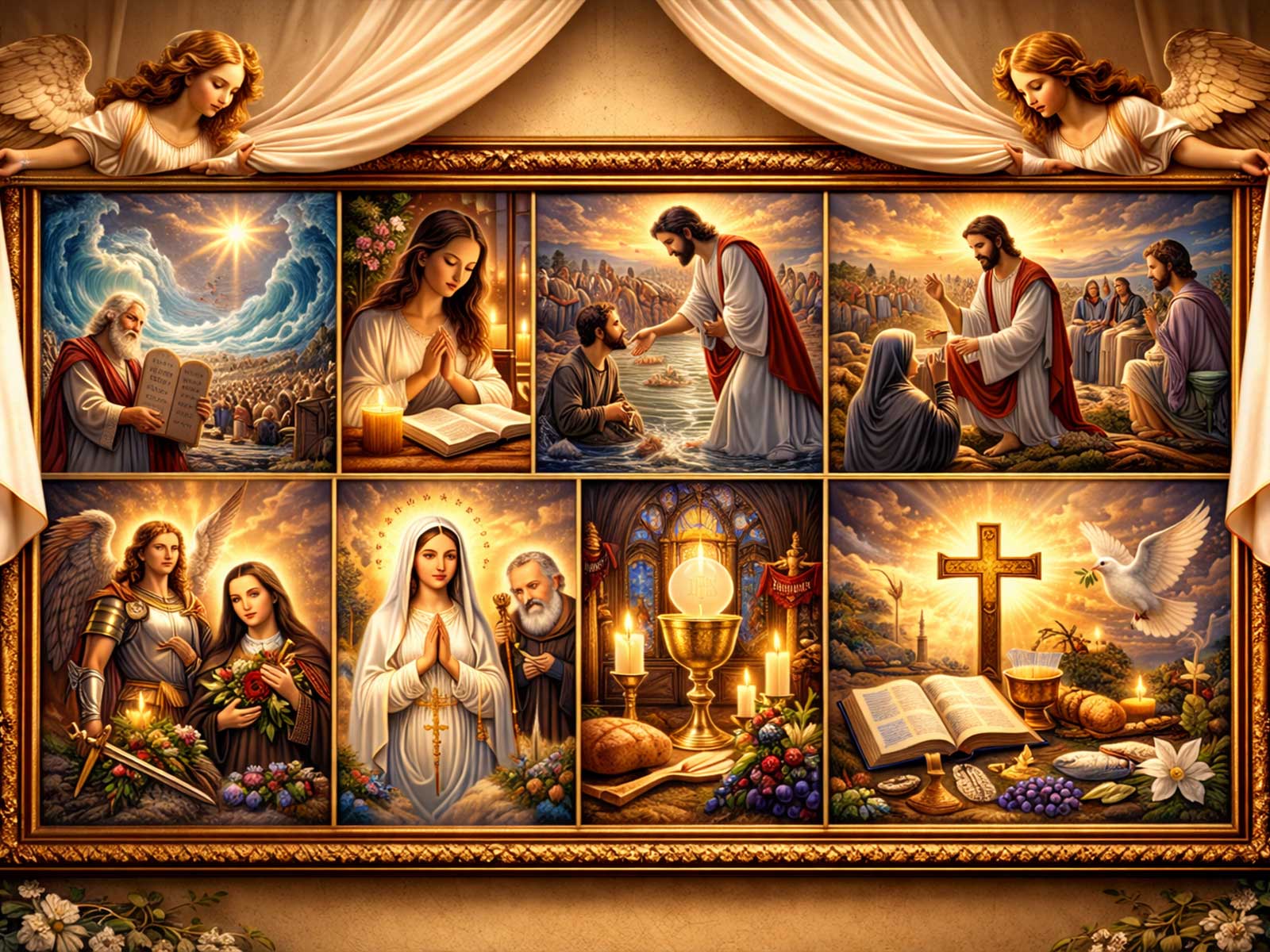
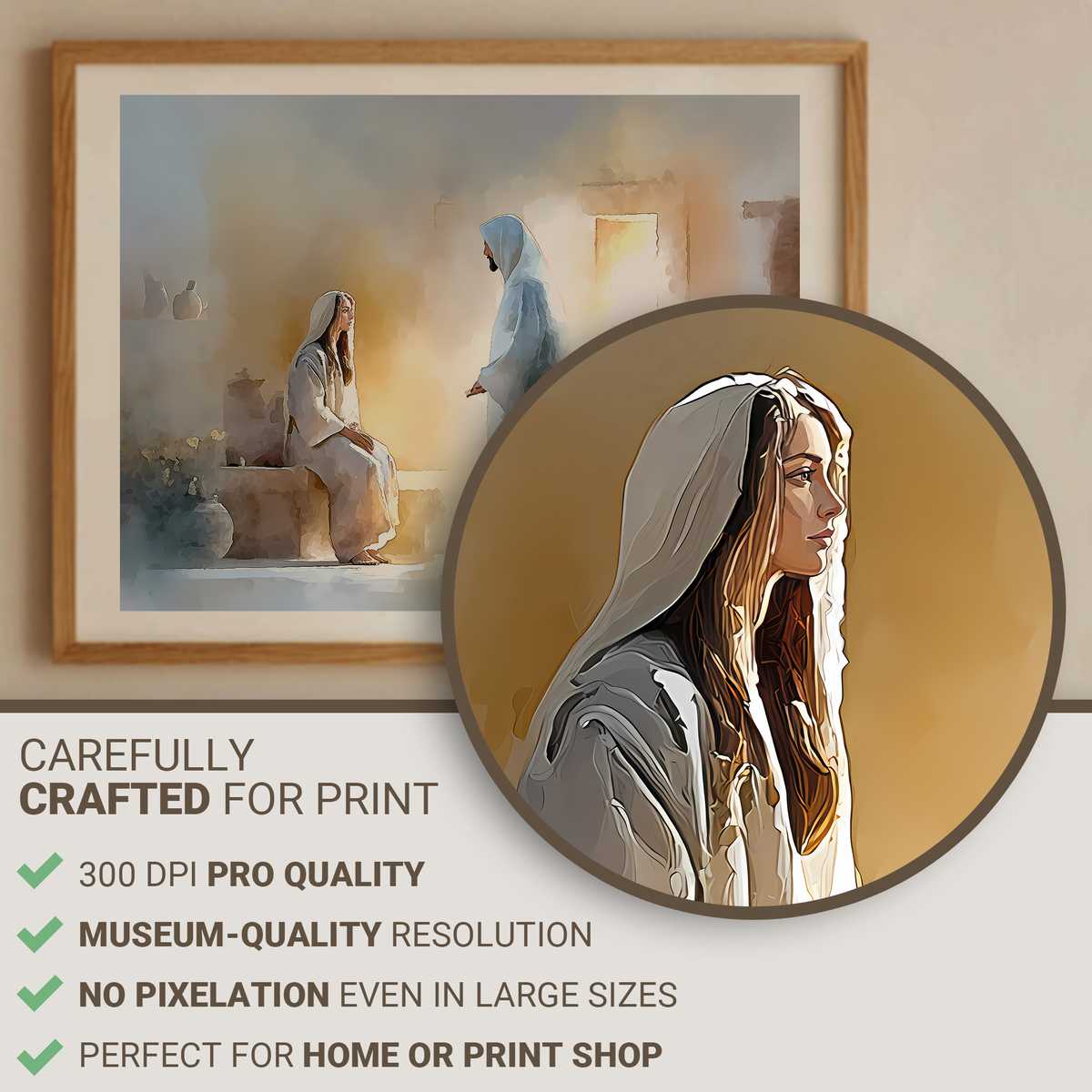
Images of the Annunciation and the Incarnation are among the earliest visual ways Christians sought to make the mystery visible. Some of the earliest surviving images appear in Roman catacomb paintings dated to the 2nd–4th centuries, where a quietly composed Annunciation fresco in the Catacomb of Priscilla is often cited as an early witness. These fragile survivors—fresco, mosaic, textile and panel—show how the scene of God drawing near to the world became a subject for intimate devotion as well as public memory.
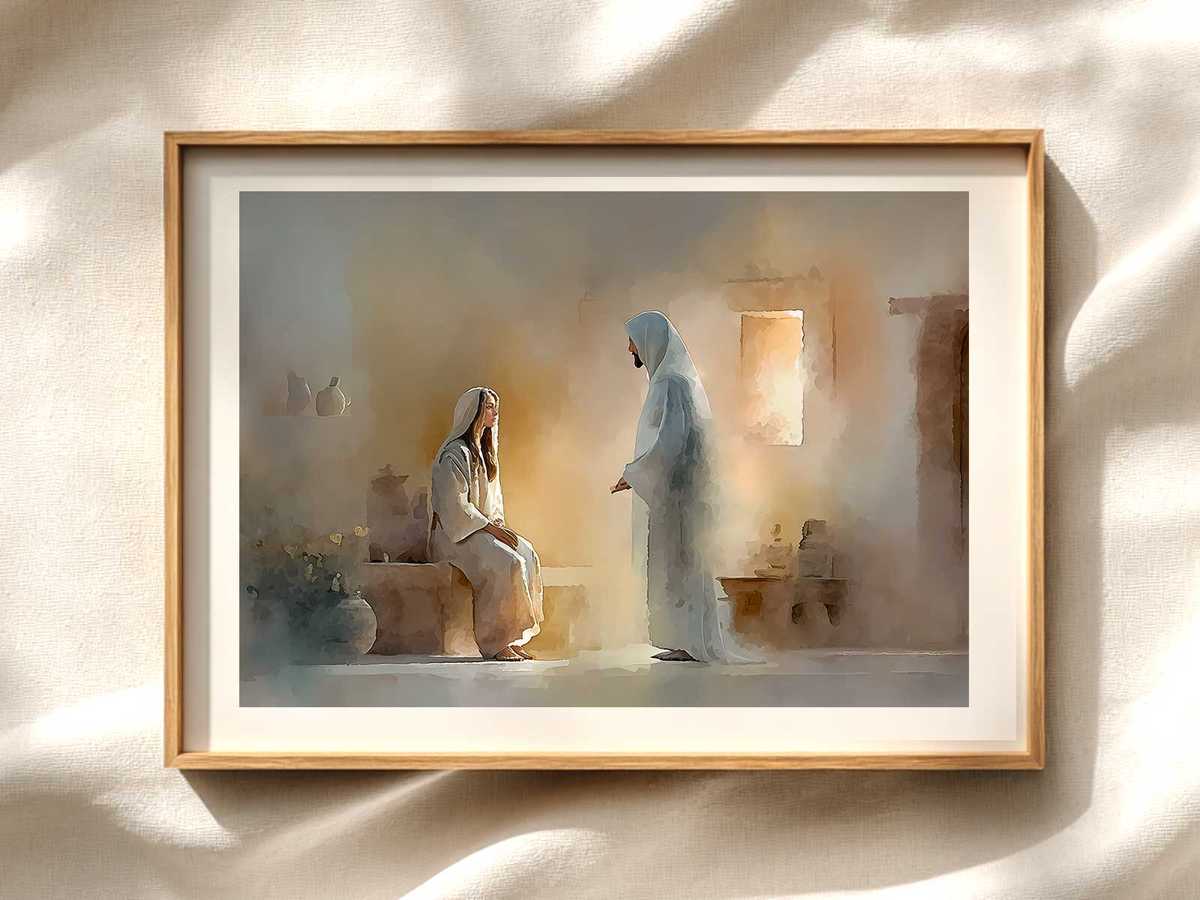
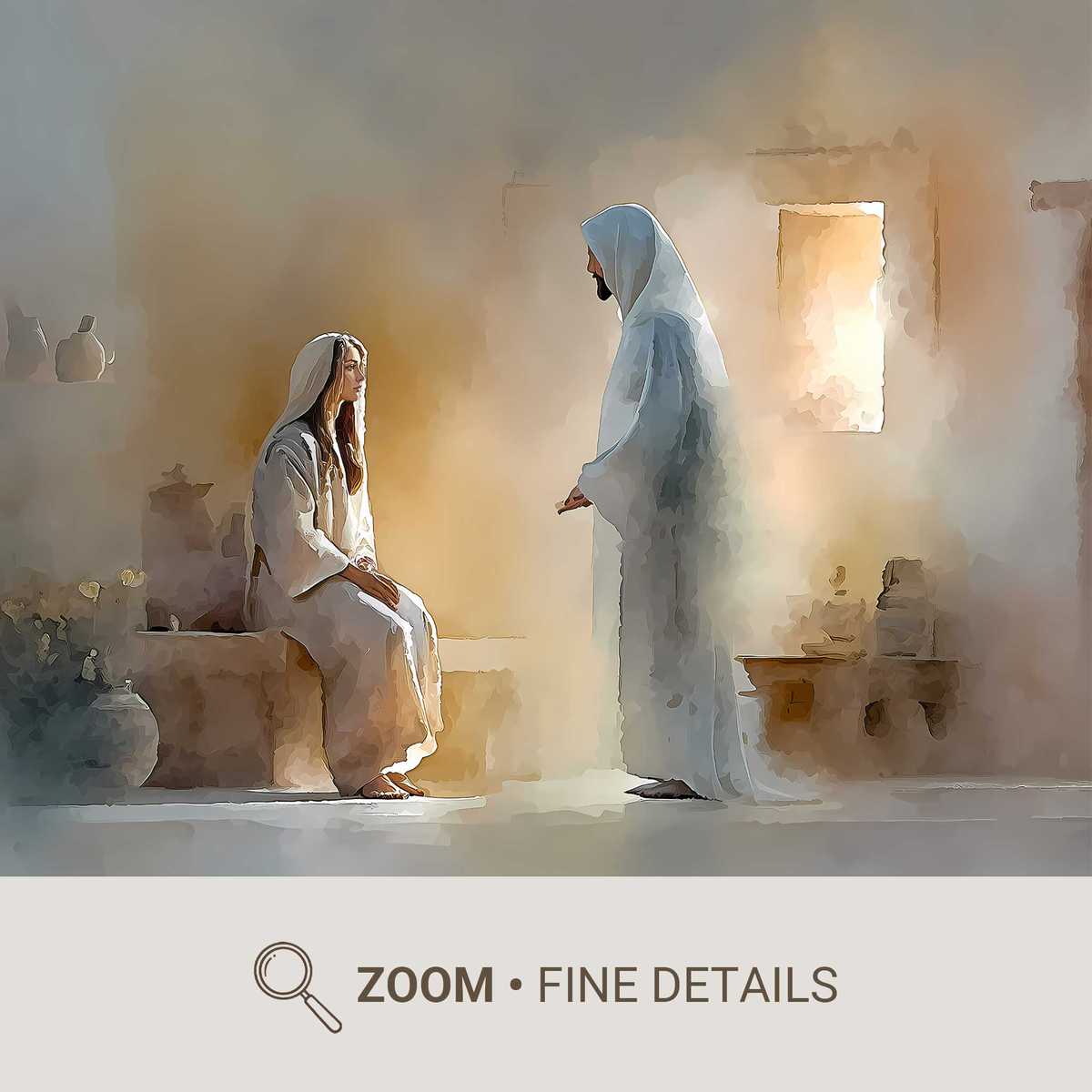
The heritage mood of a wall piece inspired by this lineage is not merely a matter of palette or age-marking; it rests on compositional restraint and devotional stillness visible in those early works. Early depictions adapt Roman visual conventions and vary in detail: the figure of the angel, the approach to the Virgin, and even the presence or absence of wings reflect formative stages in iconography and evolving theological emphasis. A print that references these choices—softened outlines, a measured scale between figures, a restrained, almost manuscript-like restraint—carries the same invitation to slow attention.
Surviving examples come from diverse media and places: catacomb frescoes, Late Antique mosaics, textiles and wooden panels found across Rome, Byzantium and sites such as Dura-Europos. That range helps explain why a heritage-inspired artwork can feel both domestic and ecclesial: it echoes images that functioned in tombs, churches and liturgical textiles alike, intended to accompany prayer, memory and the celebration of the Incarnation.
[IMAGE_INSERT_ARTICLE_01]
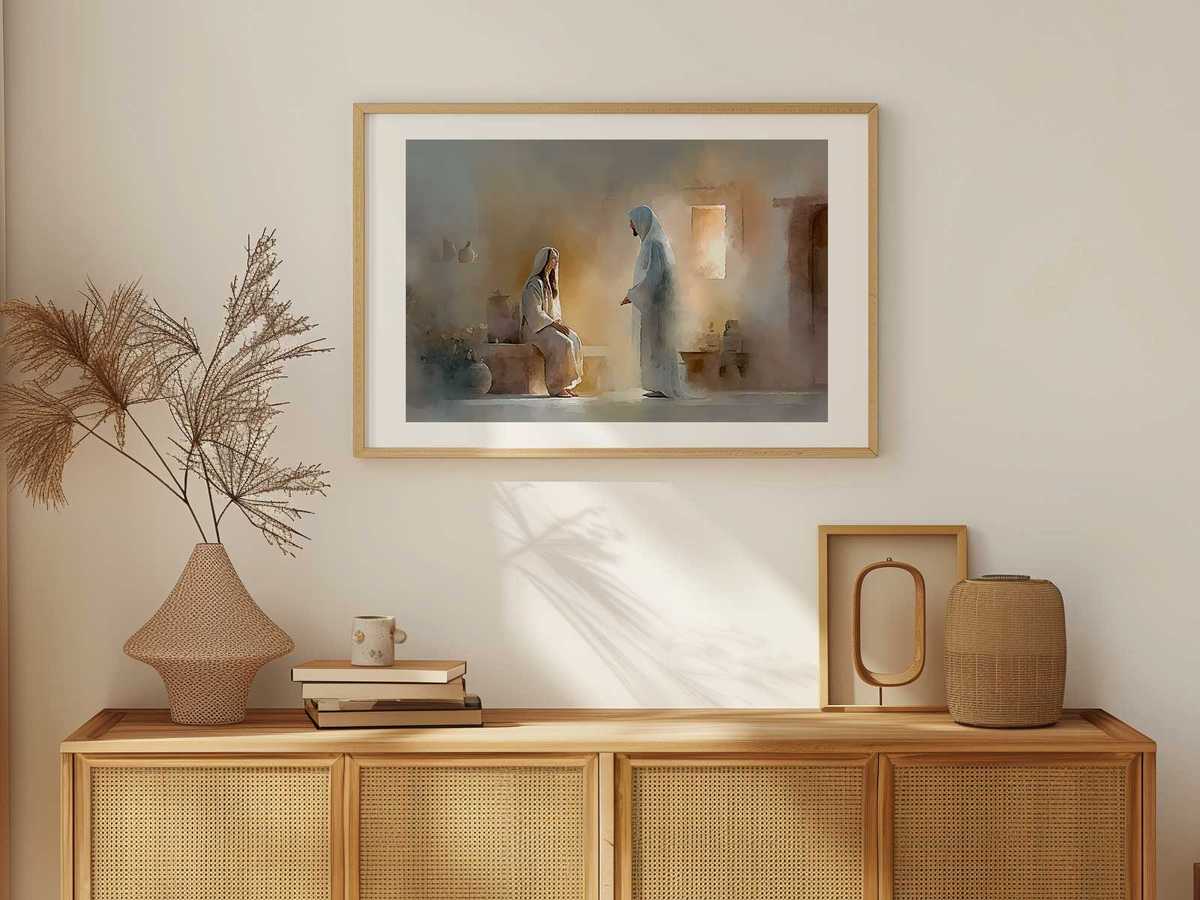
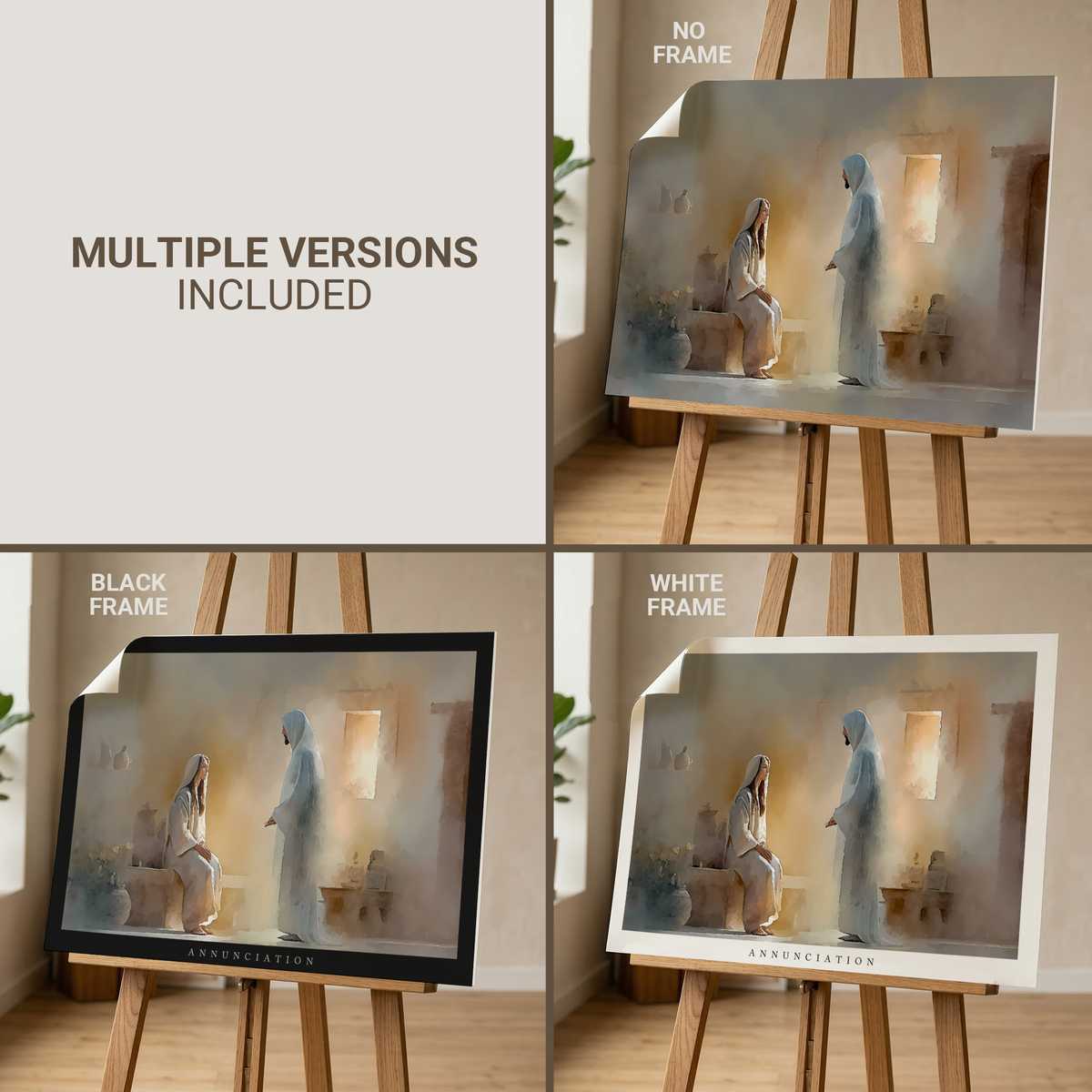
When a wall art piece draws on this early tradition, it leans toward visual elements that suggest continuity rather than novelty. A muted, restrained palette, an emphasis on solemn composition, and a print-like texture that hints at fresco or textile weave all remind the viewer that the subject has been tenderly contemplated across centuries. Such qualities help the image sit calmly in a home prayer corner, study, hallway or bedroom, offering a pictorial place for reflection rather than a declarative statement.
More than decorative nostalgia, this memory of early Christian painting offers a way to inhabit theological mystery with gentleness. The developing iconography of the Annunciation—stabilised later in Byzantine practice but visible already in Late Antique forms—speaks to a continuity of attention: artists and communities shaped an image-language for the coming of Christ that could be carried in cloth, set in mosaic, or painted on a tomb wall. A wall piece that listens to that formative language invites households to hold the Incarnation in a lived, everyday way.
In imagining such an artwork in your home, consider how the piece will function over time. In a quiet study it may anchor reading and prayer; in an entryway it may offer a brief, steadying recollection of God’s nearness; as a gift for a Christian household it can be offered as a companion to family devotion. Its power comes from restraint—the compositional choices and material allusions that suggest a long visual conversation rather than a passing trend.
Rooted in the verified presence of Annunciation images across catacombs, mosaics, textiles and panels, this heritage-led approach to wall art honors the careful, formative stages of early Christian iconography. It asks the viewer to linger with the Incarnation as those first images asked viewers to linger: with reverence, with memory, and with a sense that an ancient visual language still has something to say to the rhythm of modern domestic life.

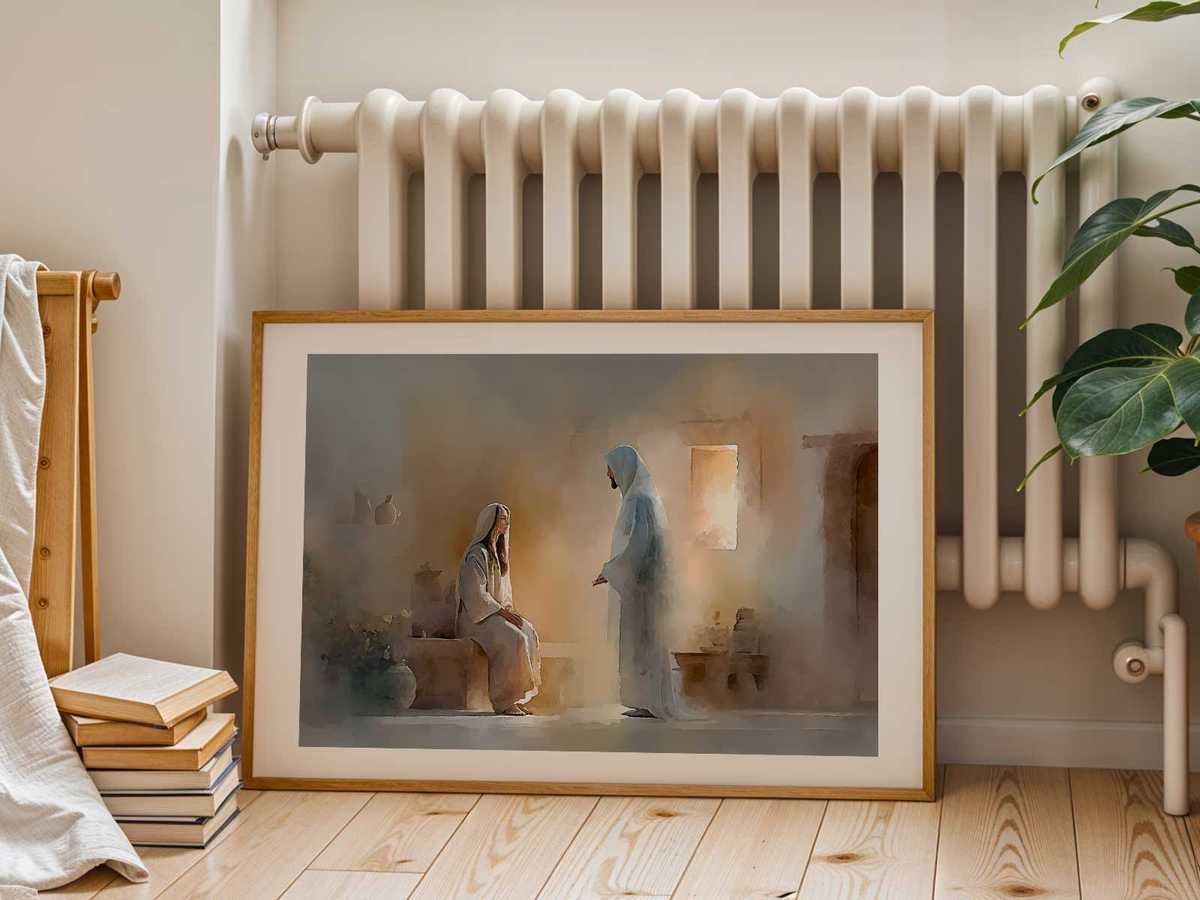
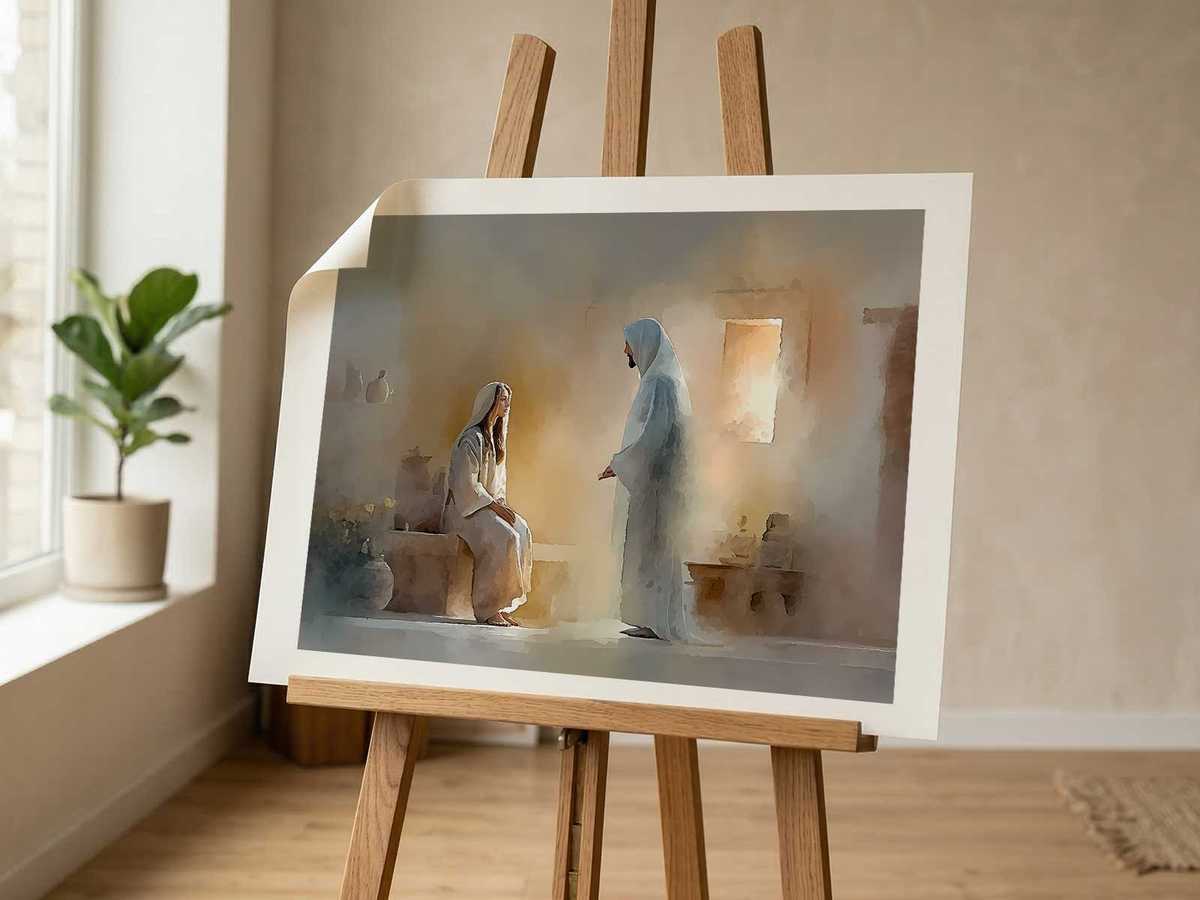
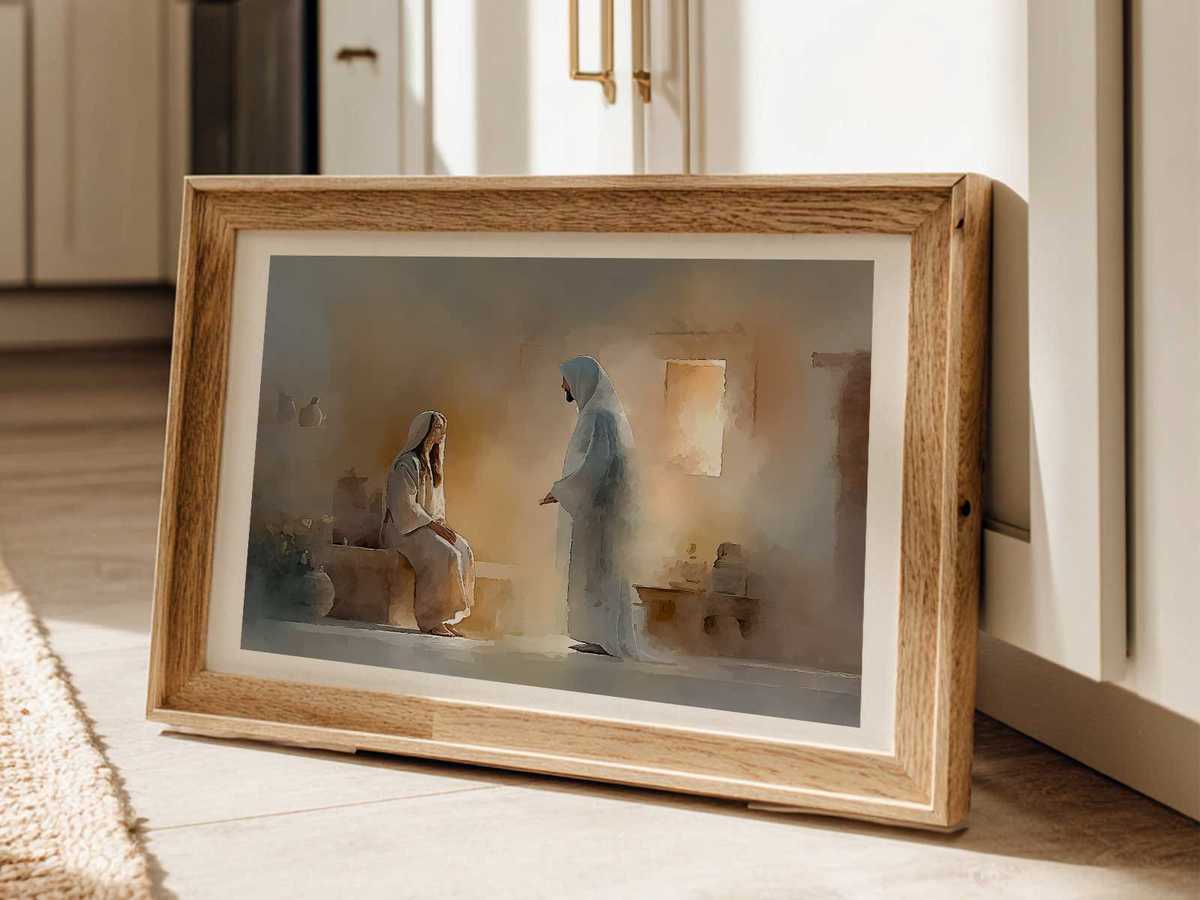
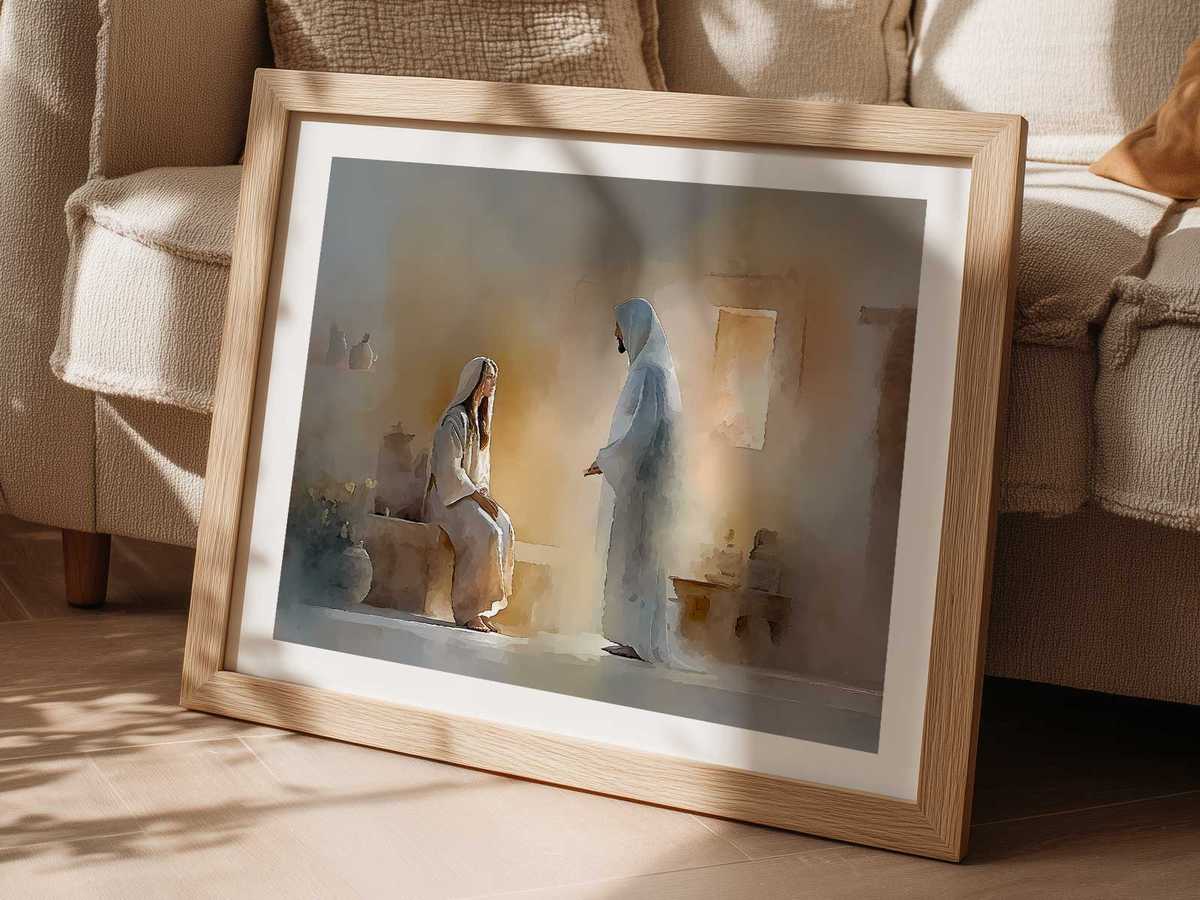


 ↧ Digital download
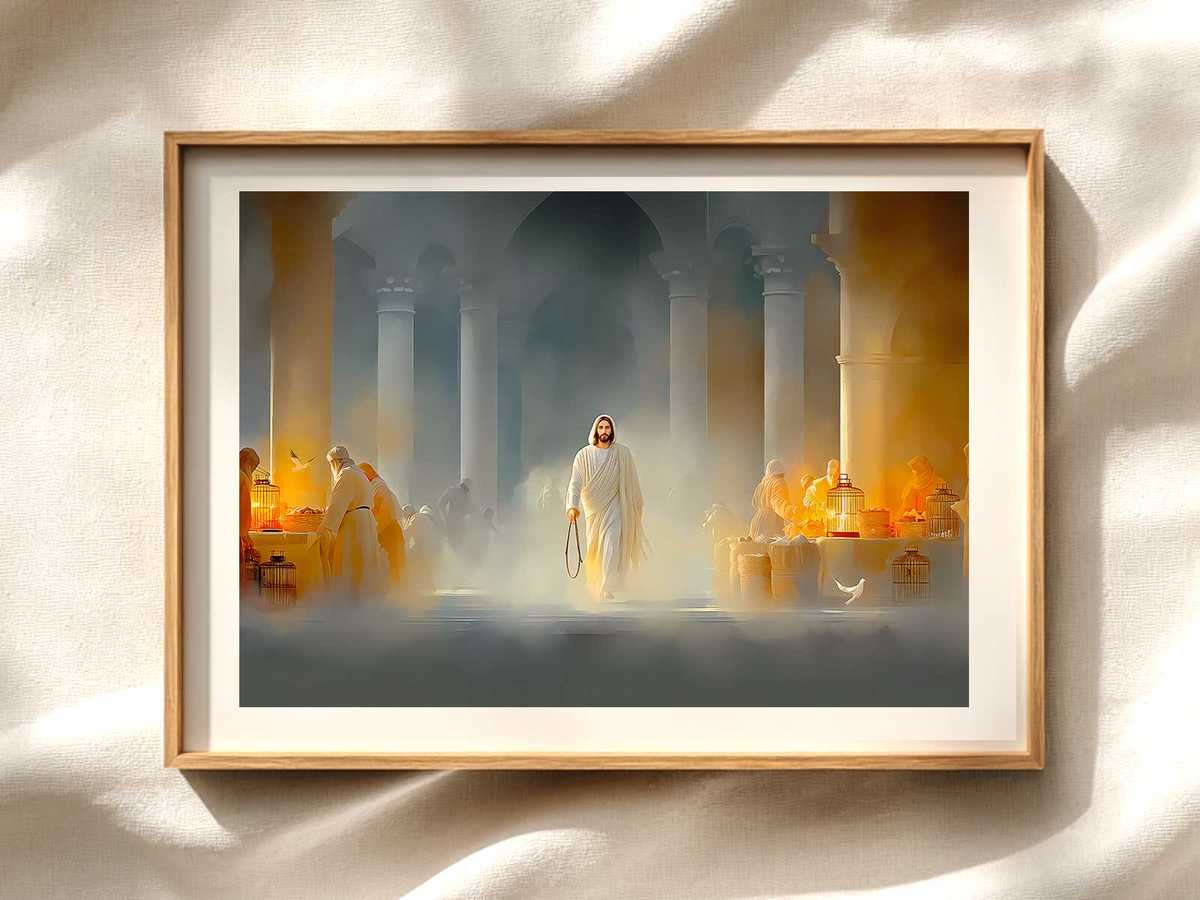
Drawings of Jesus Christ Print: The Purification of the Temple...
Digital download
↧ Digital download
Drawings of Jesus Christ Print: The Purification of the Temple...
Digital download
 ↧ Digital download
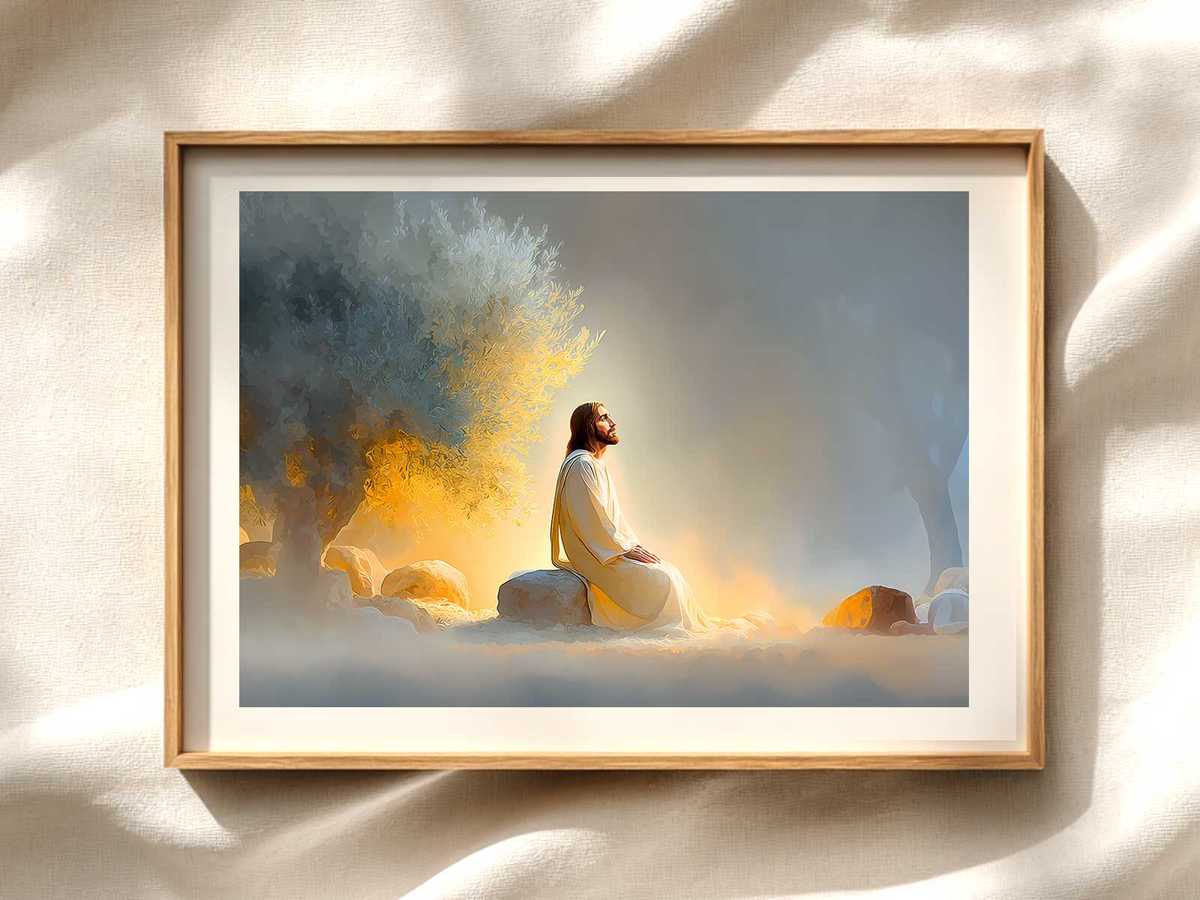
Gethsemane Drawing with Bible Verse Wall Art: A Quiet Companion for...
Digital download
↧ Digital download
Gethsemane Drawing with Bible Verse Wall Art: A Quiet Companion for...
Digital download
 ↧ Digital download
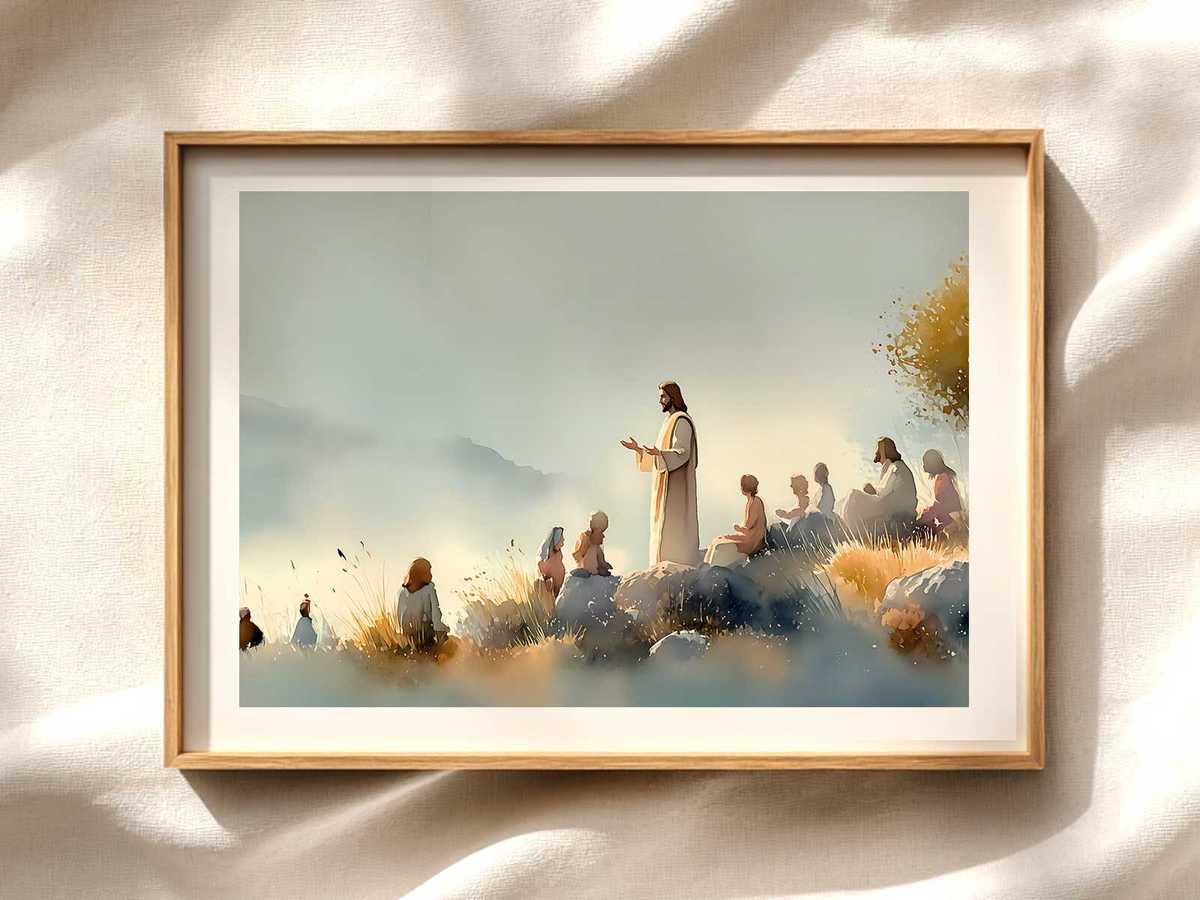
Why the Sermon on the Mount Makes Gentle, Daily Wall Art
Digital download
↧ Digital download
Why the Sermon on the Mount Makes Gentle, Daily Wall Art
Digital download
 ↧ Digital download
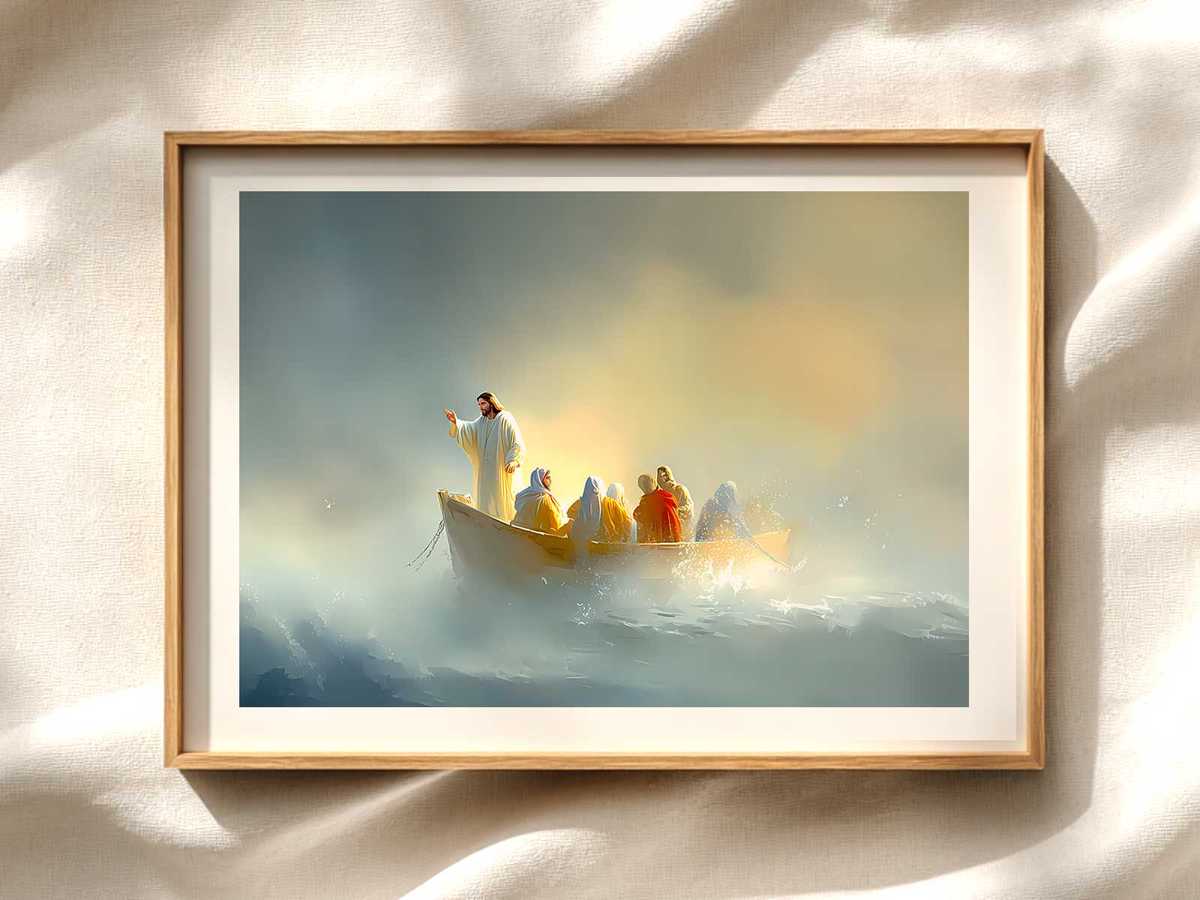
Jesus Art: The Stilled Storm — A Quiet Icon of Christ’s Gentle...
Digital download
↧ Digital download
Jesus Art: The Stilled Storm — A Quiet Icon of Christ’s Gentle...
Digital download