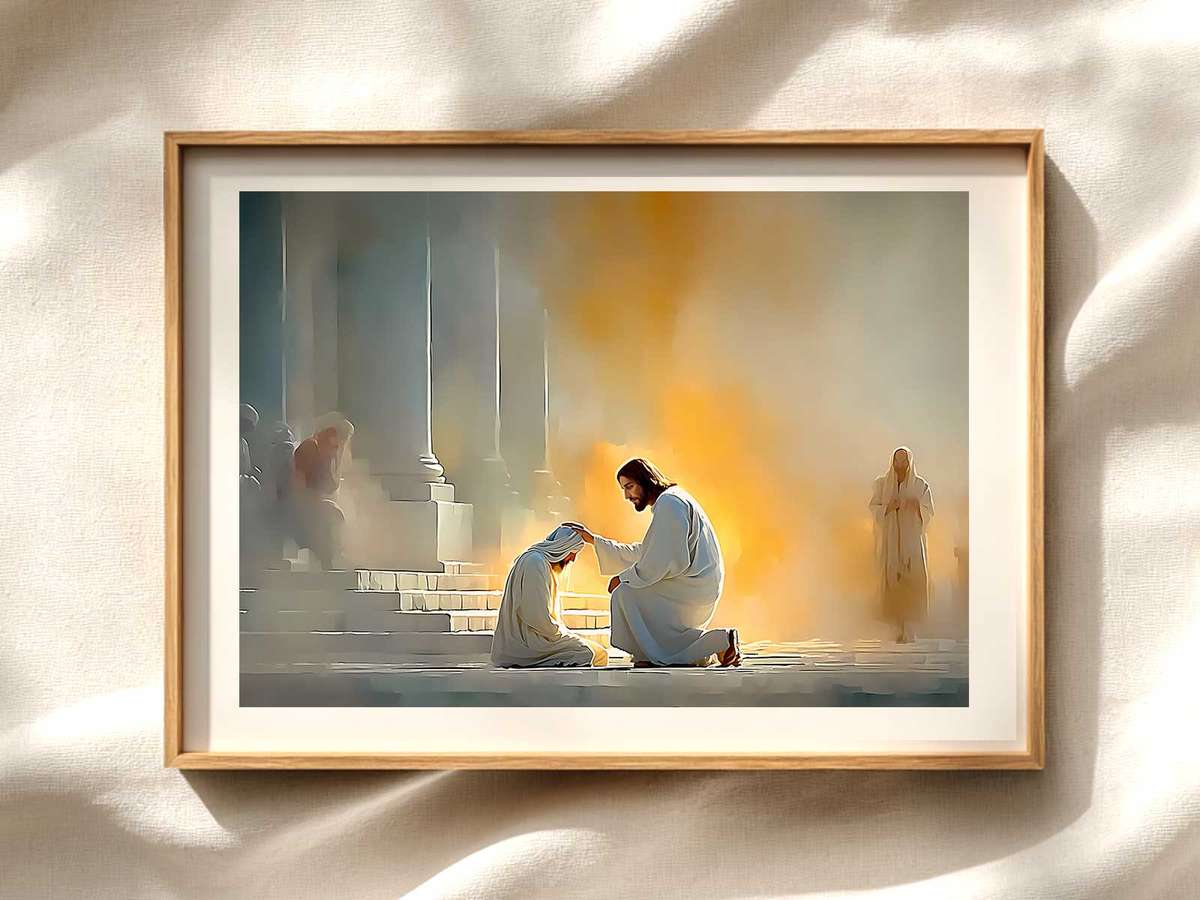
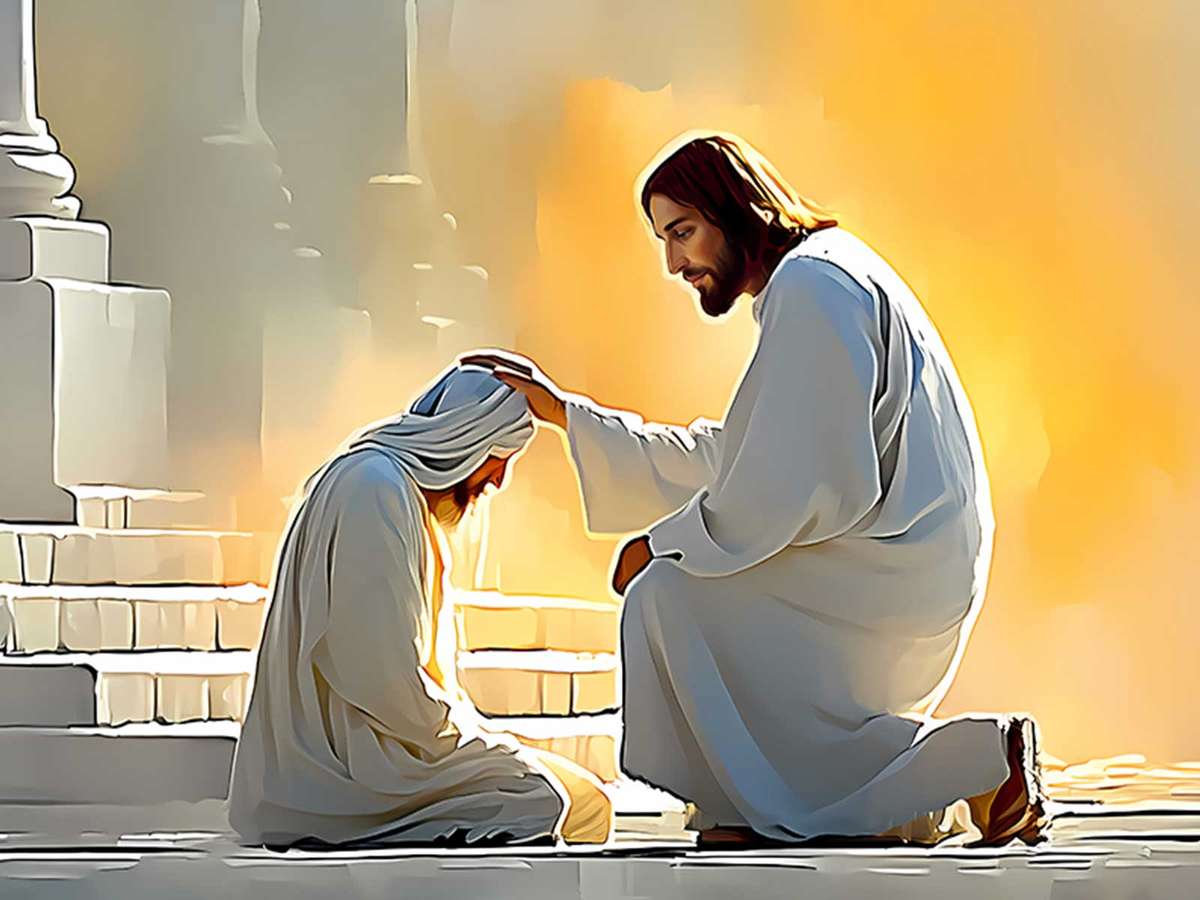
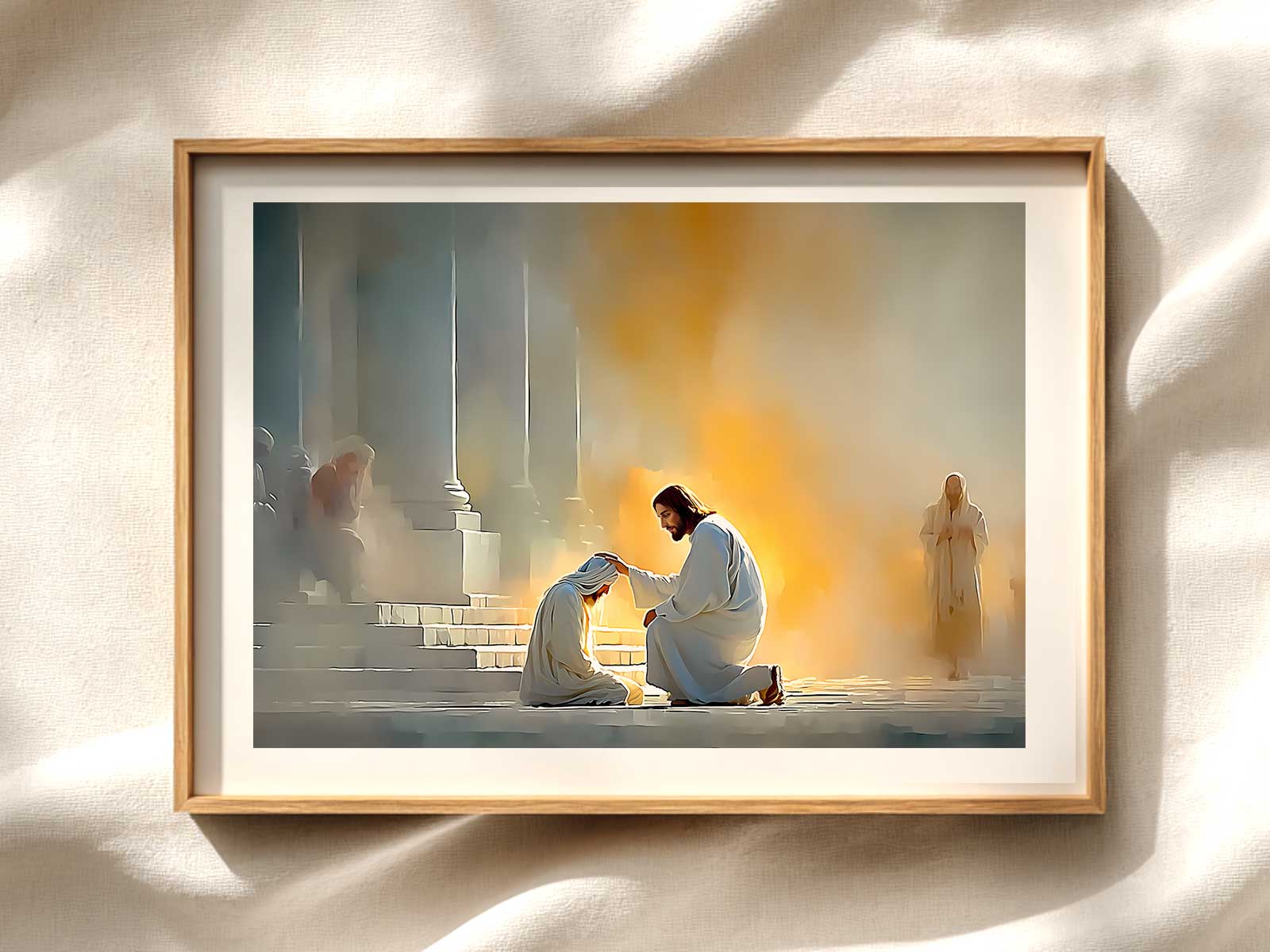
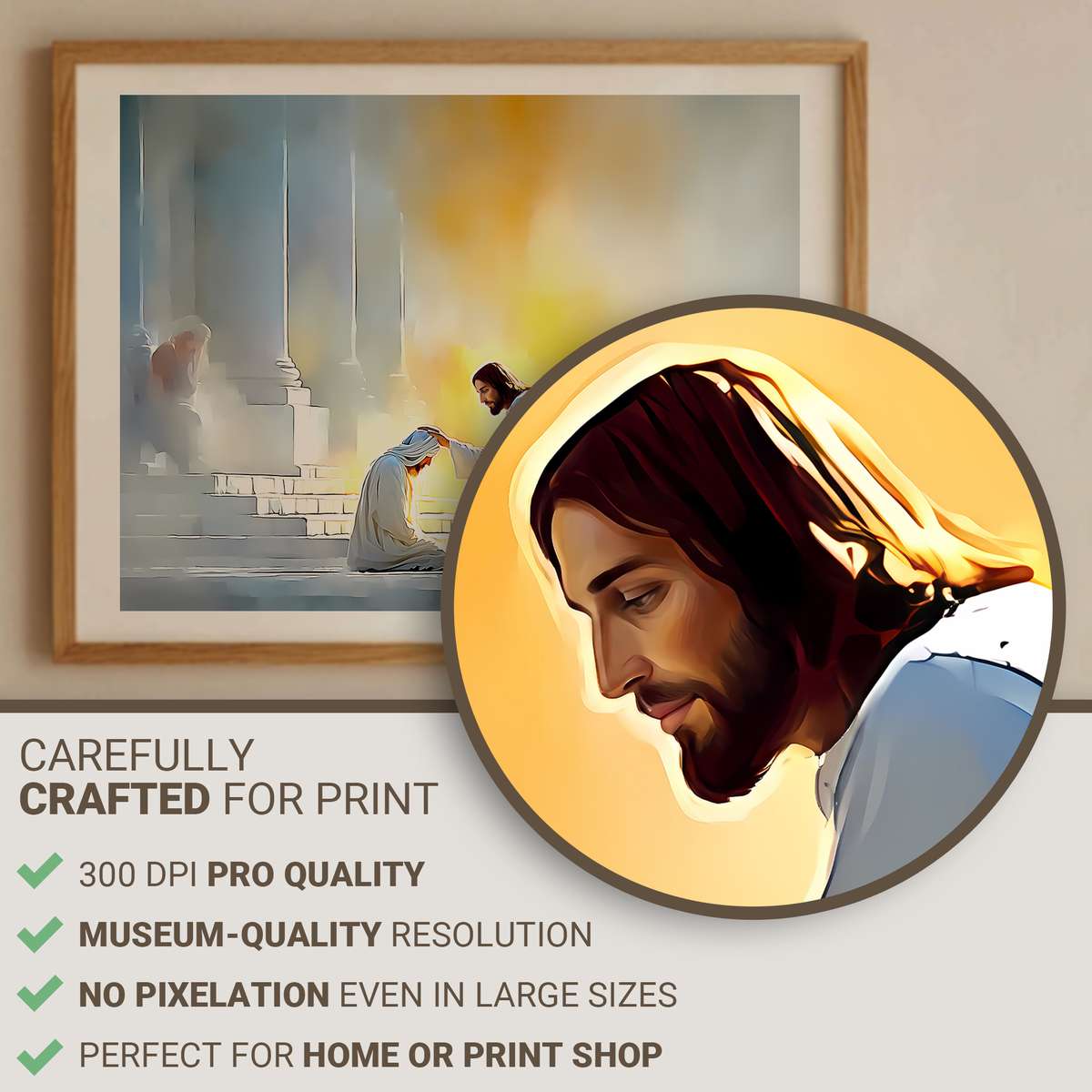
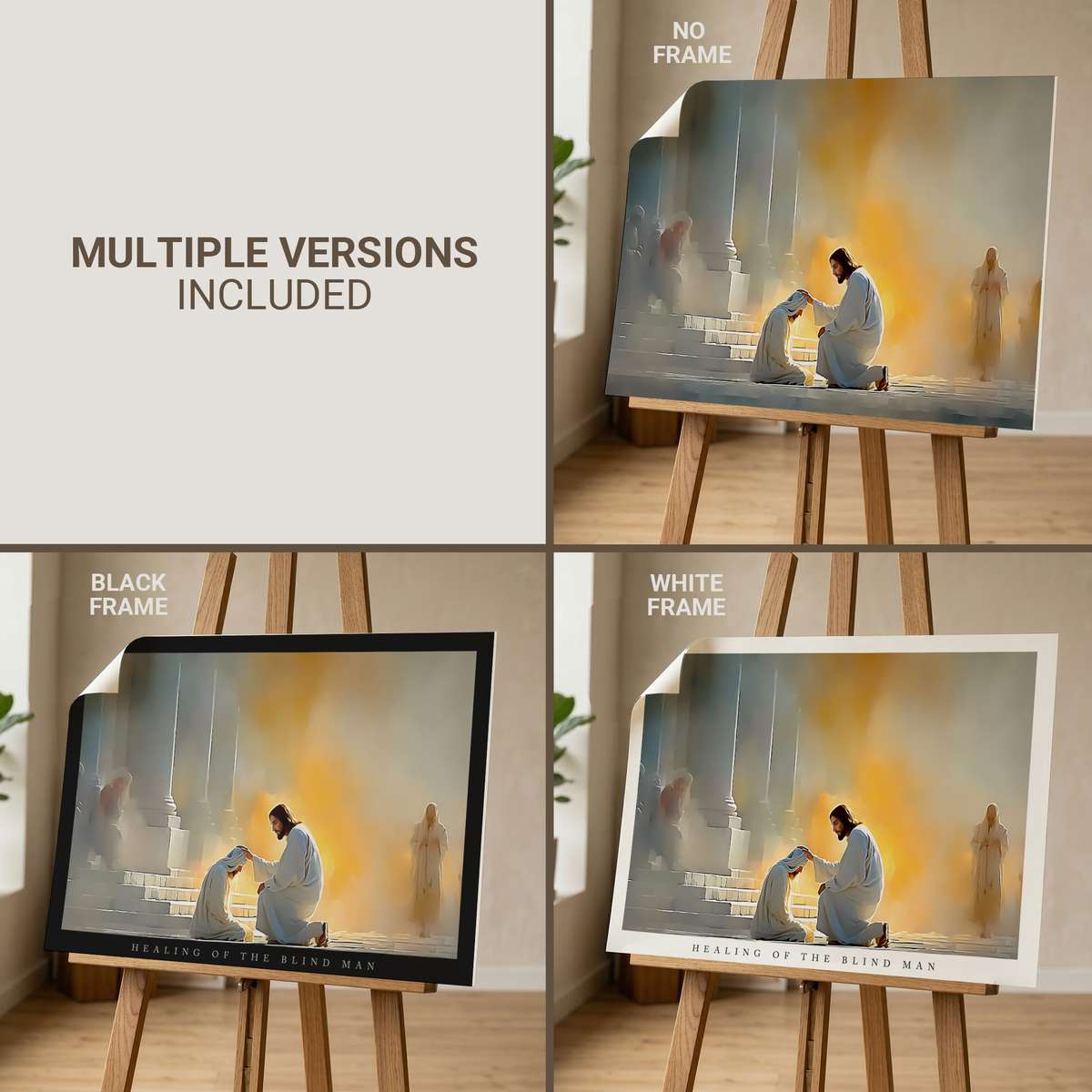
The Johannine account of the man born blind (John 9:1–12) and the recurring theme of Jesus as the Light of the World offer a rich visual language for devotional wall art in the Christian home. When an image quietly suggests the movement from darkness toward opening and light, it can become more than decoration: it becomes an aid to recollection, a prompt to trust, and a companion in daily prayer. That theological thread—healing that also signifies spiritual sight, and Christ’s illuminating presence described throughout John—gives a clear, theologically grounded motif for a prayer corner, bedroom wall, or office nook.
In practice, such a piece works best where other devotional elements already form the habit of prayer: a small cross or crucifix, a candle or low lamp, a Bible or devotional book, and a chair or cushion placed for pause. Images have long been used across Christian traditions in home altars and icon corners to provide a focal point for contemplation. A painting or print that evokes progressive opening to light invites the eye to rest and the heart to turn, offering a visual echo of the scriptures that speak of sight restored and of Jesus as light.
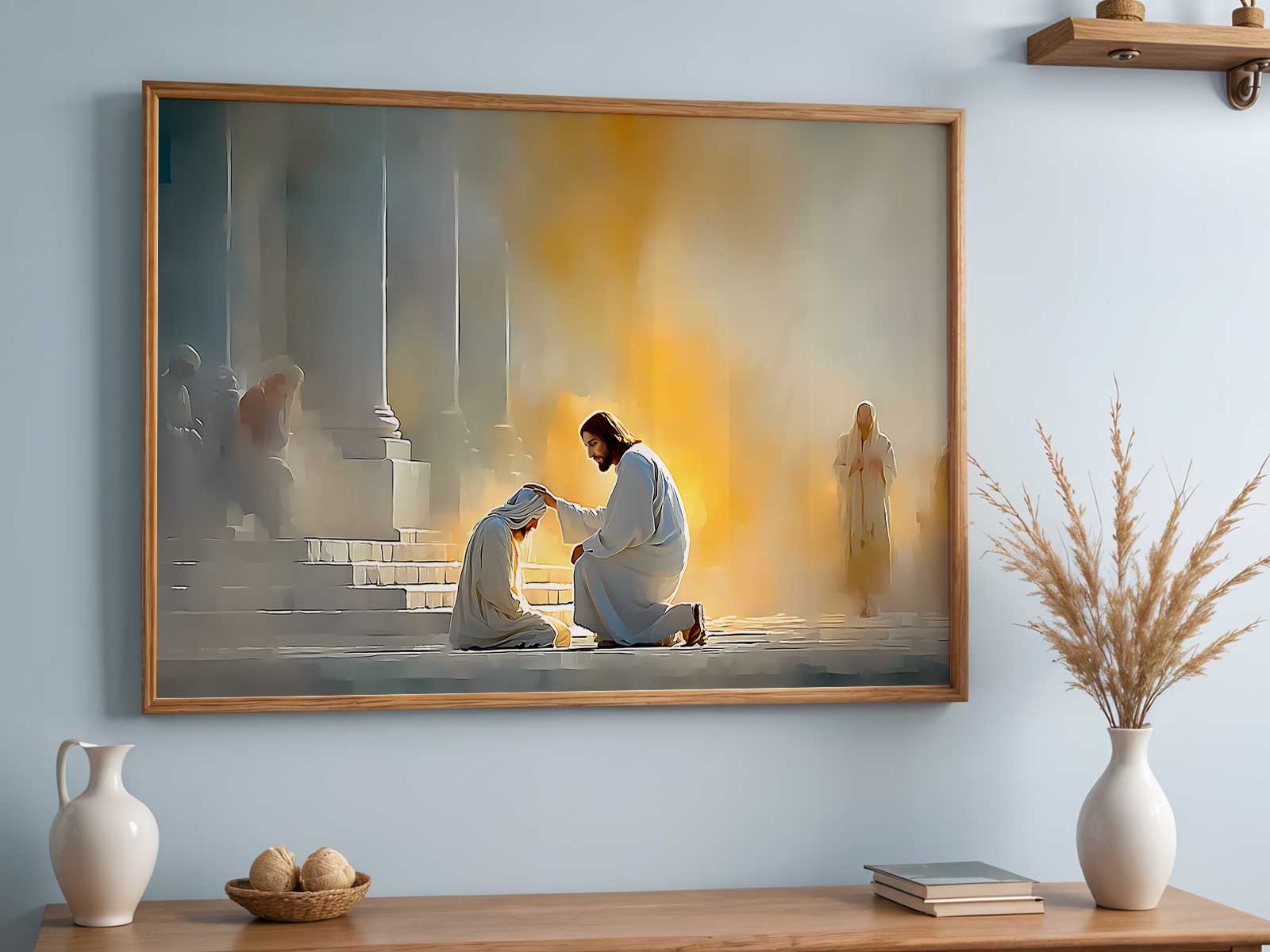
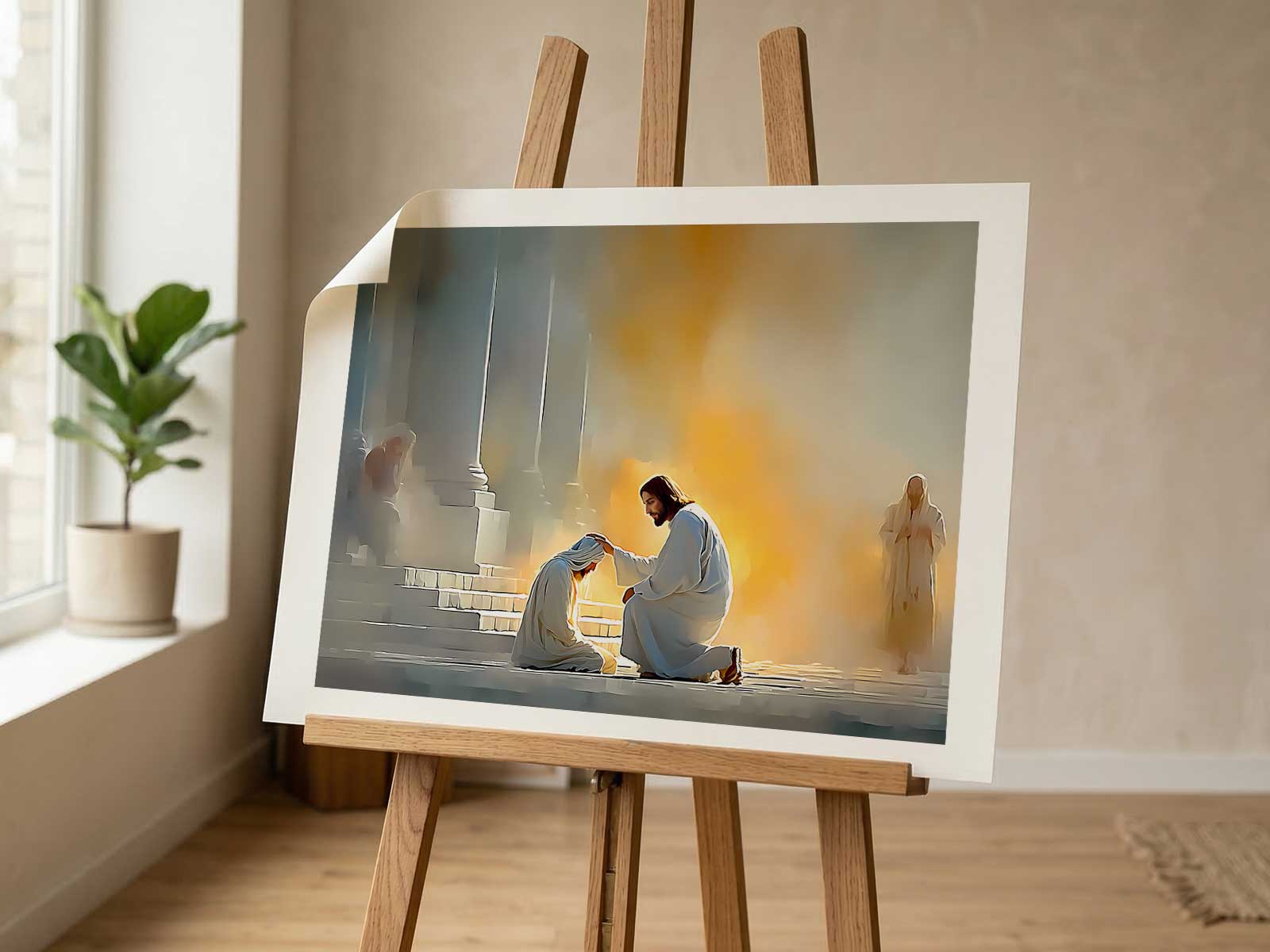
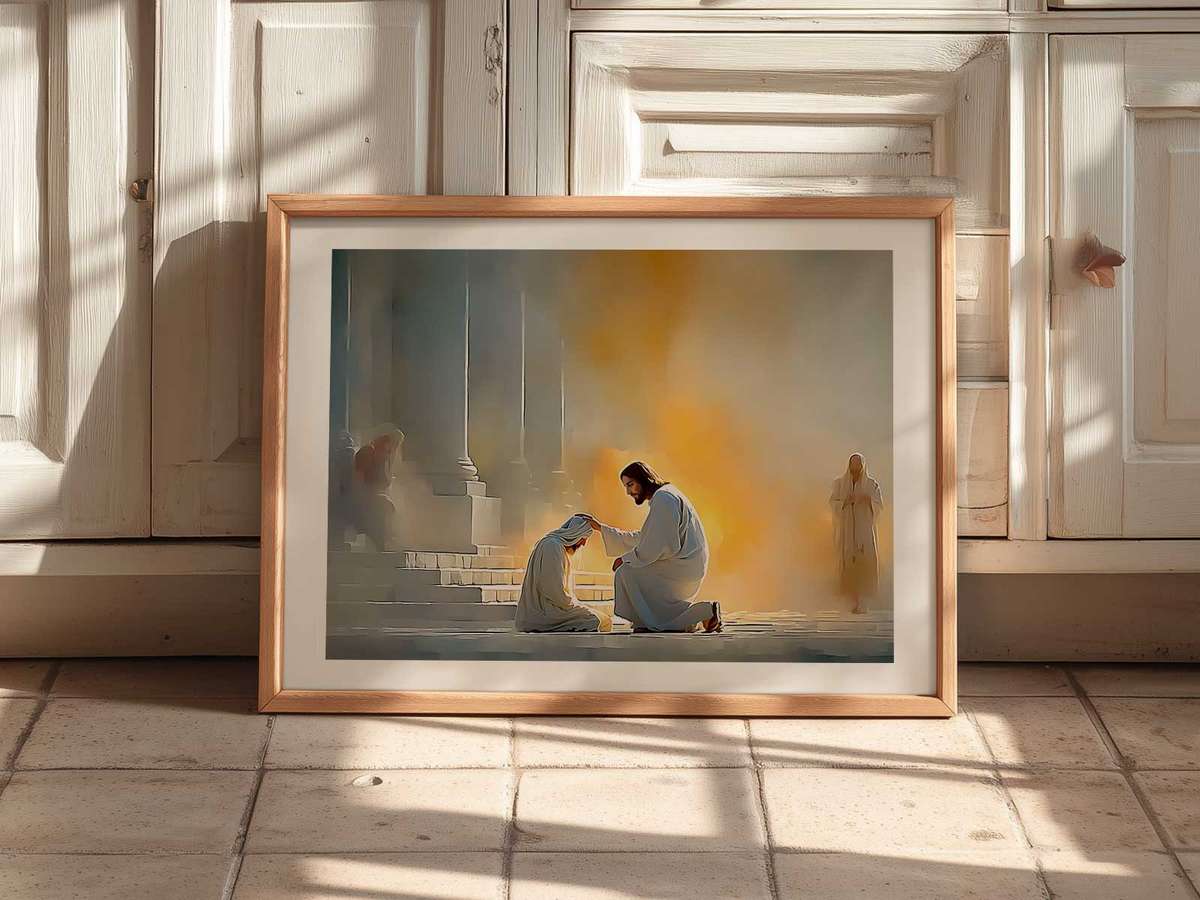
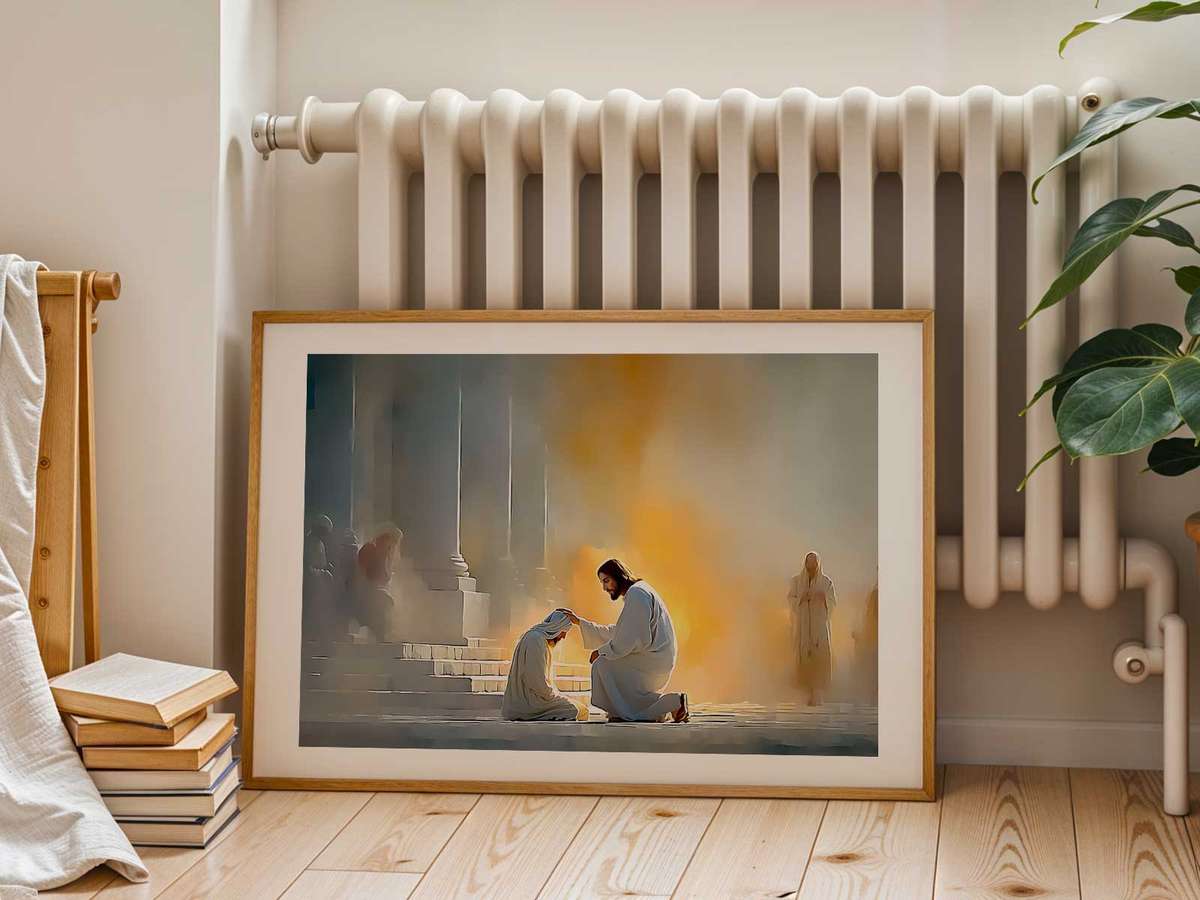
Placed in a corner of a bedroom, the artwork can speak gently at bedside, helping a person begin and end the day with a reminder of God’s presence and the possibility of inner clarity. In a small home office, the same image can offer a steadying counterpoint to busyness: a composition that moves from shadow into a soft illumined center helps the worker practice brief moments of prayerful breath and reorientation toward Christ’s guidance. In a dedicated prayer nook, the piece can anchor the arrangement, lending coherence to the cross, candle, and books, and shaping a rhythm of regular return.
[IMAGE_INSERT_ARTICLE_01]
Visually, the motif of progressive opening to light does not require elaborate detail to be effective; it is often the restraint—suggested layers of shadow, a subtle path of light, an implied gaze—that fosters quiet attention. Within many Christian homes, devotional images help shape imagination and invite reverent attention without crowding the room. When chosen with simplicity and placed with other devotional objects, the image supports a posture of trust: it reminds the household that healing in John’s narrative points beyond a single miracle to the persistent presence of Christ who illuminates and guides.
Beyond aesthetics, practical guides for home altars and prayer corners recommend arranging images, candles, and seating to create an atmosphere conducive to regular prayer. A modest lamp or candle placed near the art can gently echo the artwork’s theme of light; a Bible left open on a small shelf invites scripture that complements the visual story; a single chair or cushion invites a family member or guest to sit and linger. These small, intentional choices help transform a corner, bedroom wall, or office into a place of recollection where the image becomes a habitual threshold into prayer.
Because religious images are used across traditions to assist contemplation, a wall piece inspired by the healing of the blind and the Light motif can resonate in varied household practices while remaining theologically rooted in John’s witness. It is not meant to replace scripture or communal worship but to serve as a humble, visible invitation to trust and to seek the light of Christ in everyday rhythms. Placed thoughtfully, the artwork helps a home cultivate a calm atmosphere, a steady focus for prayer, and a gentle reminder that spiritual sight and healing are part of the Christian imagination for domestic devotion.
Author:



 ↧ Digital download
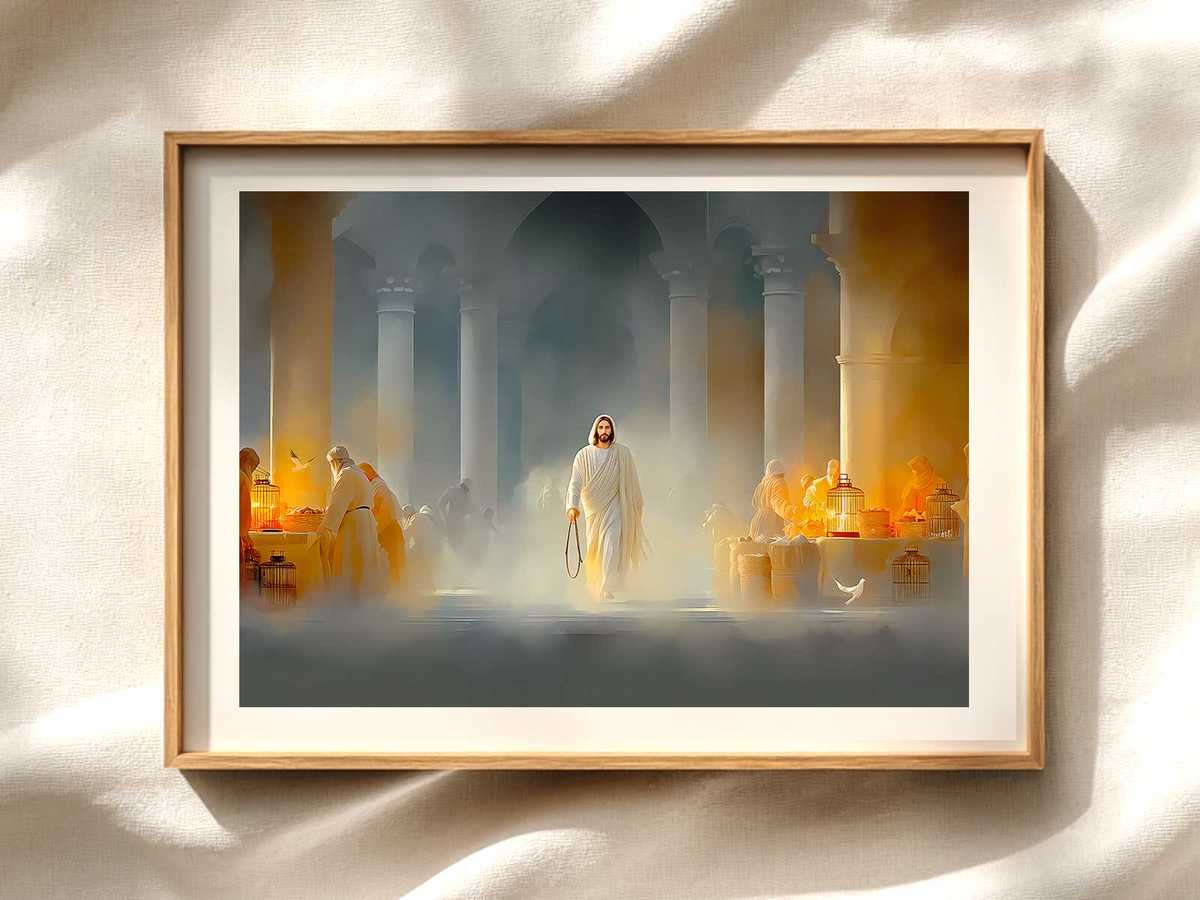
Drawings of Jesus Christ Print: The Purification of the Temple...
Digital download
↧ Digital download
Drawings of Jesus Christ Print: The Purification of the Temple...
Digital download
 ↧ Digital download
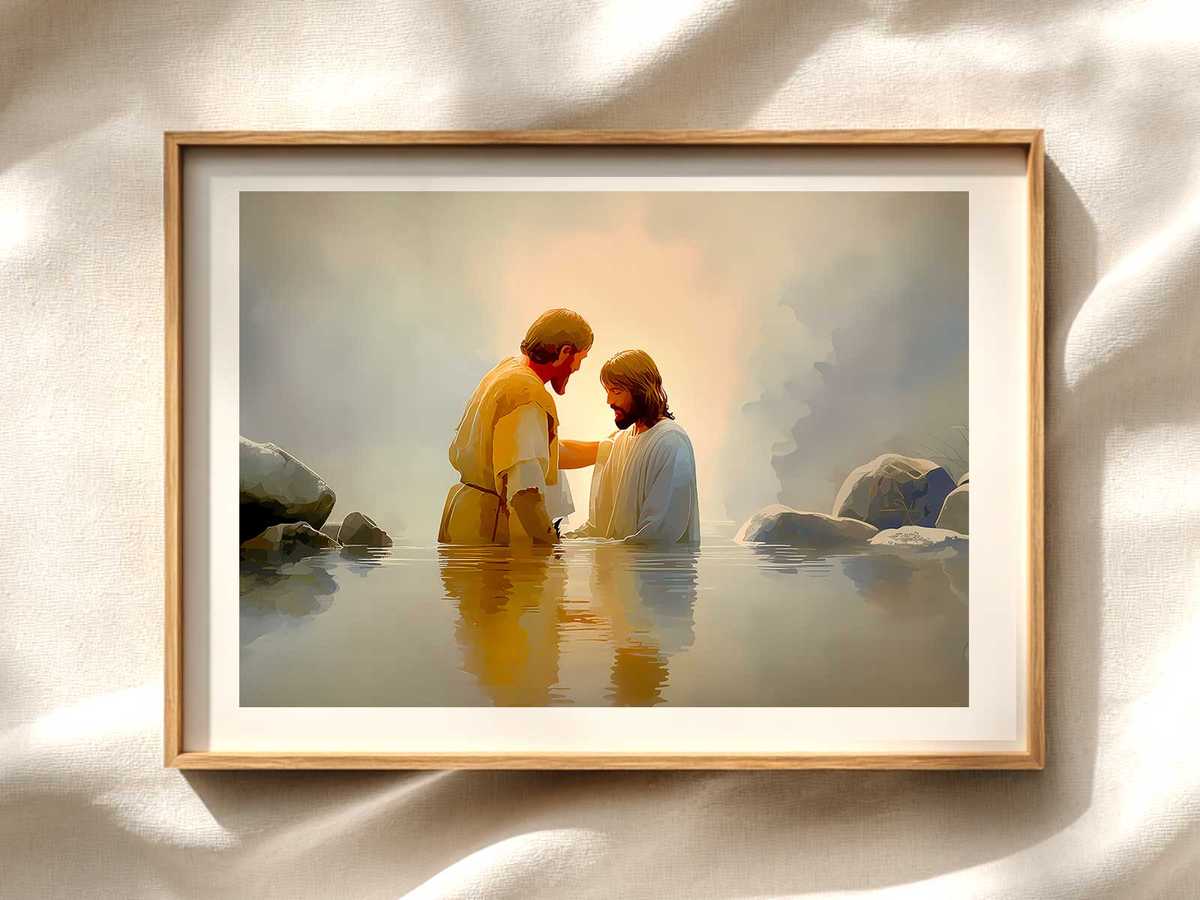
Baptism of Christ painting — a sacred print for quiet devotion at home
Digital download
↧ Digital download
Baptism of Christ painting — a sacred print for quiet devotion at home
Digital download
 ↧ Digital download
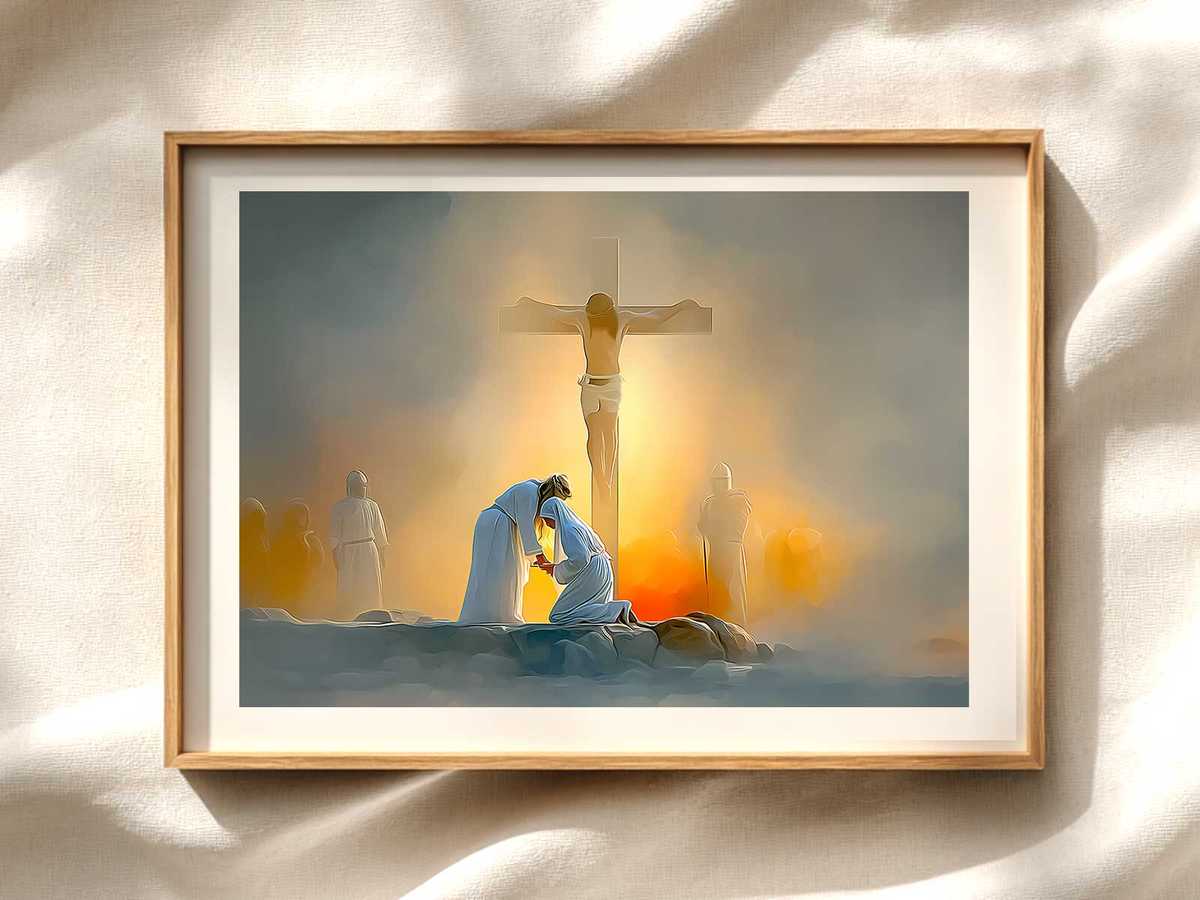
Drawings of Jesus on Cross Wall Art: A Contemplative Crucifixion in...
Digital download
↧ Digital download
Drawings of Jesus on Cross Wall Art: A Contemplative Crucifixion in...
Digital download
 ↧ Digital download
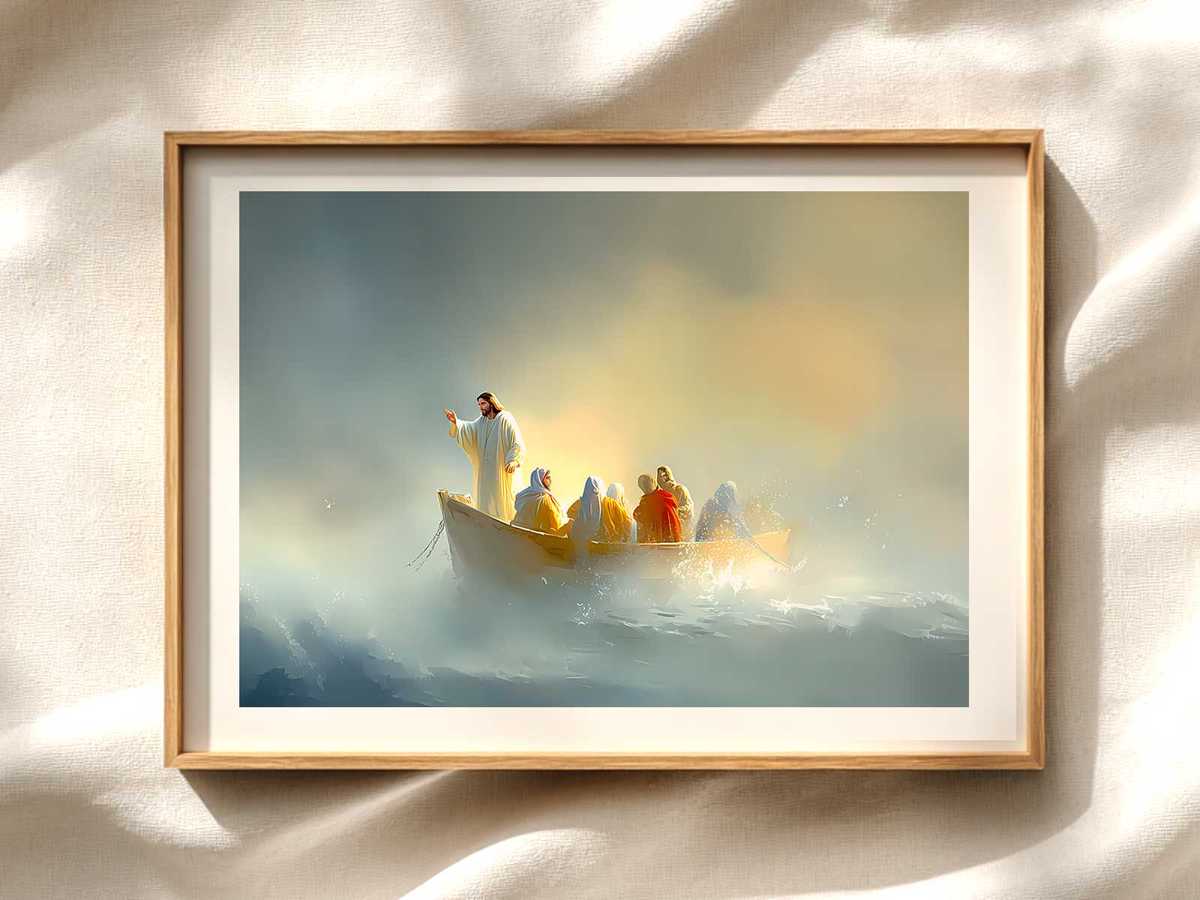
Jesus Art: The Stilled Storm — A Quiet Icon of Christ’s Gentle...
Digital download
↧ Digital download
Jesus Art: The Stilled Storm — A Quiet Icon of Christ’s Gentle...
Digital download