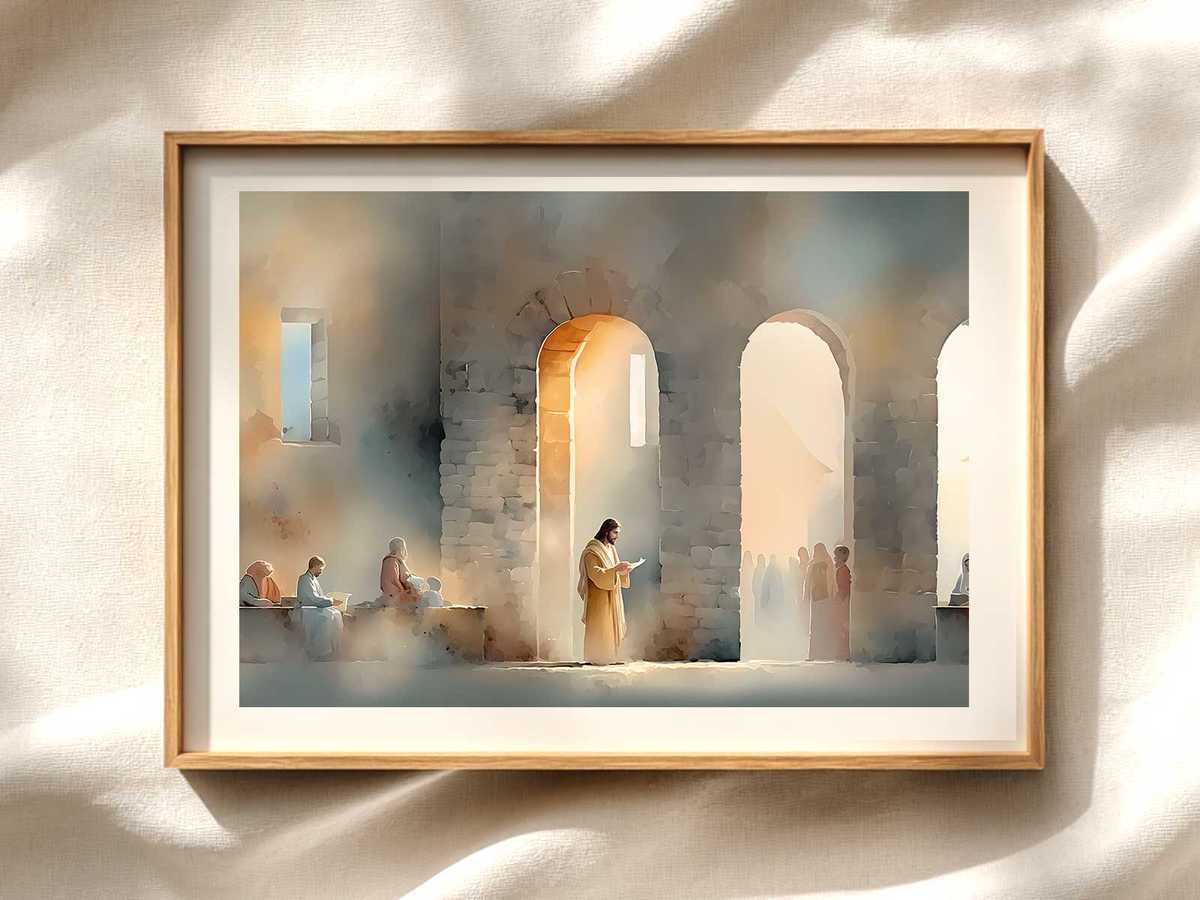
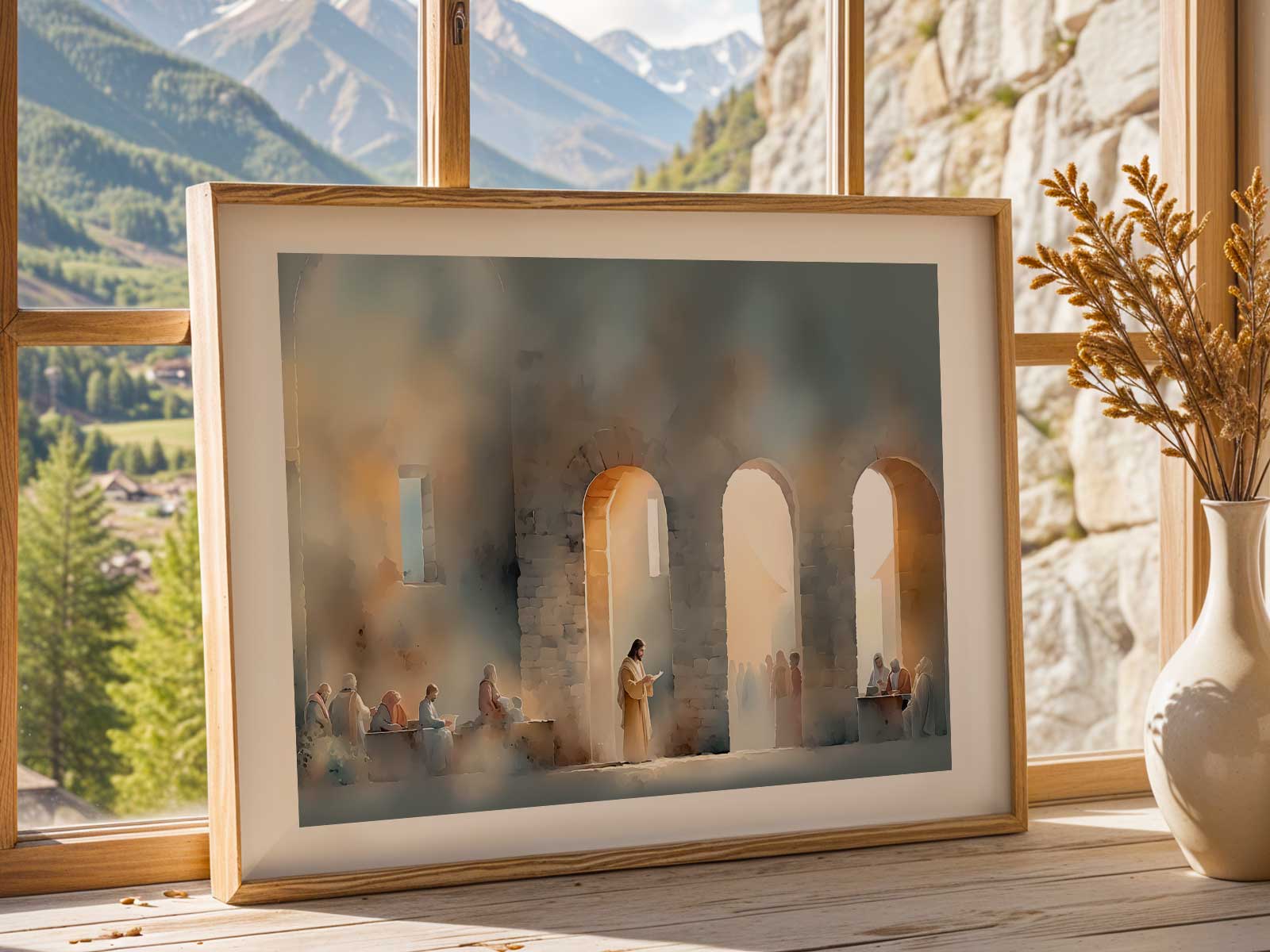
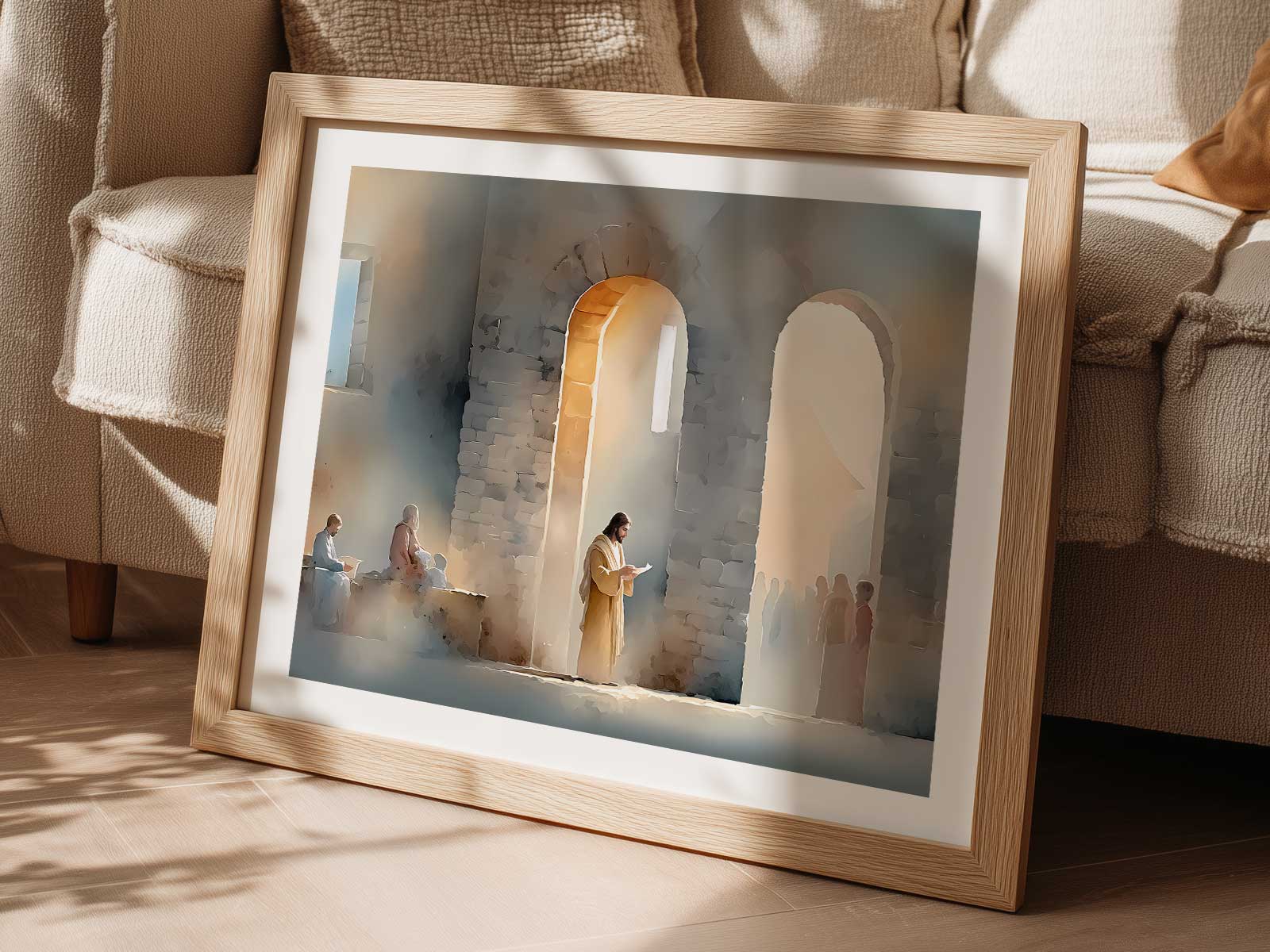
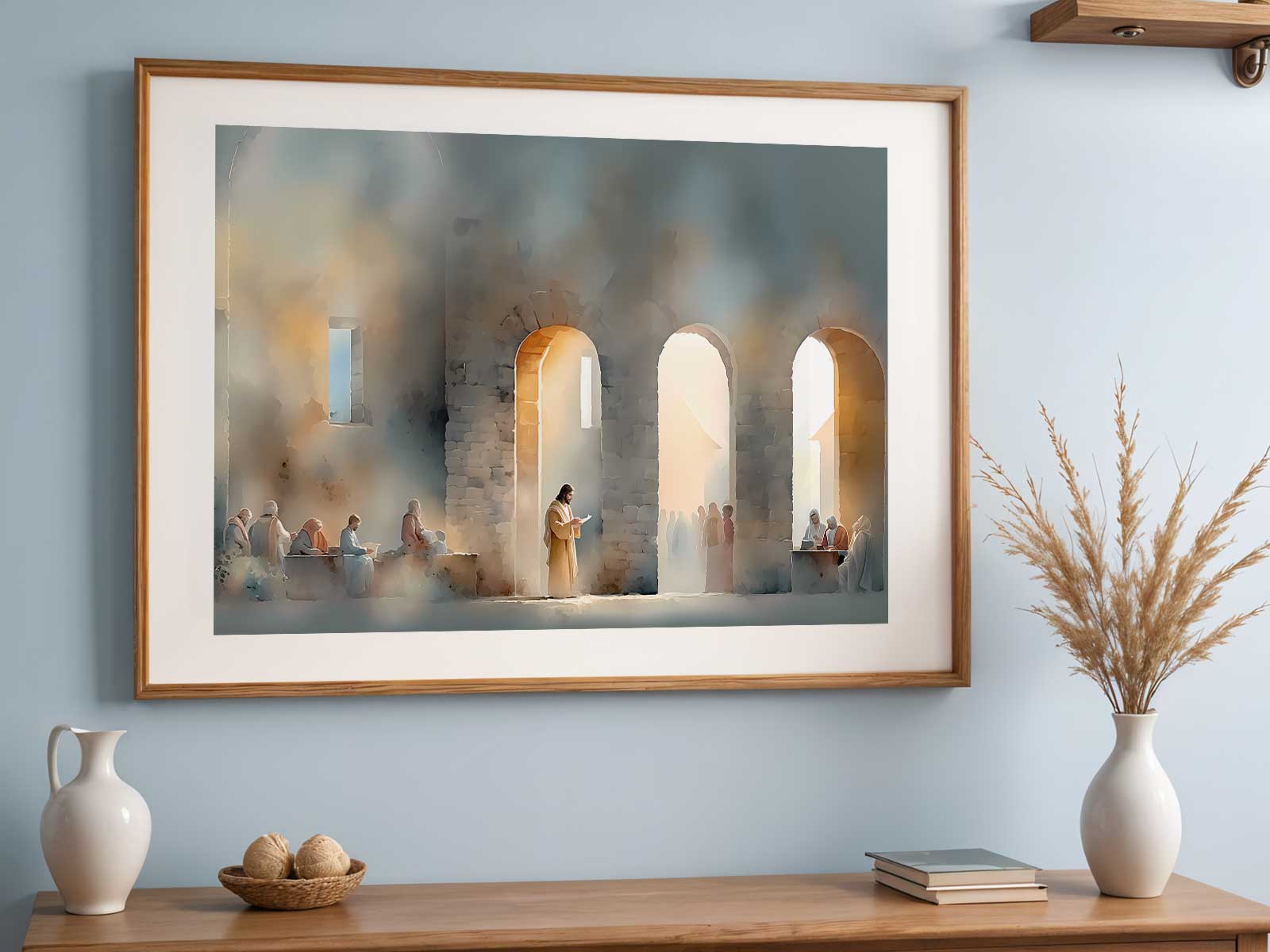
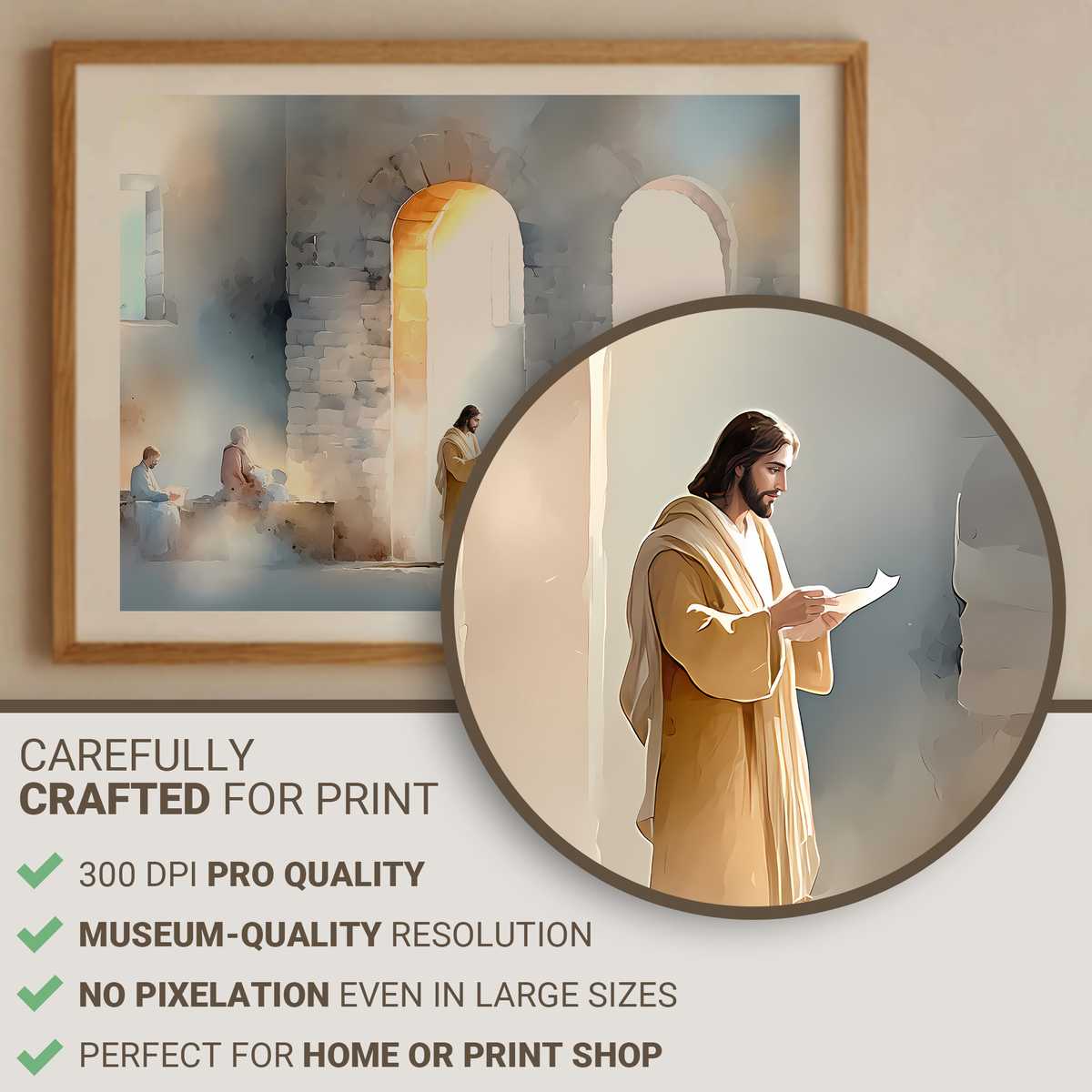
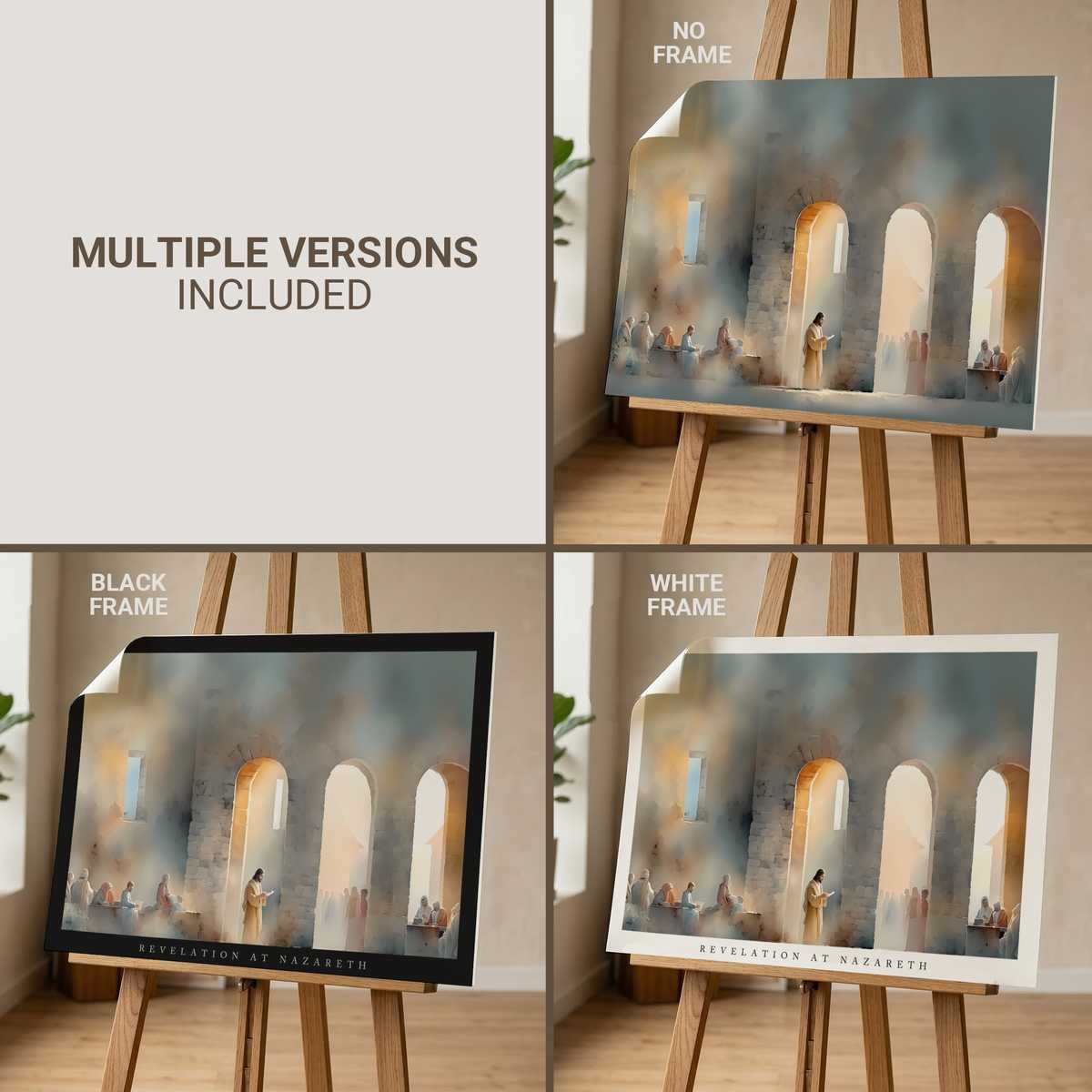
There are images that speak loudly and images that invite silence. This drawing of the revelation at Nazareth and the public announcement of Jesus’ mission belongs to the second kind: a spare composition, economy of line, a face rendered with restraint. In a room intended for prayer, such sobriety is not an absence but a presence—an invitation to draw nearer without the demand of explanation. The piece asks less from the eye and more from the heart, offering a gentle focus point for moments of recollection and ordinary devotion.
Placed above a small shelf, near a simple cross, or opposite a chair where morning prayers begin, the artwork shapes a posture rather than a program. The minimal gestures of the figure and the calm clarity of the design make it possible to glance, breathe, and return to the breath or scripture without distraction. In family homes where many images compete for attention, this drawing preserves a margin of quiet. In a bedroom, it supports the transition between rest and waking with a single, steady presence. In a study or hallway, it signals a sacreded pause within daily movement.
[IMAGE_INSERT_ARTICLE_01]
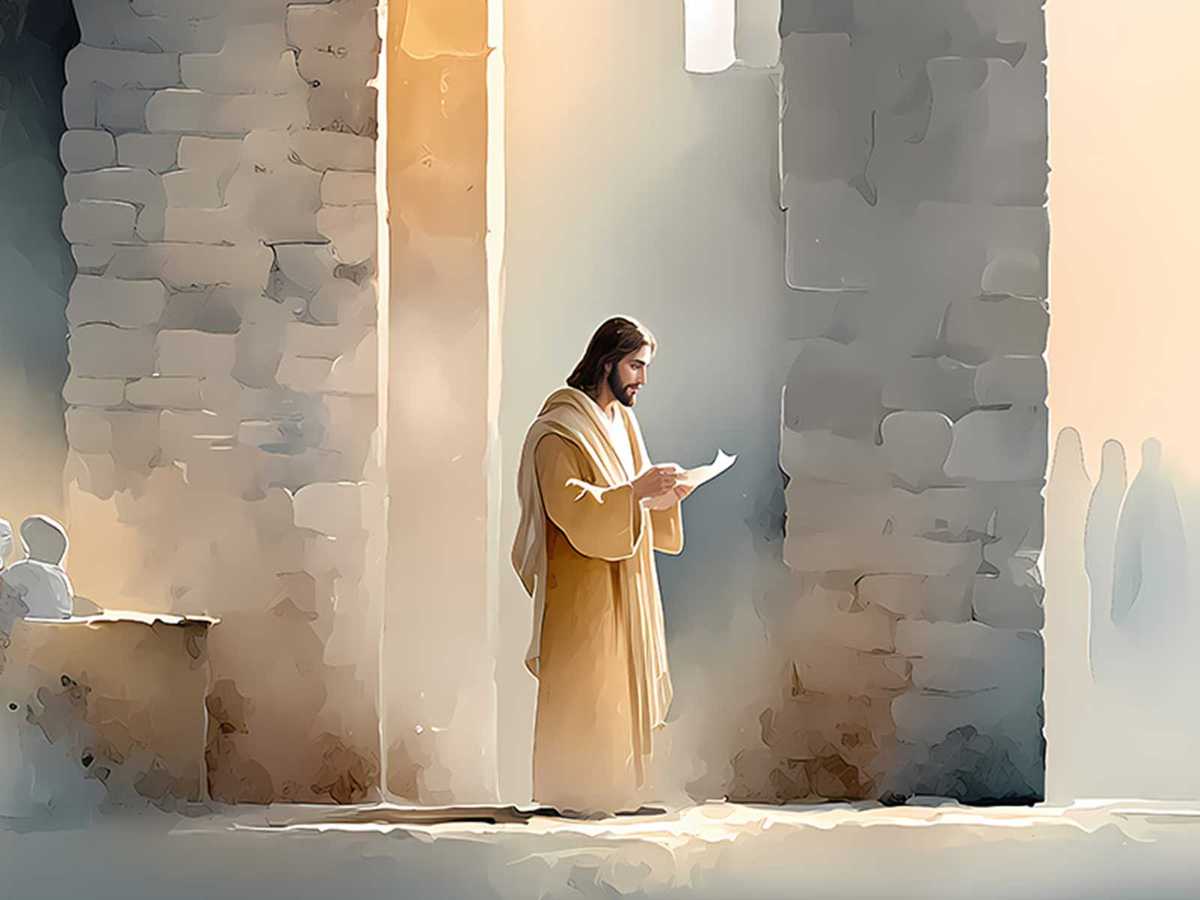
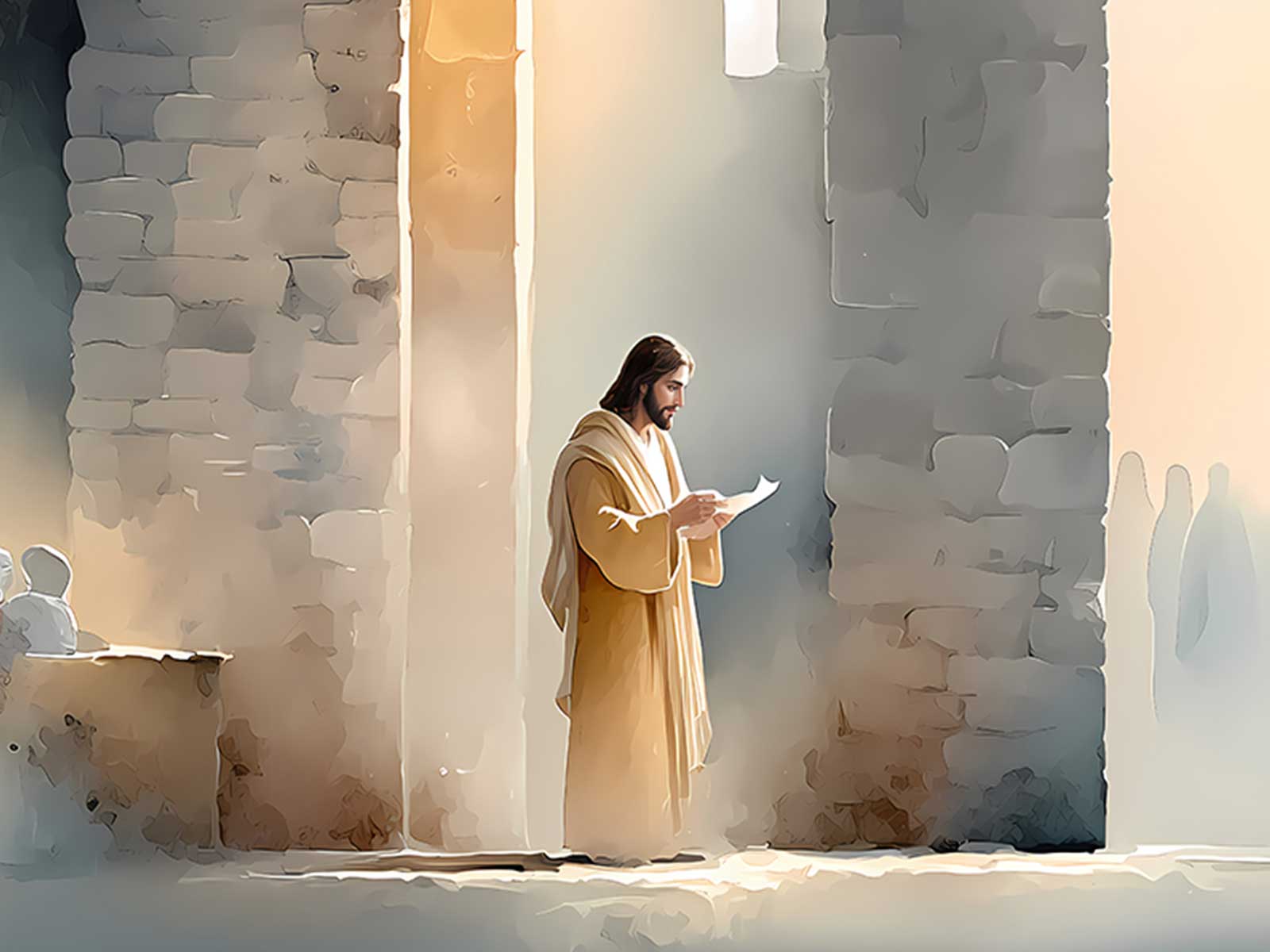
The face in the drawing is intentionally measured: not an exhaustive portrait but a meeting place. A pared-back visage allows the viewer to project prayerful attention rather than be led by expressive detail. That visual modesty fosters intimacy—an impression that Christ is near, accessible, and patient with the smallness of our devotional rhythms. For those who cultivate a habit of short prayers throughout the day, the image works as a gentle bell, a reminder to refocus and breathe into the truth already present in ordinary time.
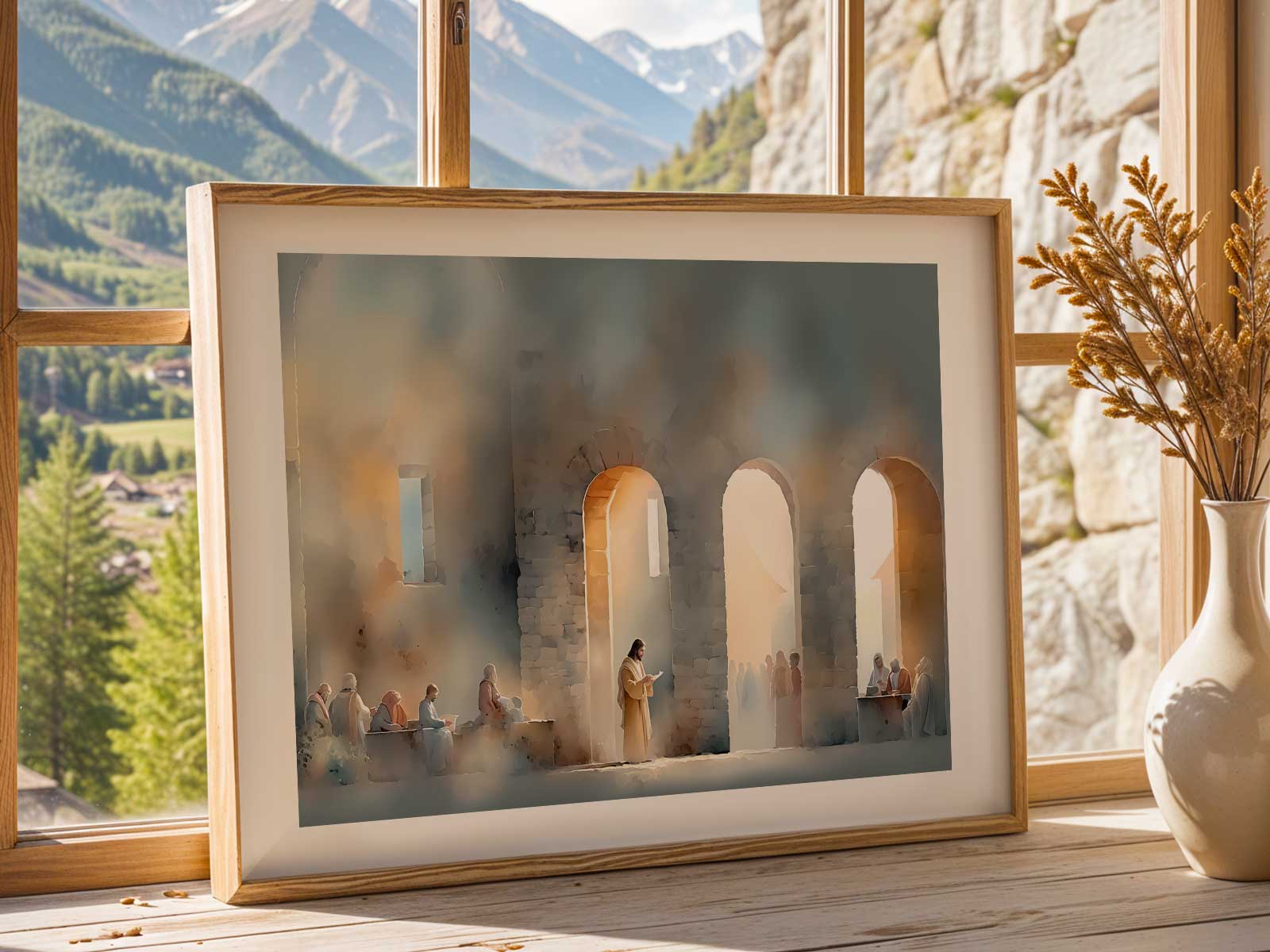
Thoughtful placement matters. Near a lamp that gives soft, warm light after dusk, the print will encourage evening examen and quiet thanksgiving. Positioned in a narrow devotional nook with a Bible and a candle, it will help family members gather quickly, offering a common visual language that respects varied spiritual temperaments. In a home office, the drawing can be a steady counterpoint to urgency—an unobtrusive witness that work, like prayer, finds discipline in simplicity.
Material and scale should support the piece’s intent: a muted frame, neutral matting, and measured dimensions that do not dominate the room. The result is not a museum statement but a domestic companion, one that breathes with the household. Over time, the drawing becomes woven into the rhythm of daily life—silent at first glance, then gradually anchoring memory and habit as prayers are spoken, read, and lived beneath its calm gaze.
Ultimately, this artwork is an aid to recollection rather than a lecture. It helps create a room where the eye can rest and the spirit can turn inward. Whether used in a small prayer corner, a child’s bedside, or along a frequently traveled corridor, it invites repeated, unhurried encounters with the gospel moment it represents. In a home that values quiet attention, the sober line and reserved face offer a faithful companion for the simple work of keeping company with Christ.



 ↧ Digital download
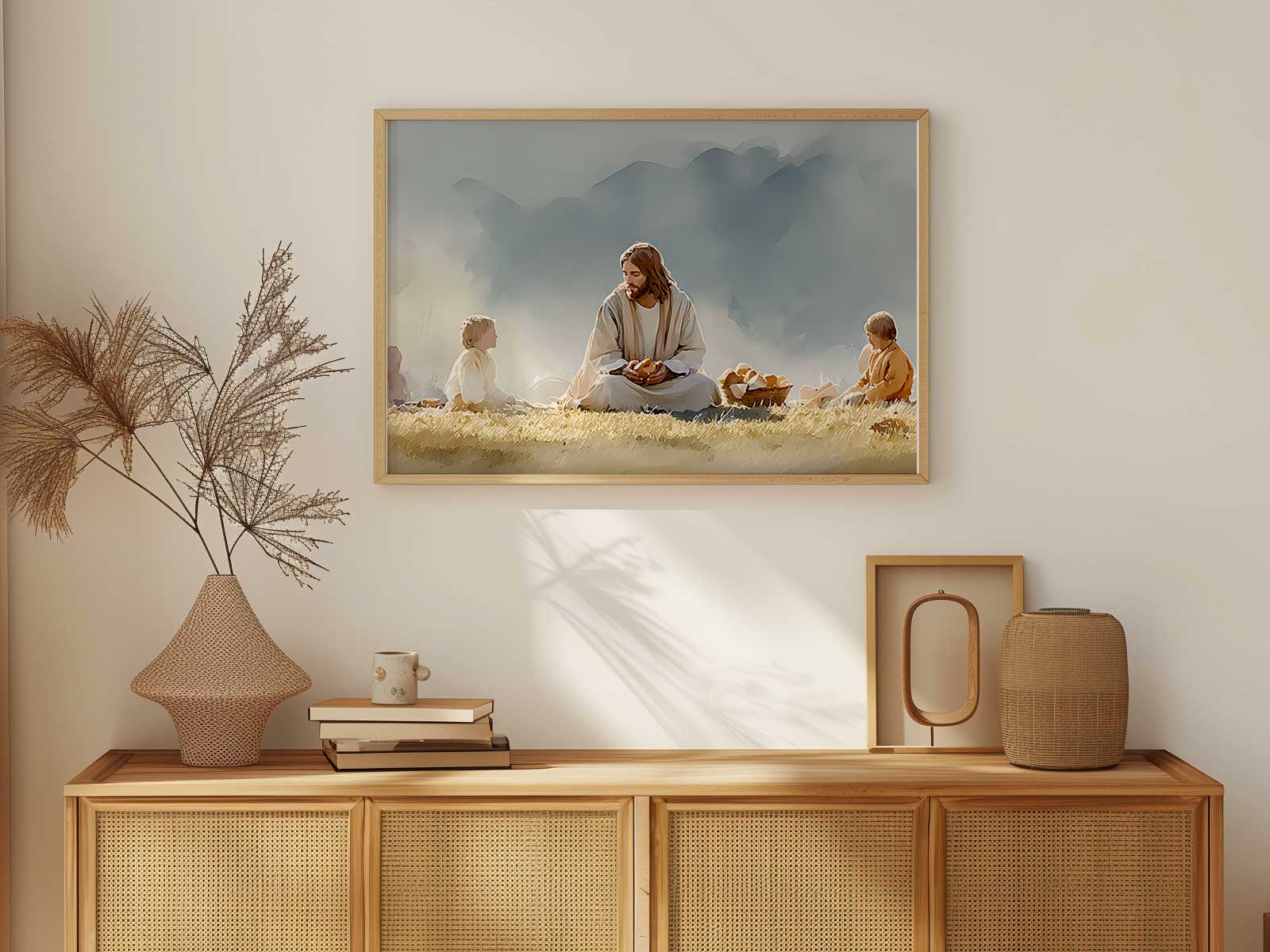
Christian Wall Art: Feeding the Five Thousand and Trust in Providence
Digital download
↧ Digital download
Christian Wall Art: Feeding the Five Thousand and Trust in Providence
Digital download
 ↧ Digital download
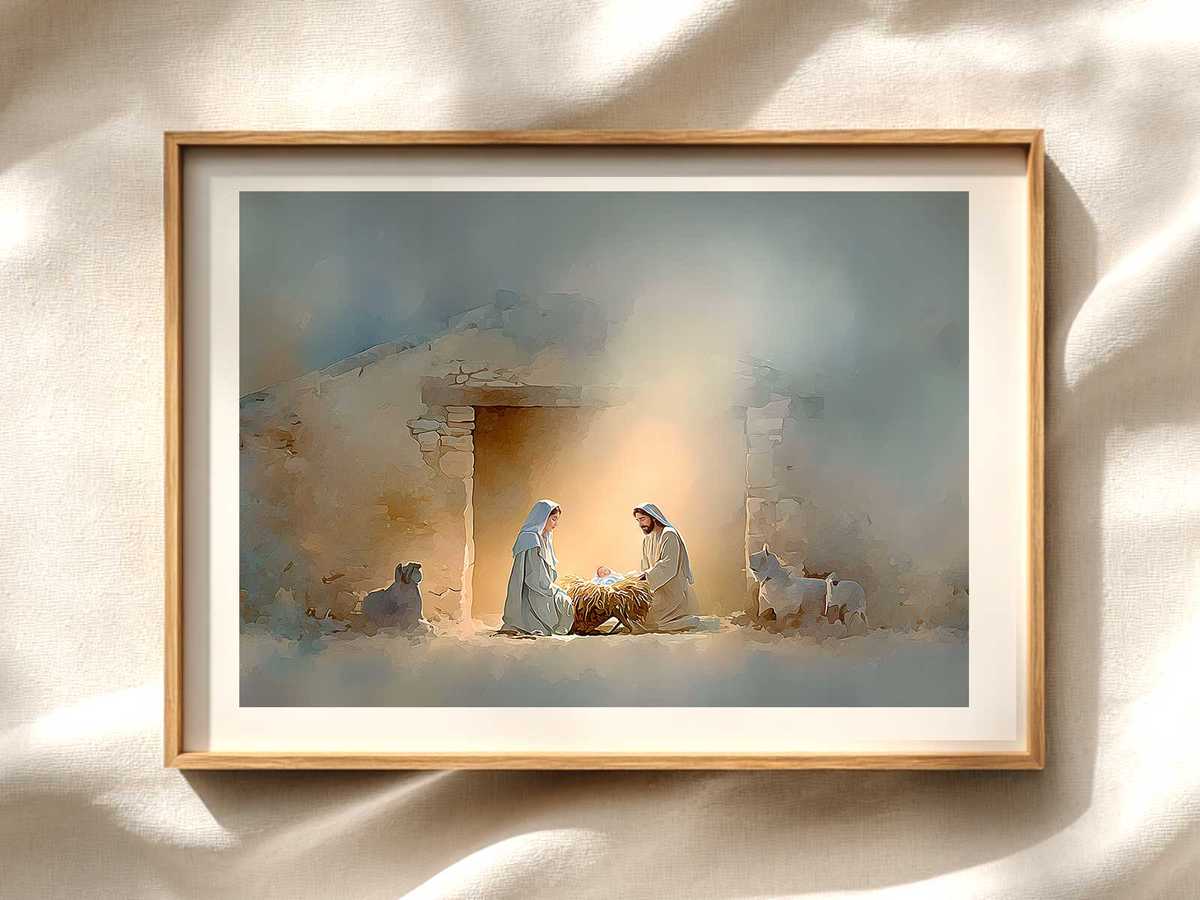
Earliest Painting of Jesus: The Nativity’s Quiet Thread Through...
Digital download
↧ Digital download
Earliest Painting of Jesus: The Nativity’s Quiet Thread Through...
Digital download
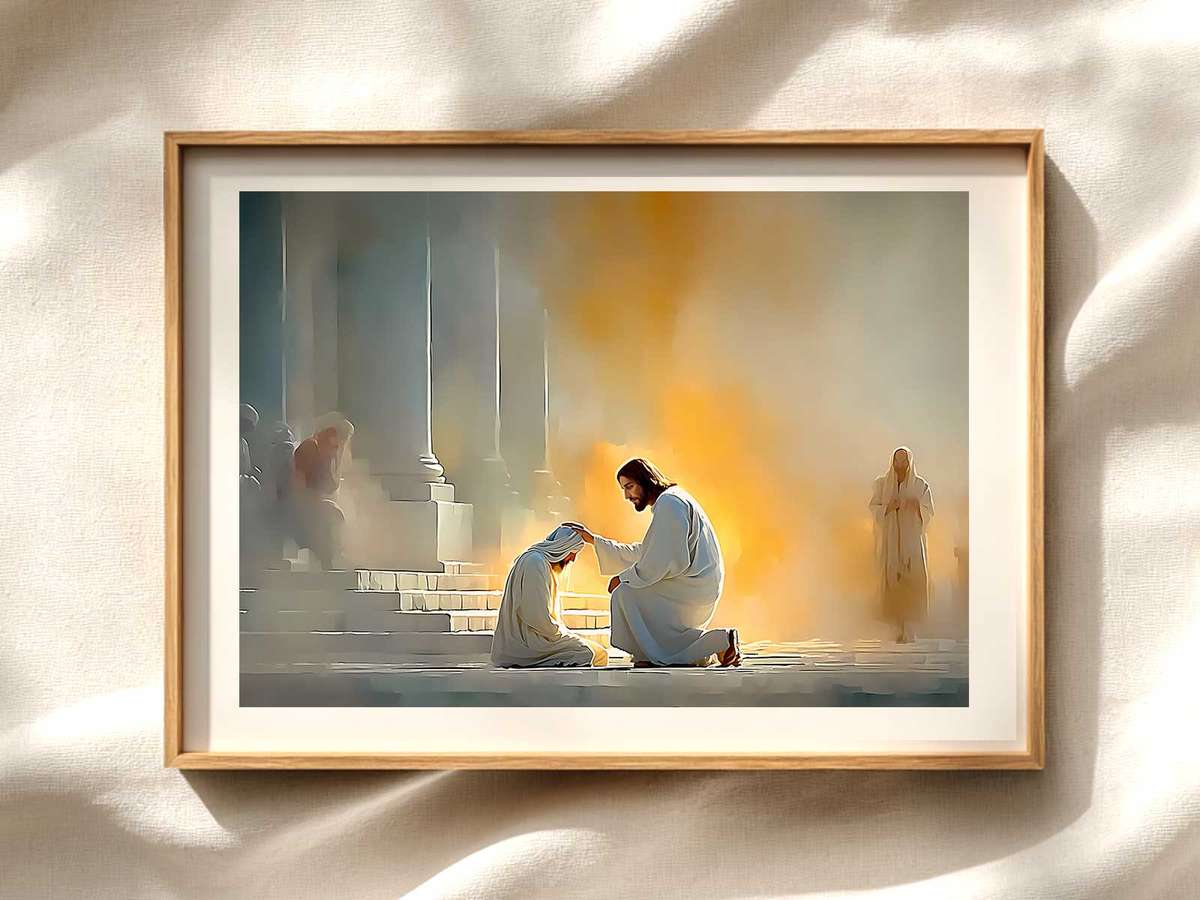 ↧ Digital download
Christian wall art — Healing, Light, and Quiet: Using the Johannine...
Digital download
↧ Digital download
Christian wall art — Healing, Light, and Quiet: Using the Johannine...
Digital download
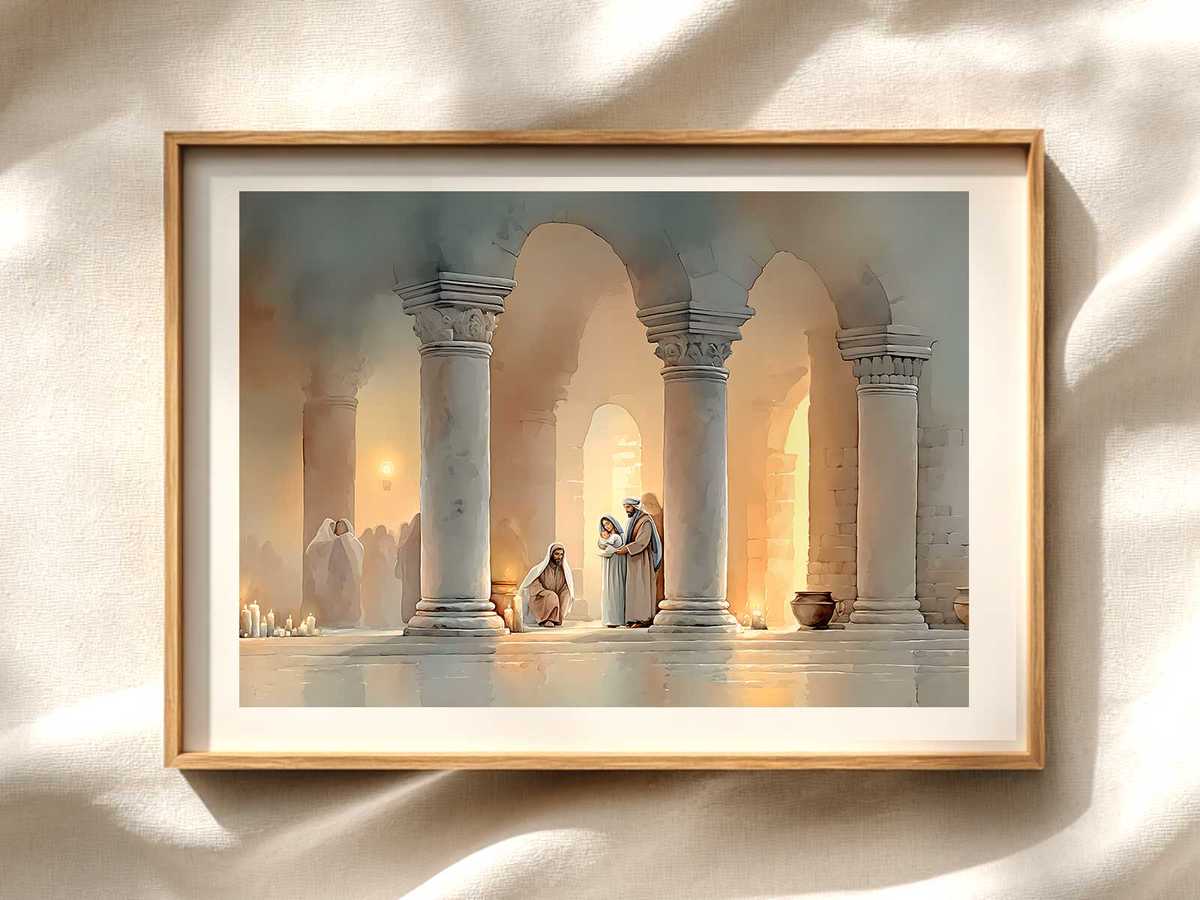 ↧ Digital download
The Christ Child in the Temple: A Sacred wall art for Quiet Home...
Digital download
↧ Digital download
The Christ Child in the Temple: A Sacred wall art for Quiet Home...
Digital download