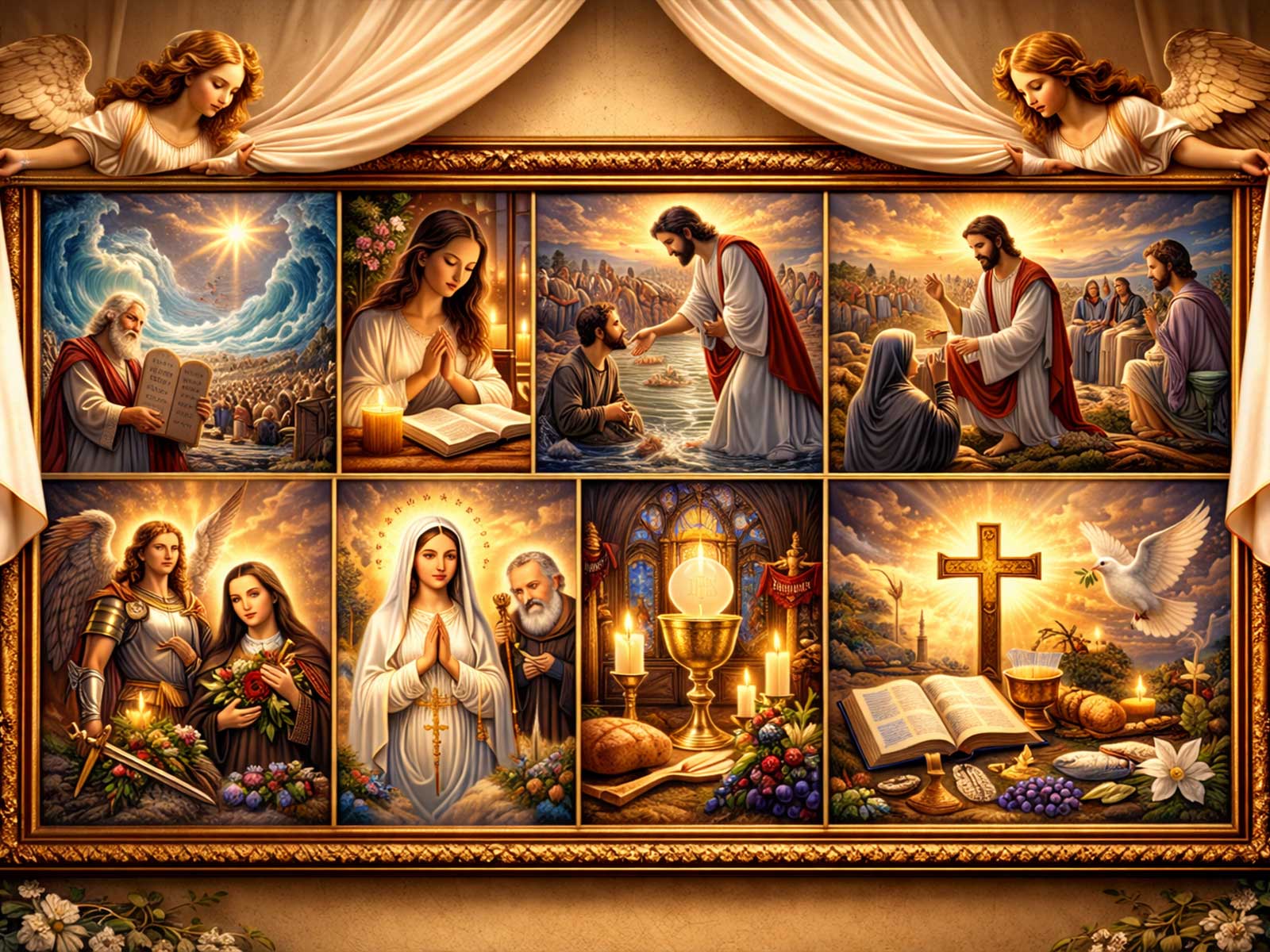
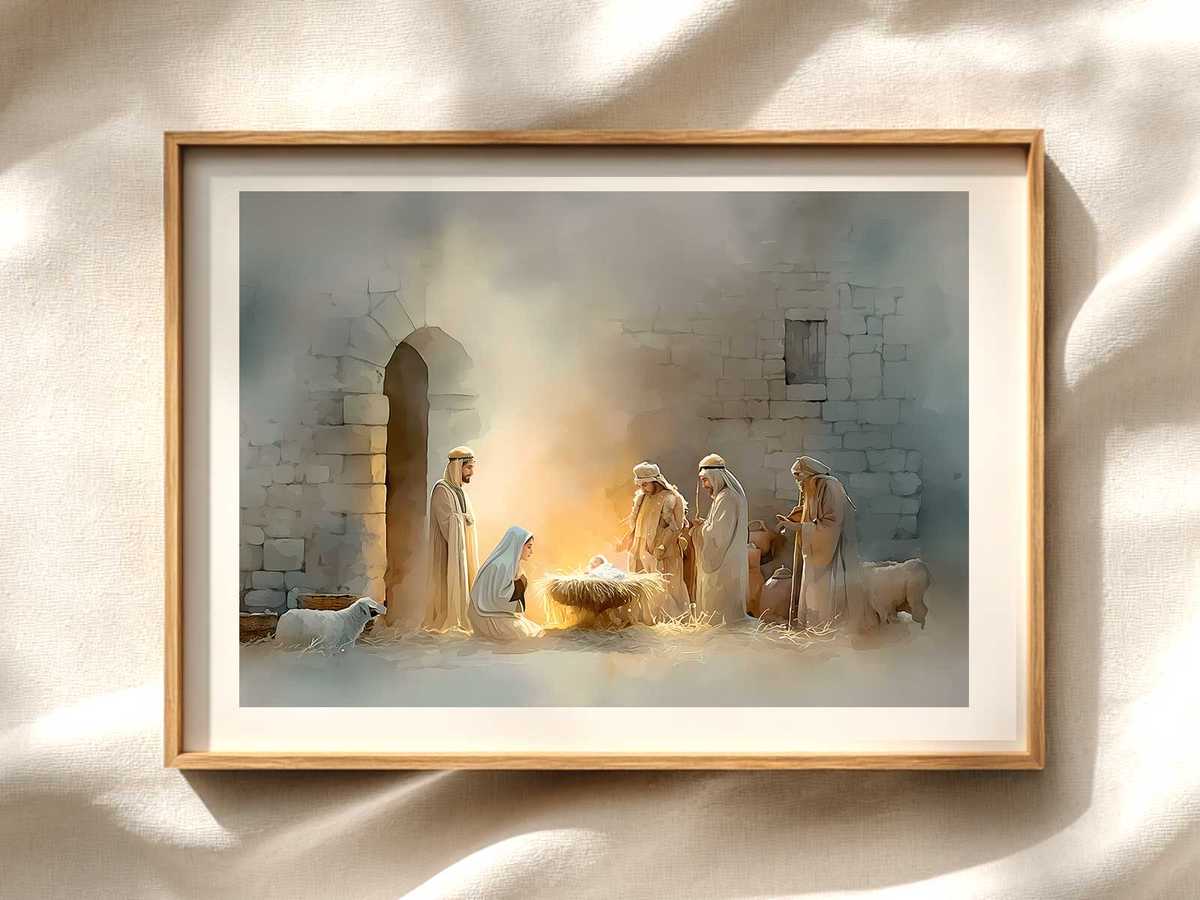
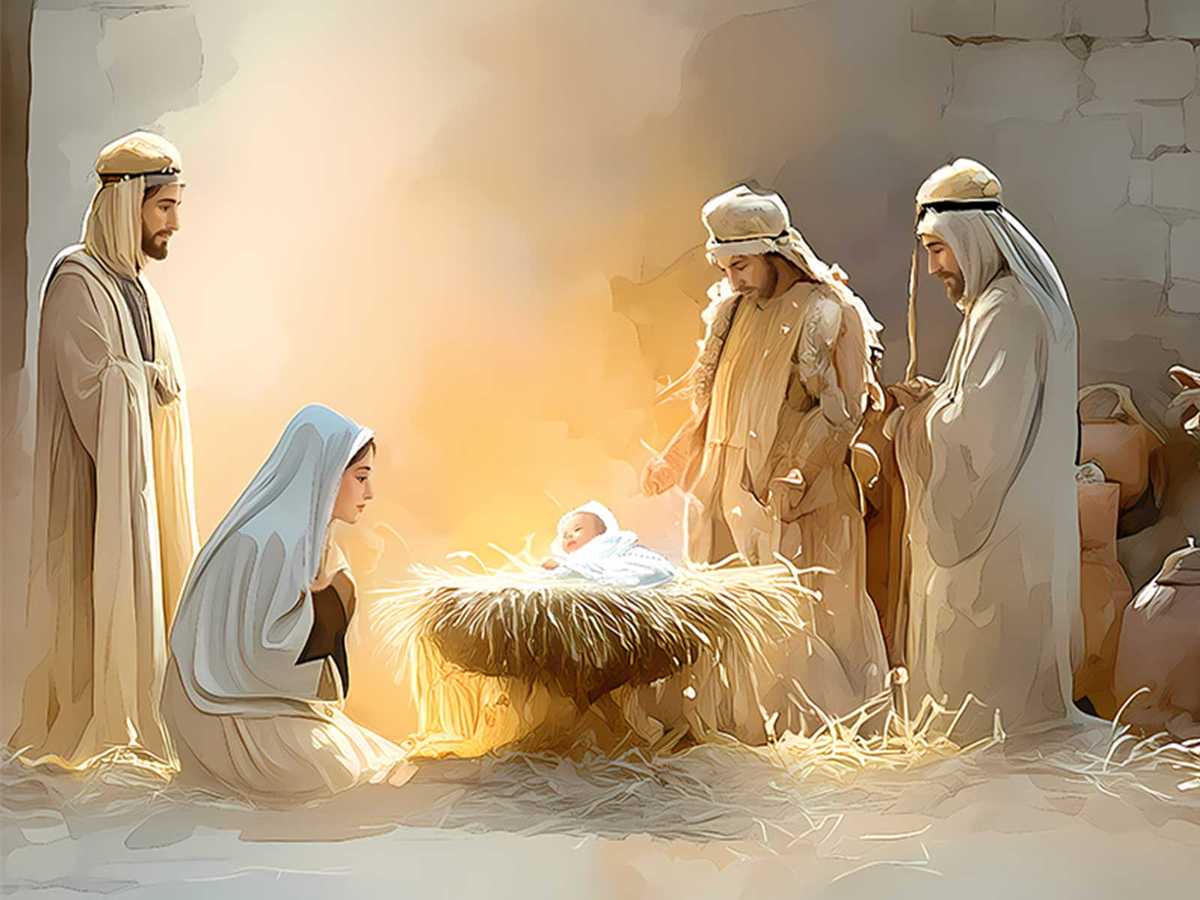
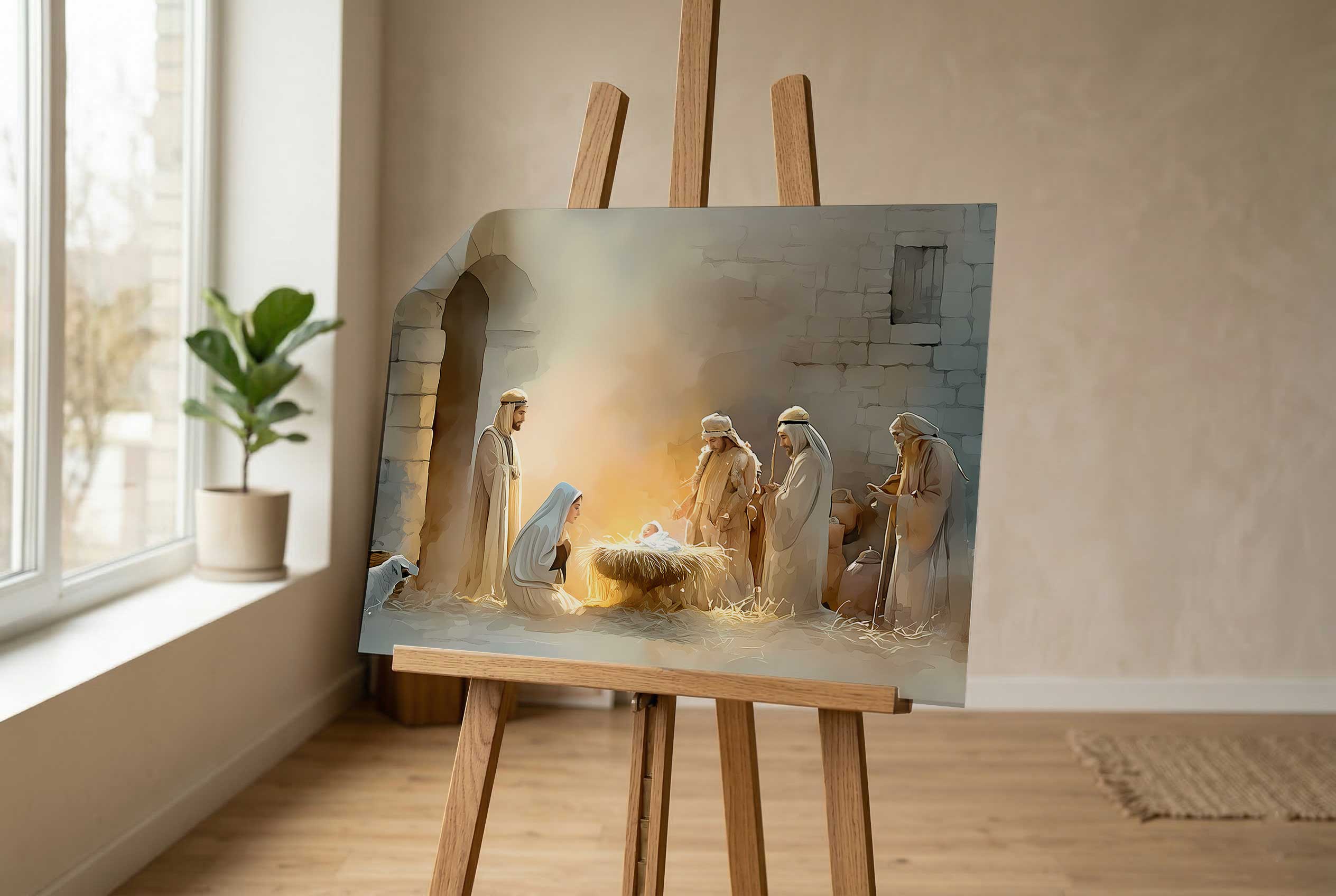
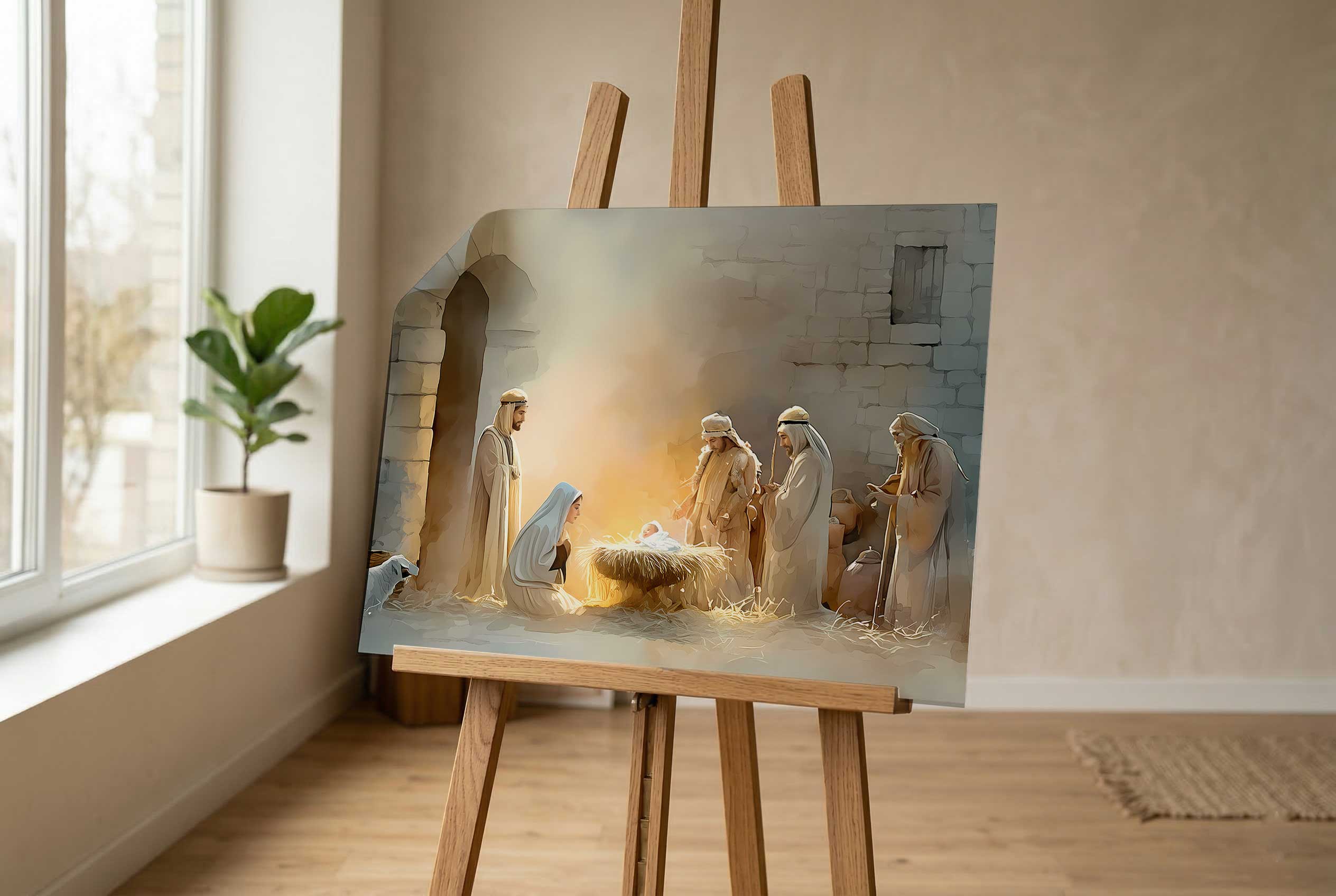
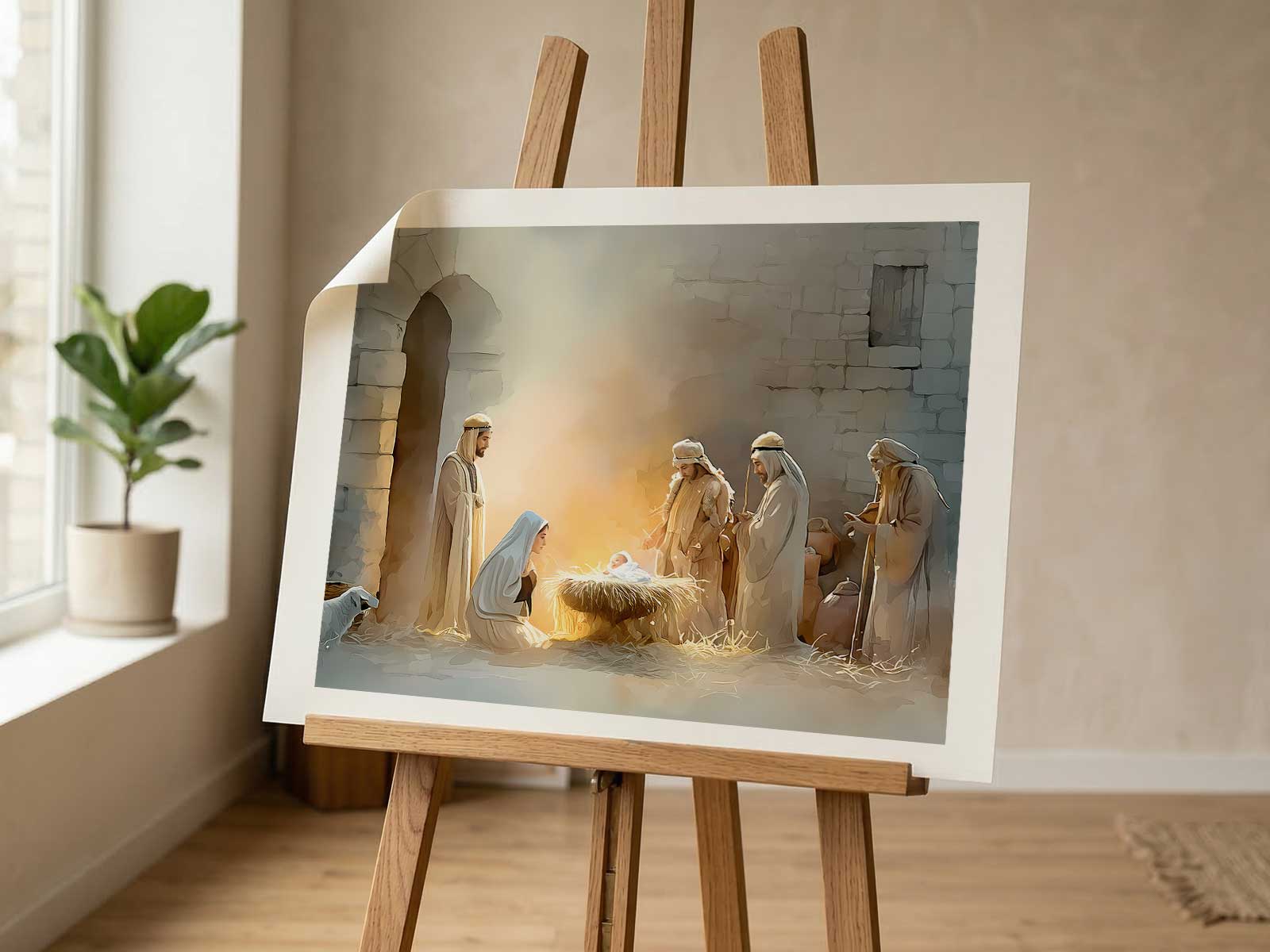
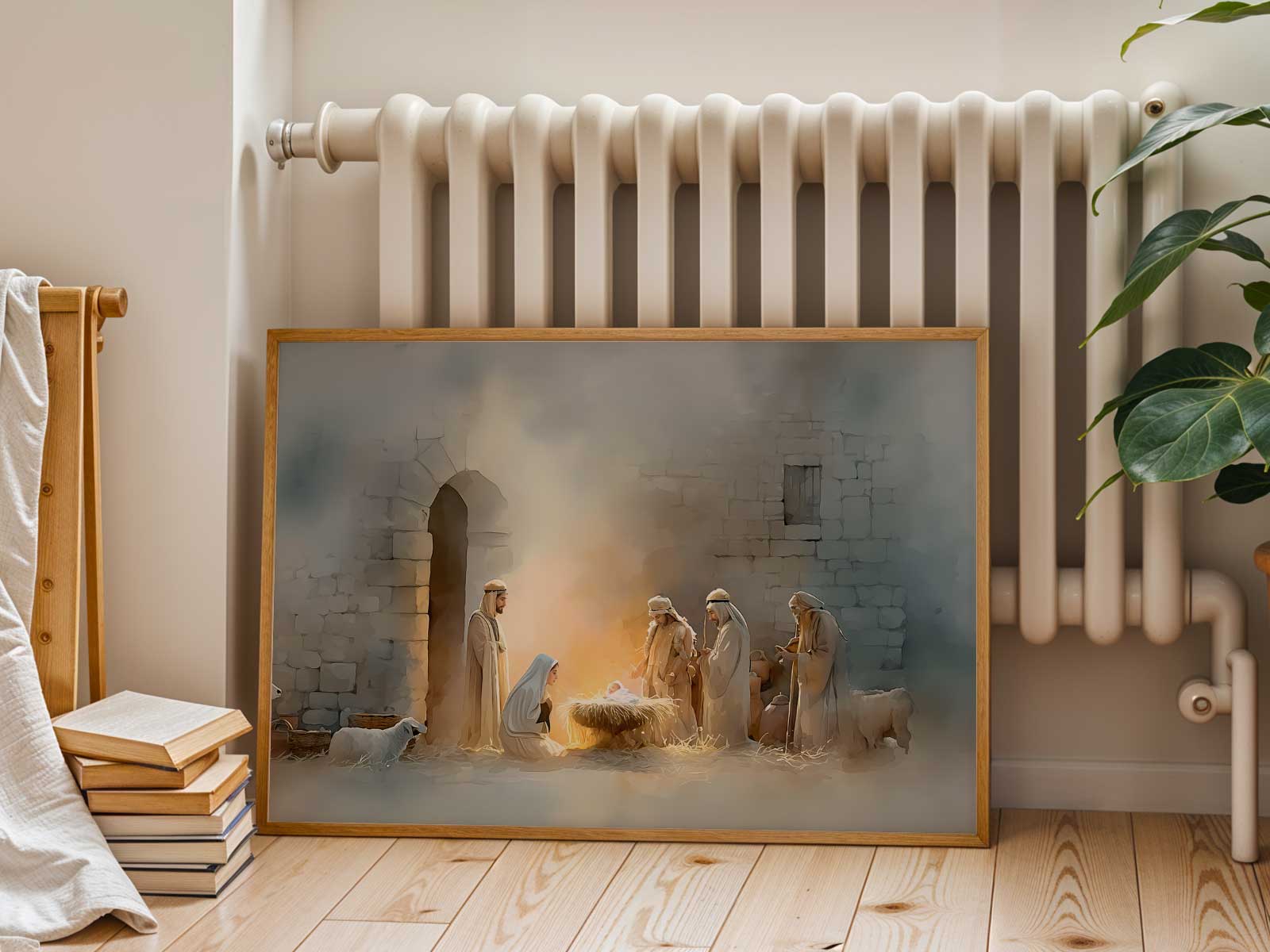
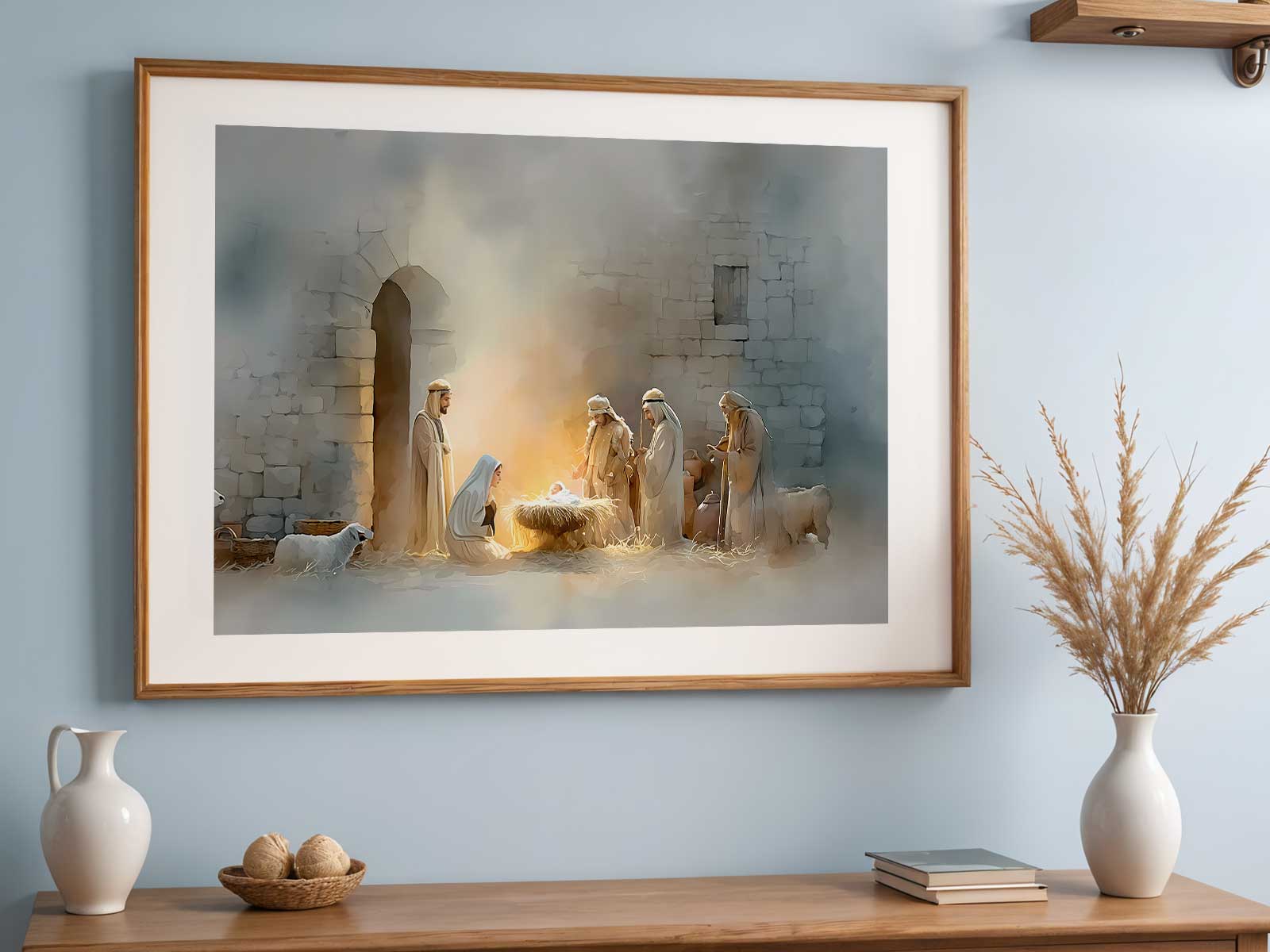
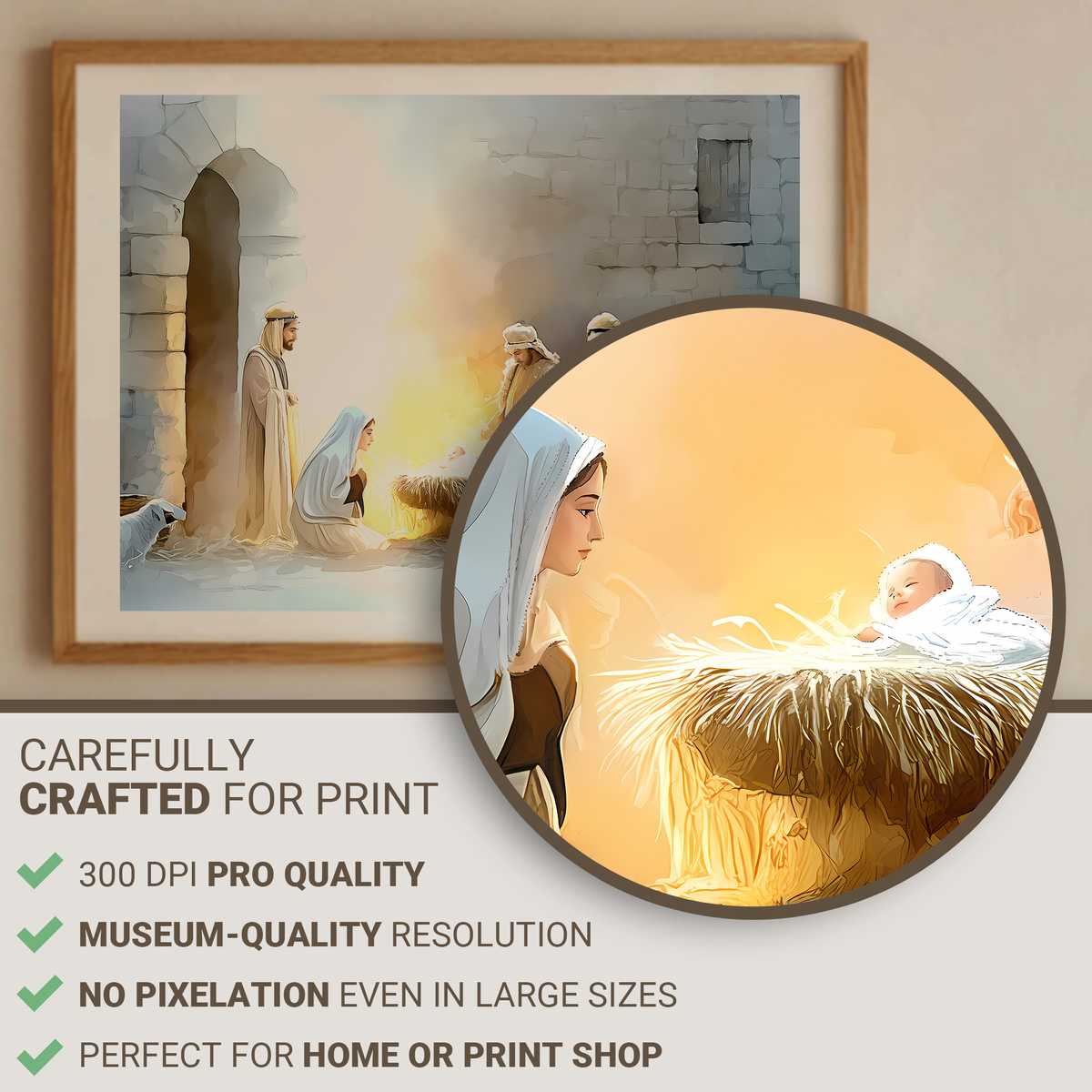
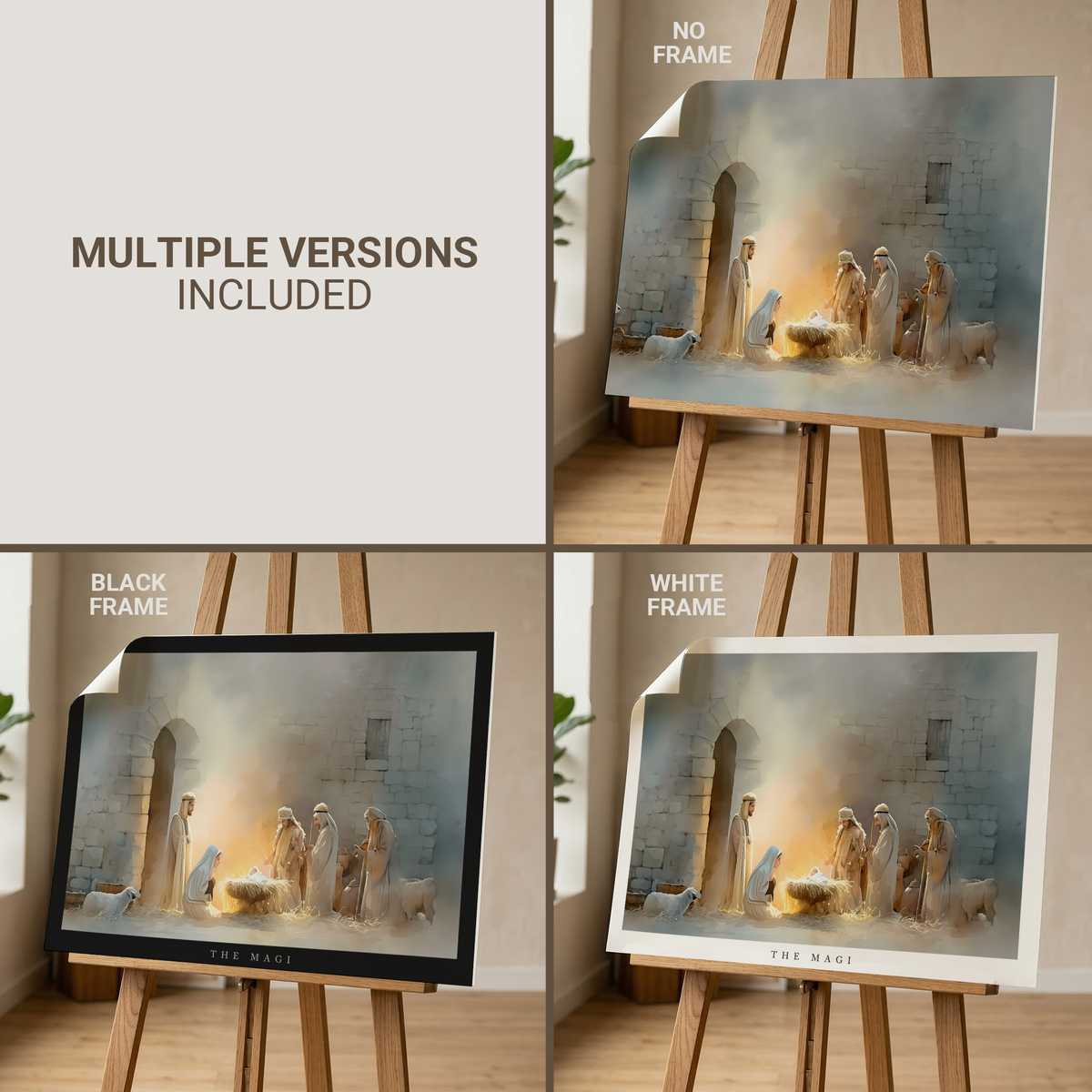
There is a calm authority in a traditional depiction of the Magi bowing before the Christ child that goes beyond motif or moment. Rendered in the hush of softened pigments and the gentle patina of an aged canvas, the scene functions as a vessel for memory and continuity. It invites daily recognition: a reminder that the worship described in the Gospels became, in the Christian imagination, a meeting between nations and the infant King. On a large canvas, this story settles into a room with a presence that is both domestic and liturgical, bearing witness without loud insistence.
What makes such an image resonate in a living space is not simply antiquarian charm but the way its visual language carries faith forward. Familiar compositional cues—the adoring gestures, the lowered crowns, the attentive light falling on the Christ figure—work like a visual liturgy, rehearsing a theology of recognition rather than explaining it. The canvas format gives breathing room to that ritual seeing: scale and texture allow the eye to rest and return, to remember the story as one remembers a cherished prayer or a line of Scripture repeated across seasons.
In a hallway, study, or prayer corner, a generously sized canvas becomes a domestic altar of sorts, a steadying presence that informs household life without overpowering it. The quiet restraint of traditional palette and measured composition encourages contemplation: the painted folds, the subdued golds and deep blues, the softened edges worn as if by time itself. These aspects suggest continuity—an unbroken thread of devotion that links the present household to generations who have known the same narrative through images, hymns, and family prayer.
[IMAGE_INSERT_ARTICLE_01]
The emotional weight of such a piece is not built on novelty but on rootedness. It offers an heirloom quality: an object meant to be seen often, to darken slightly with sun and soften with touch, to gather the patina of family life. This is why traditional devotional art can feel like a member of the home rather than merely decoration. The Magi’s recognition of Christ as King speaks to a universal turning toward the sacred, and when translated into canvas it reads as an invitation for households to pause, to remember who they are and what they cherish.
Placed above a mantel, beside a reading chair, or opposite the table where family meals are shared, the canvas holds its place with dignity. It does not demand theological precision; it offers instead a space for memory and prayer to deepen. Children grow up tracing the gestures in paint, guests notice the serenity of the scene, and the quiet repetition of seeing the image across seasons fosters a lived continuity of belief. The traditional visual vocabulary—dignified posture, attentive light, and restrained ornament—helps sustain a domestic spirituality that is neither private nor theatrical but quietly communal.
In choosing a Christian canvas wall art that evokes the adoration of the Magi, one chooses a companion for domestic devotion: an image that carries the soft authority of tradition, the tenderness of visual memory, and the steady comfort of a spiritual presence. Such a canvas does not seek to astonish; it seeks to remain, to invite slow looking, and to bless the ordinary spaces where faith is practiced in the small, repeated acts of everyday life.



 ↧ Digital download
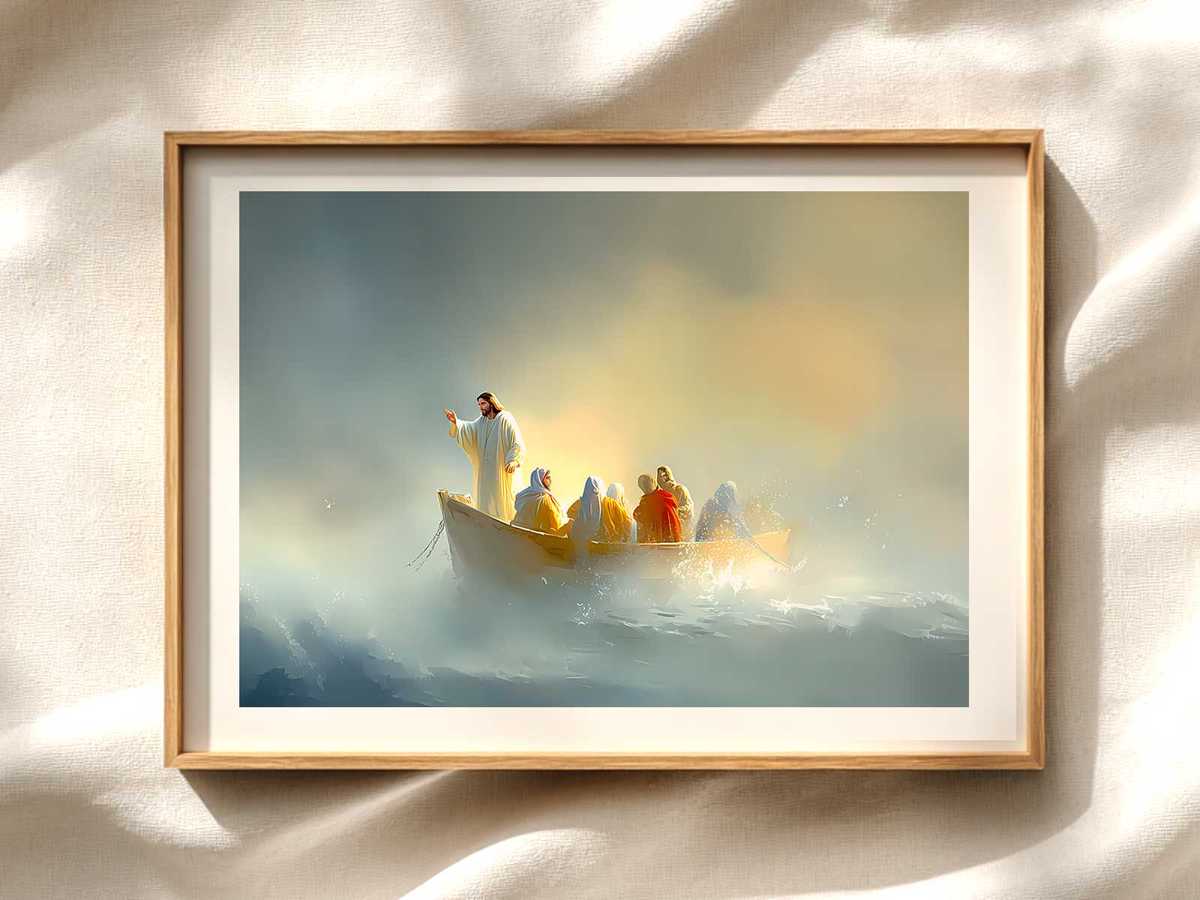
Jesus Art: The Stilled Storm — A Quiet Icon of Christ’s Gentle...
Digital download
↧ Digital download
Jesus Art: The Stilled Storm — A Quiet Icon of Christ’s Gentle...
Digital download
 ↧ Digital download
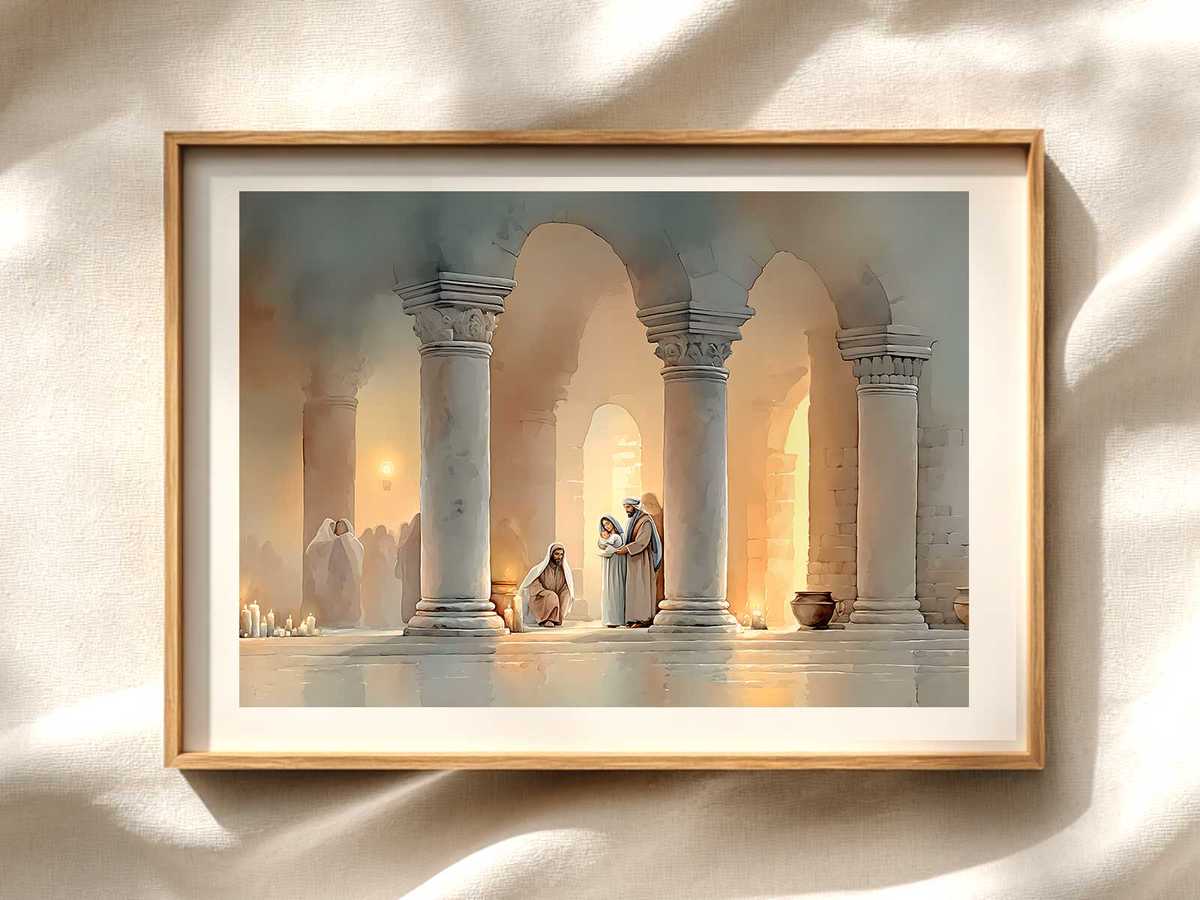
The Christ Child in the Temple: A Sacred wall art for Quiet Home...
Digital download
↧ Digital download
The Christ Child in the Temple: A Sacred wall art for Quiet Home...
Digital download
 ↧ Digital download
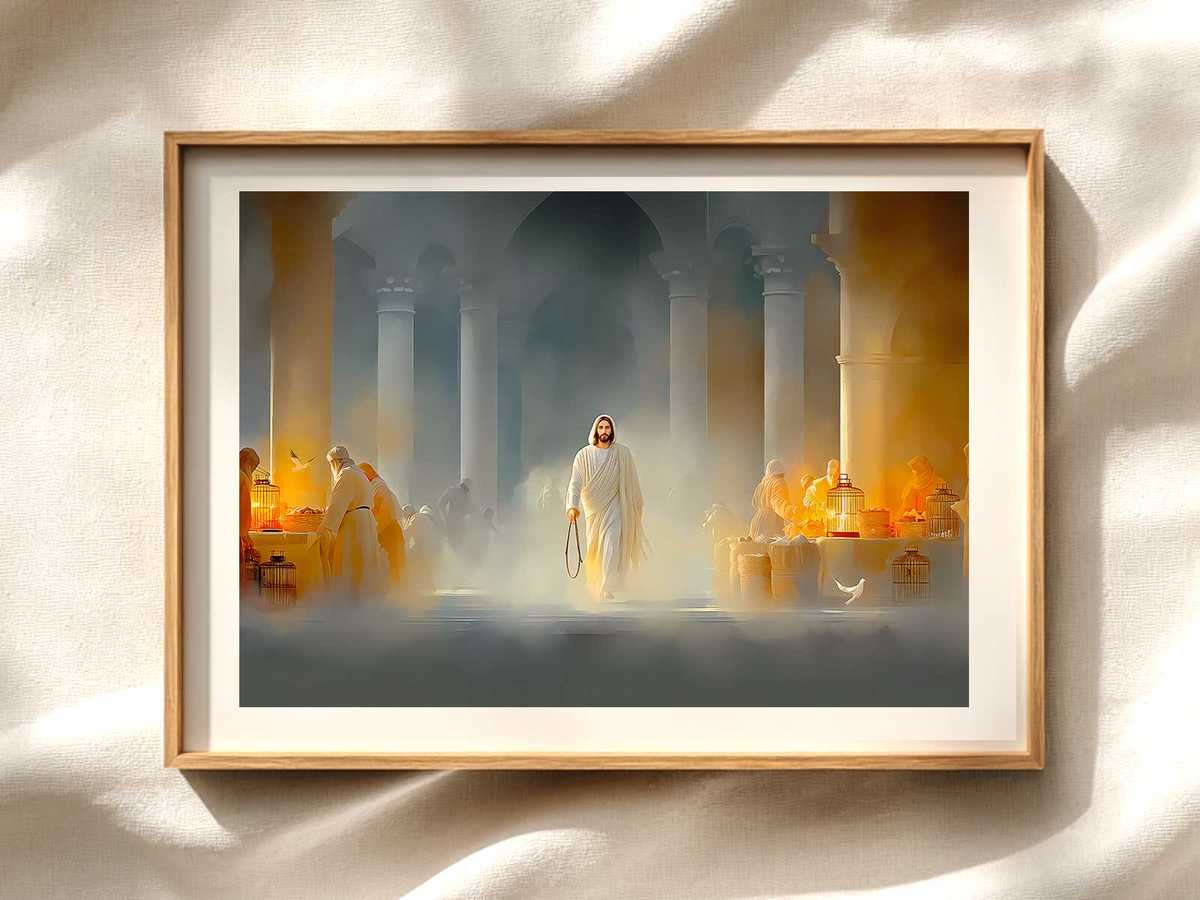
Drawings of Jesus Christ Print: The Purification of the Temple...
Digital download
↧ Digital download
Drawings of Jesus Christ Print: The Purification of the Temple...
Digital download
 ↧ Digital download
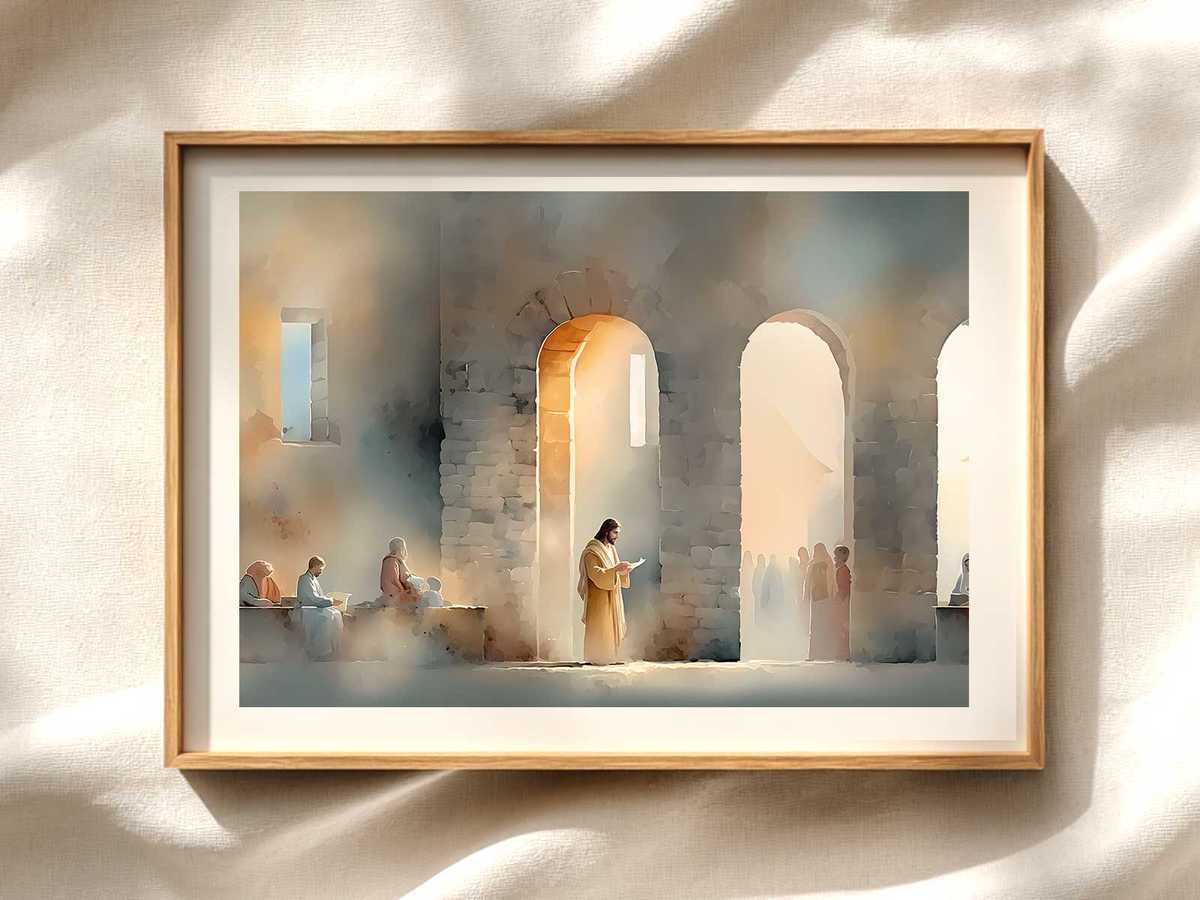
Drawings of Jesus Christ: A Quiet wall art of Nazareth and the Call...
Digital download
↧ Digital download
Drawings of Jesus Christ: A Quiet wall art of Nazareth and the Call...
Digital download