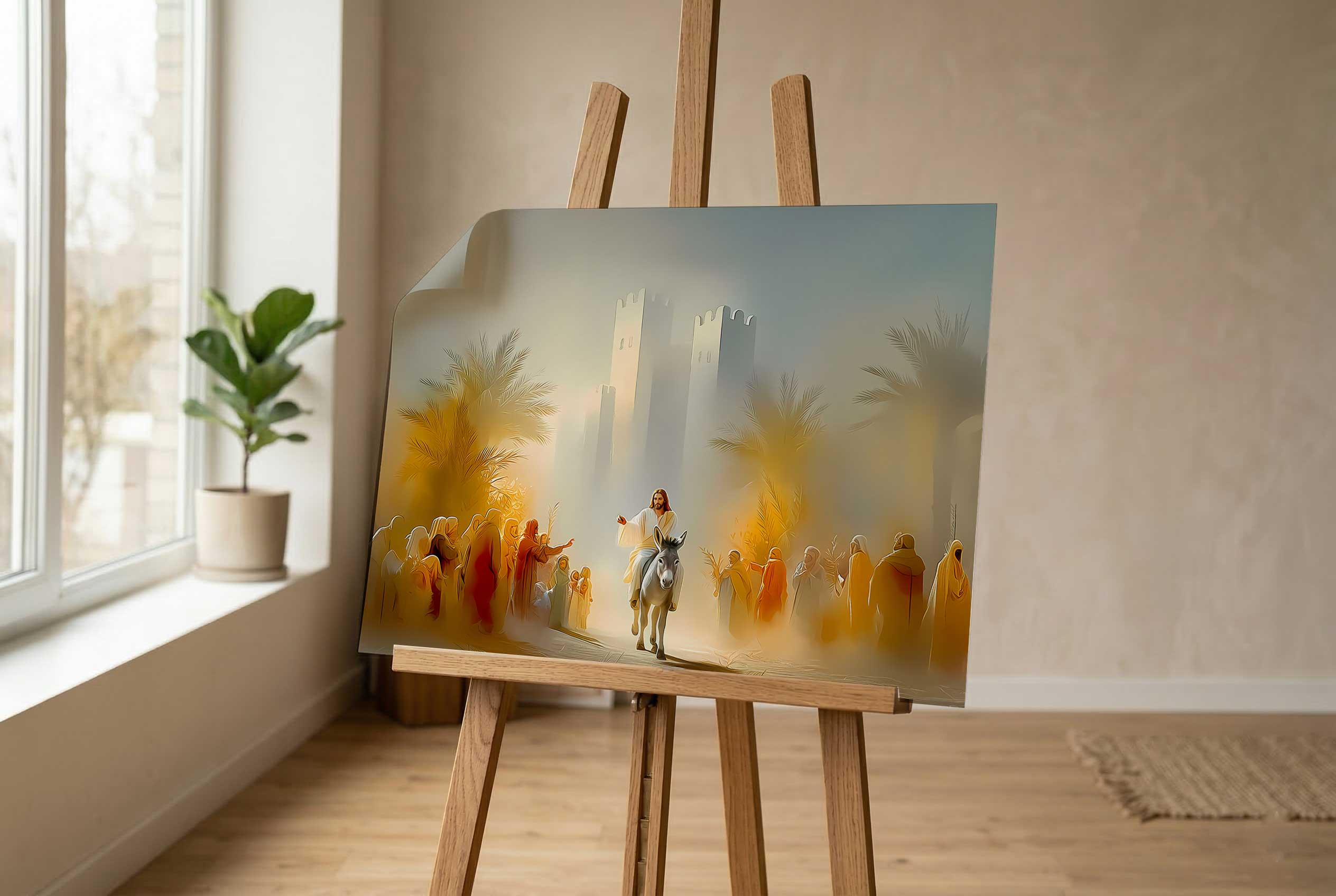
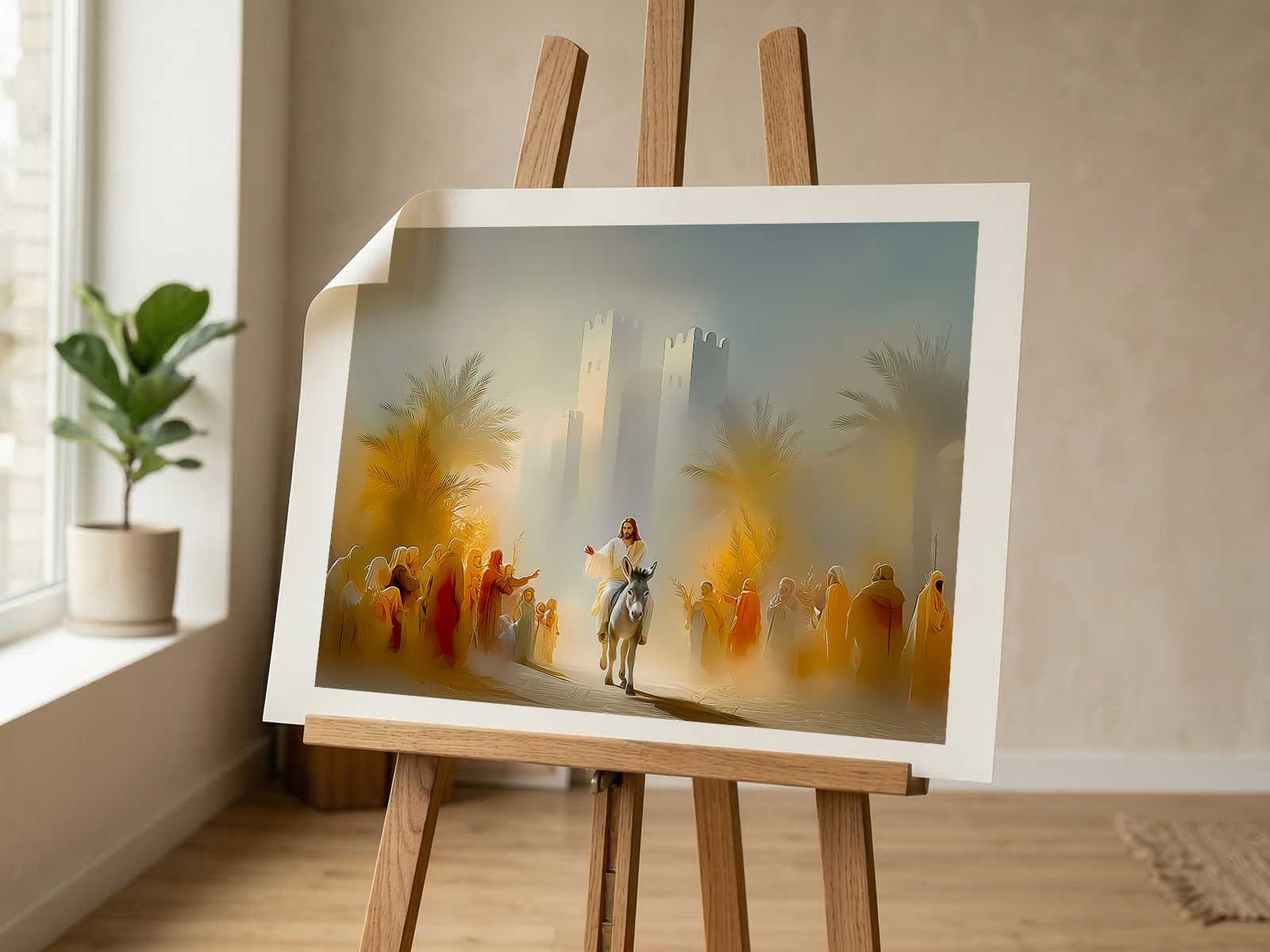
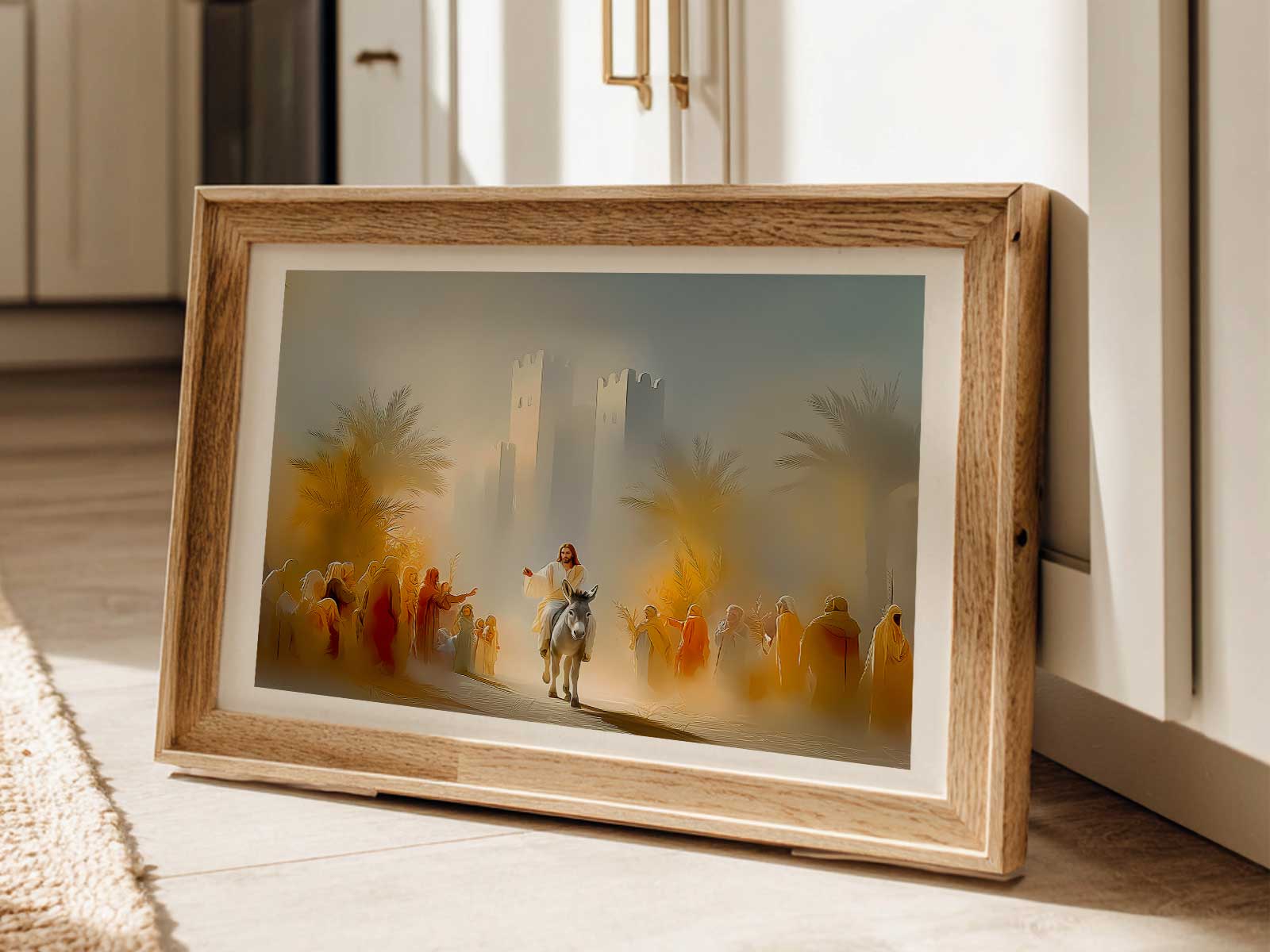
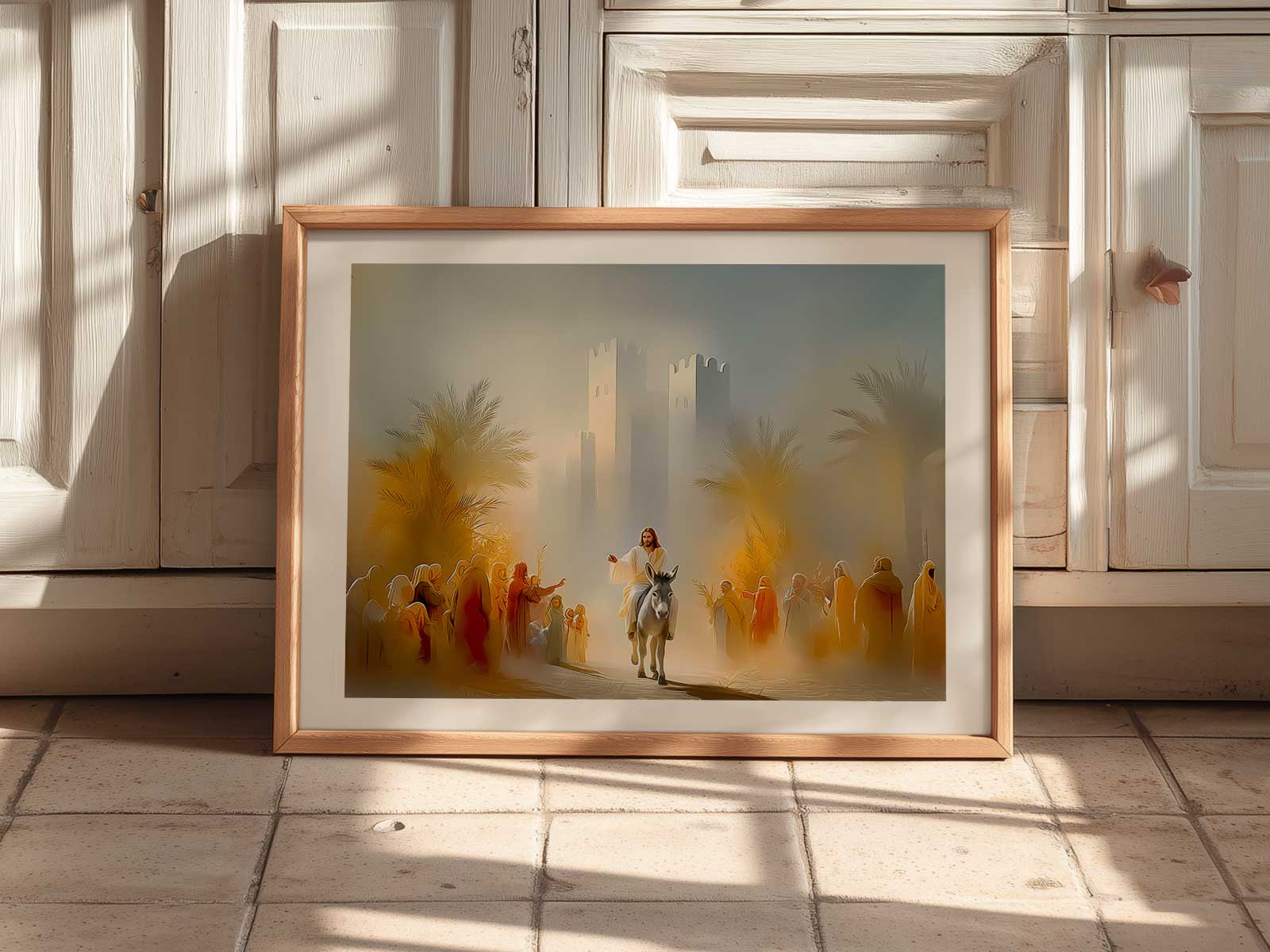
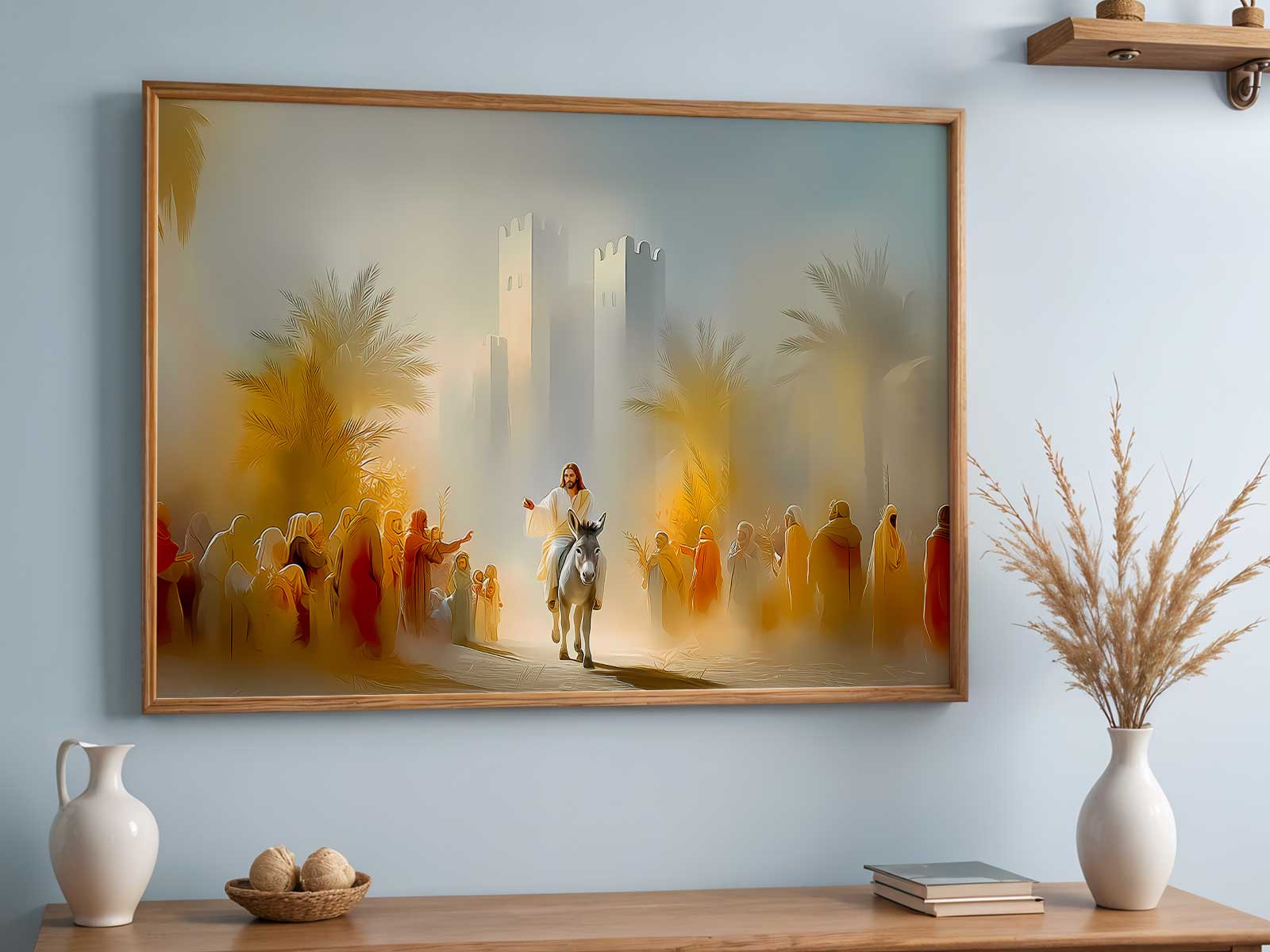
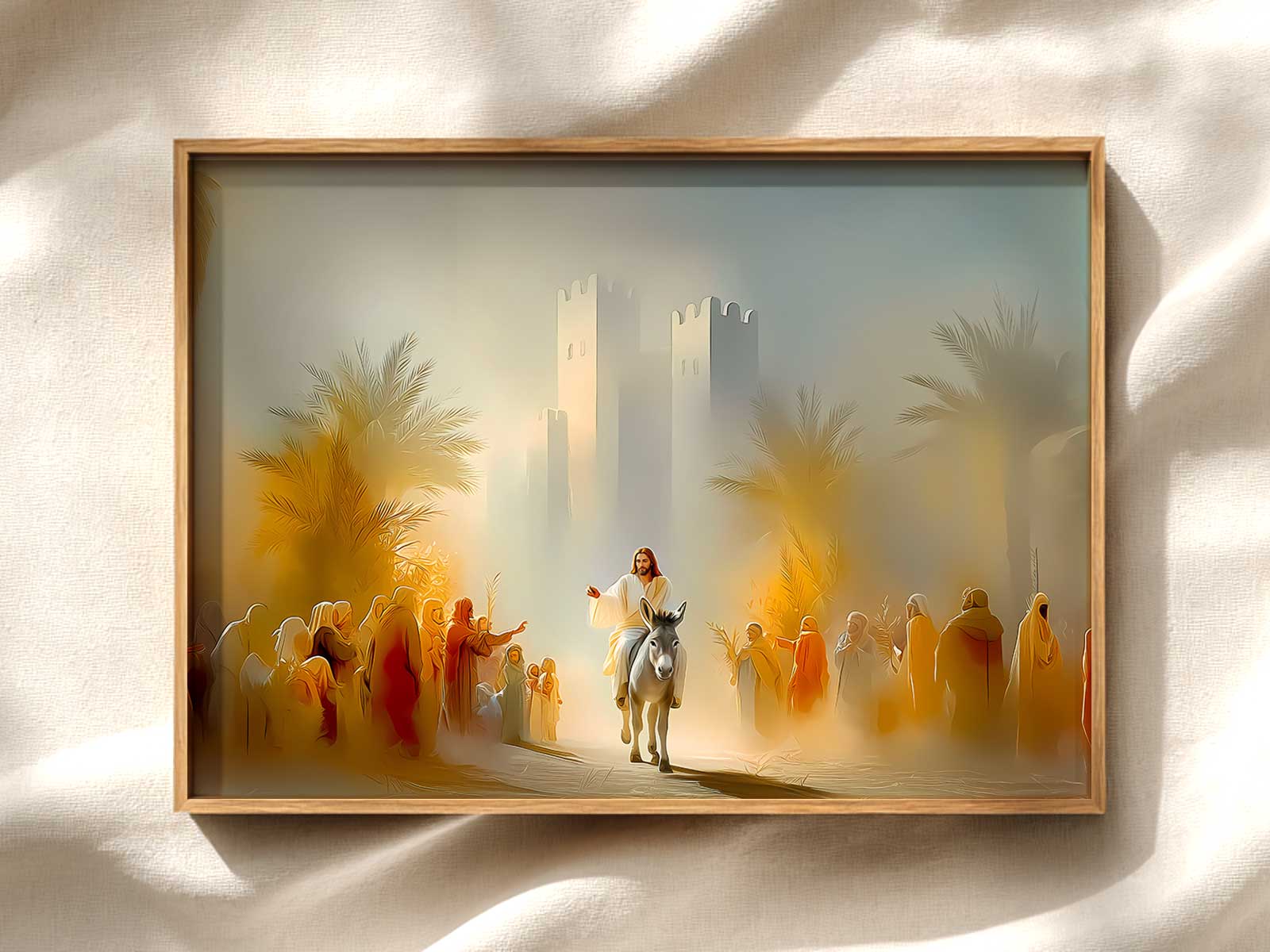
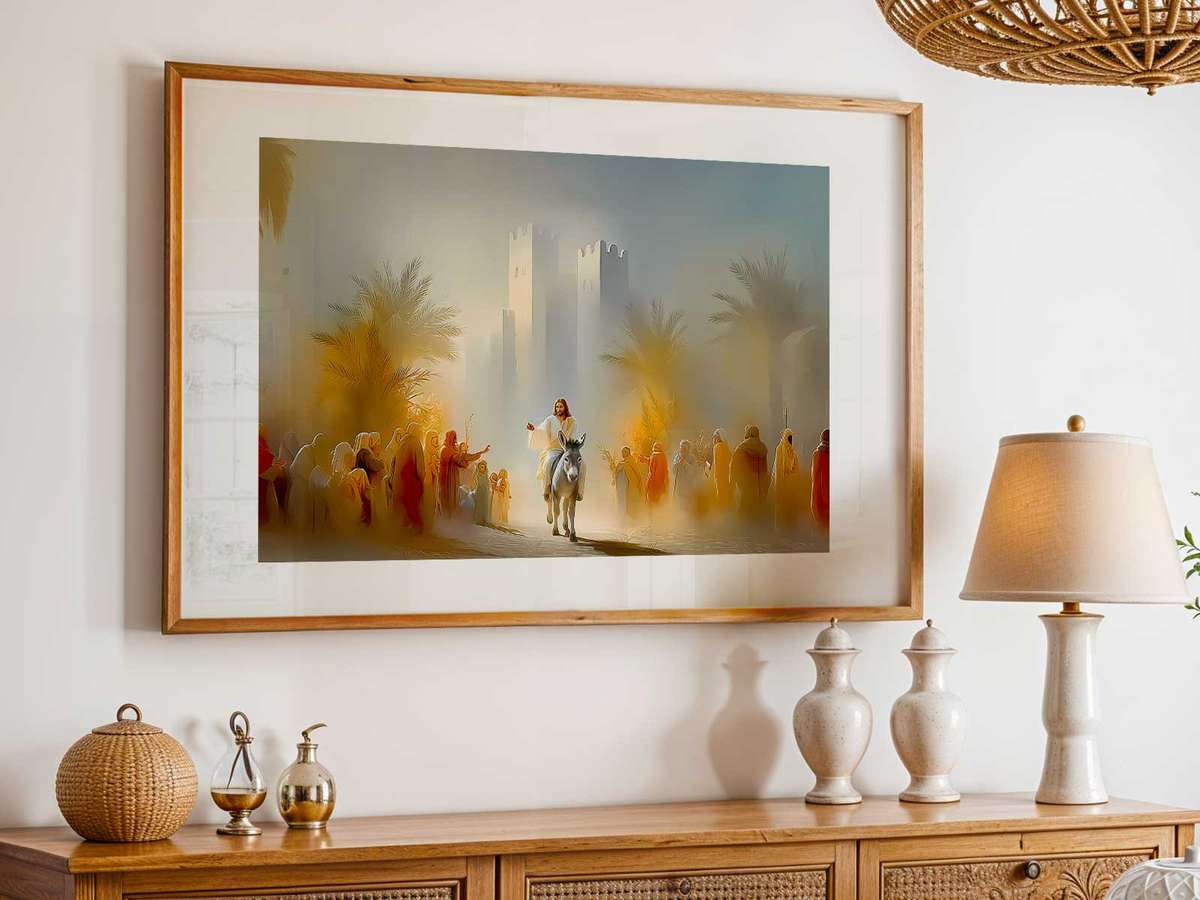
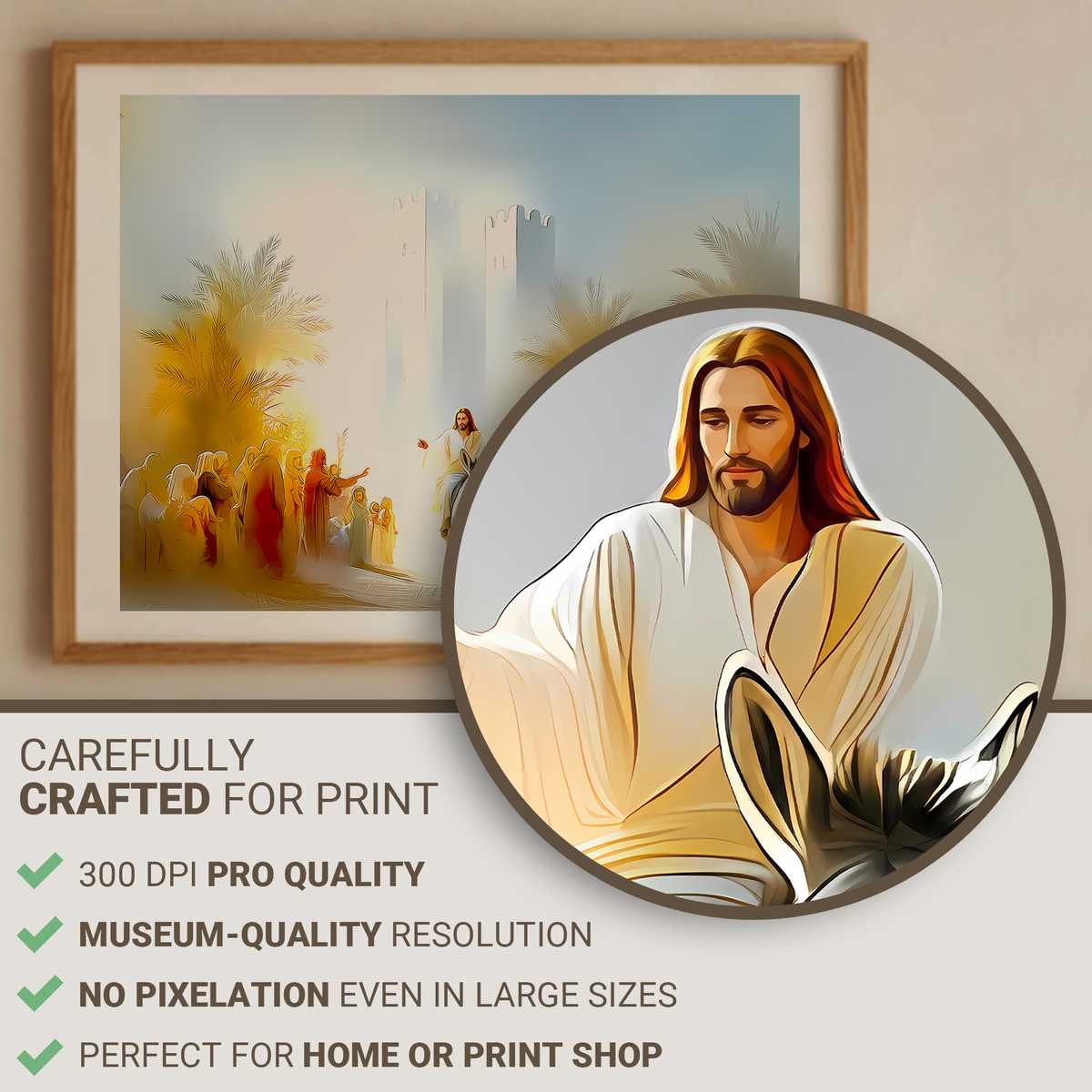
The scene of Jesus’ entry into Jerusalem has been part of Christian memory since it appears in all four canonical Gospels, and it stands at the heart of the Palm Sunday tradition. As a visual theme for the Christian home, this narrative carries a particular gravity: it is at once scriptural, liturgical, and quietly theological, recalling the moment the Gospels link to prophecy and the opening of Holy Week.
What gives the motif its persistent power in traditional devotional imagery is the paradox it embodies. The Gospel accounts and the long-standing reading of Zechariah 9:9 present a king who chooses a donkey rather than a warhorse. In art this choice becomes a concentrated visual theology: humility and peace are set against expectations of triumph. That contrast is what makes the image not merely illustrative but formative for memory and prayer in the home.
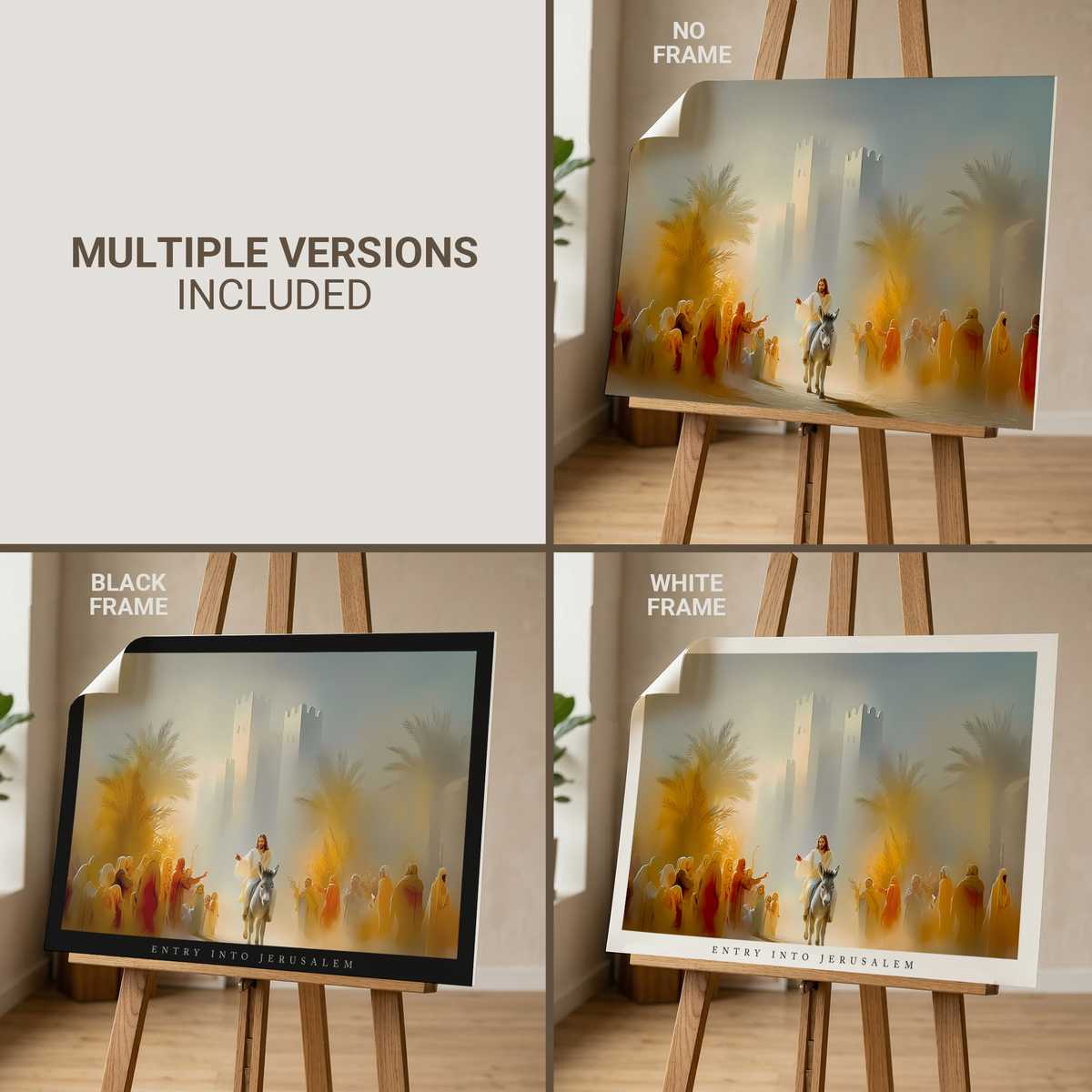
Artists and makers across centuries and media have returned to the entry—icons, medieval ivories, Renaissance paintings and later devotional prints—because the composition translates easily into a domestic contemplative object. A small framed icon or a quietly painted panel can contain the narrative elements readers know by heart: Christ mounted on a donkey or colt, the crowd laying garments or palms, and the surrounding city suggesting both arrival and destiny. Those elements serve as visual cues that trigger liturgical recollection and the rhythm of Holy Week within ordinary rooms.
Placed on a hallway wall, above a mantel, or in a corner set aside for prayer, such a piece works by continuity rather than novelty. It invites the household into a larger story already sung and prayed by the Church: the prophetic echo of Zechariah, the Gospel narratives, and the Palm Sunday observance. That continuity gives the picture a familiar, heirloom quality. It is an image that can be lived with—noticed and unnoticed—yet available to draw the eye back to a remembered text and to the quietly challenging witness of humility.
The traditional visual language—patinated color, measured gestures, and restrained composition—matters because it shapes response. Rather than shocking or commanding, the image opens a space for reflection. The donkey’s presence, the gathered palms, and the composed face of Christ invite a domestic gaze that is reverent and calm. In homes shaped by devotion this restraint translates into peaceful presence: the artwork holds a story that belongs to communal worship and private remembrance alike.
For those seeking an art object that serves both beauty and devotion, the Entry into Jerusalem offers a particular balance. It is rooted in scripture and liturgy; it carries a theological point about kingship that is perceptible at a glance; and it has a long history as a subject made for domestic contemplation. The result is not merely decoration but a gentle keeper of memory—a picture that helps sustain spiritual continuity from one day to the next and from one generation to the next.
Author:


 ↧ Digital download
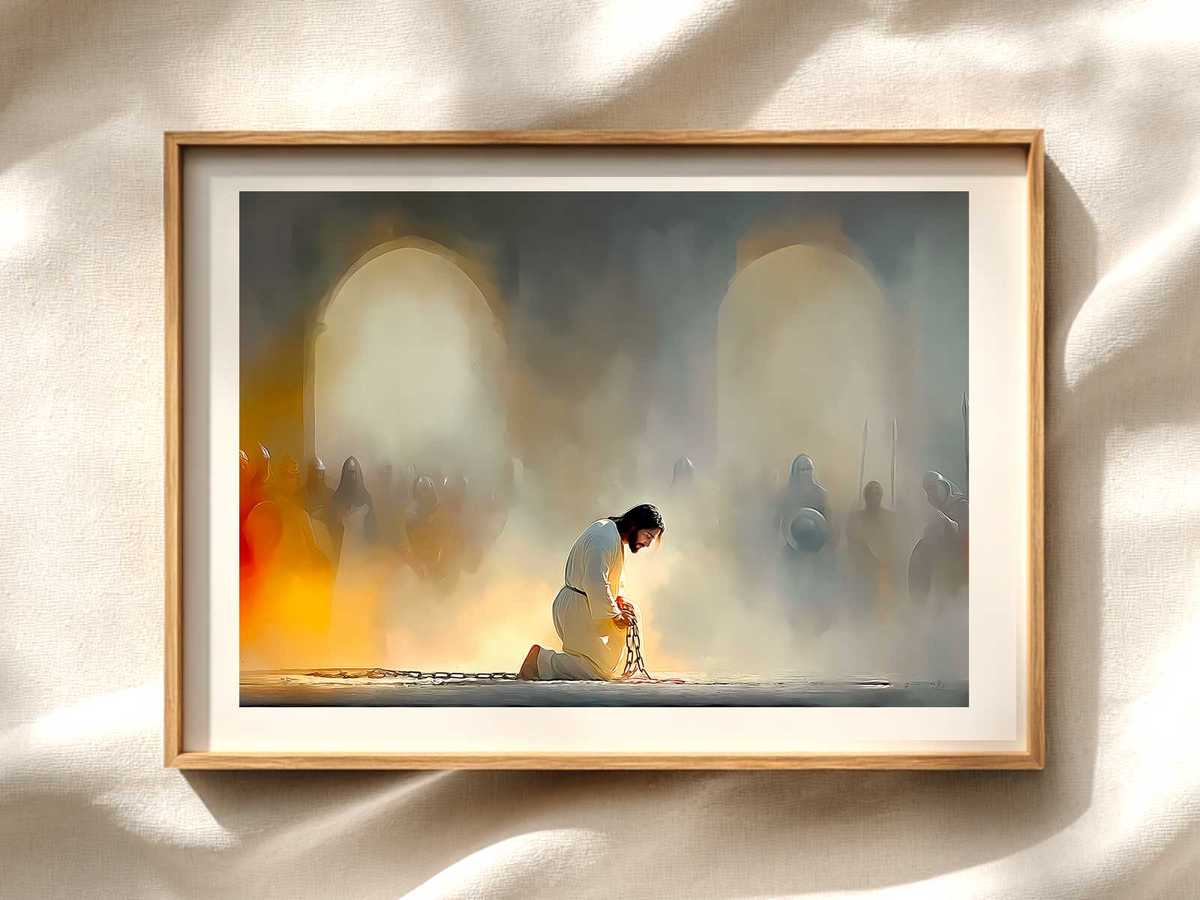
Drawings of Jesus Christ Print: The Trial and the Silent Dignity of...
Digital download
↧ Digital download
Drawings of Jesus Christ Print: The Trial and the Silent Dignity of...
Digital download
 ↧ Digital download
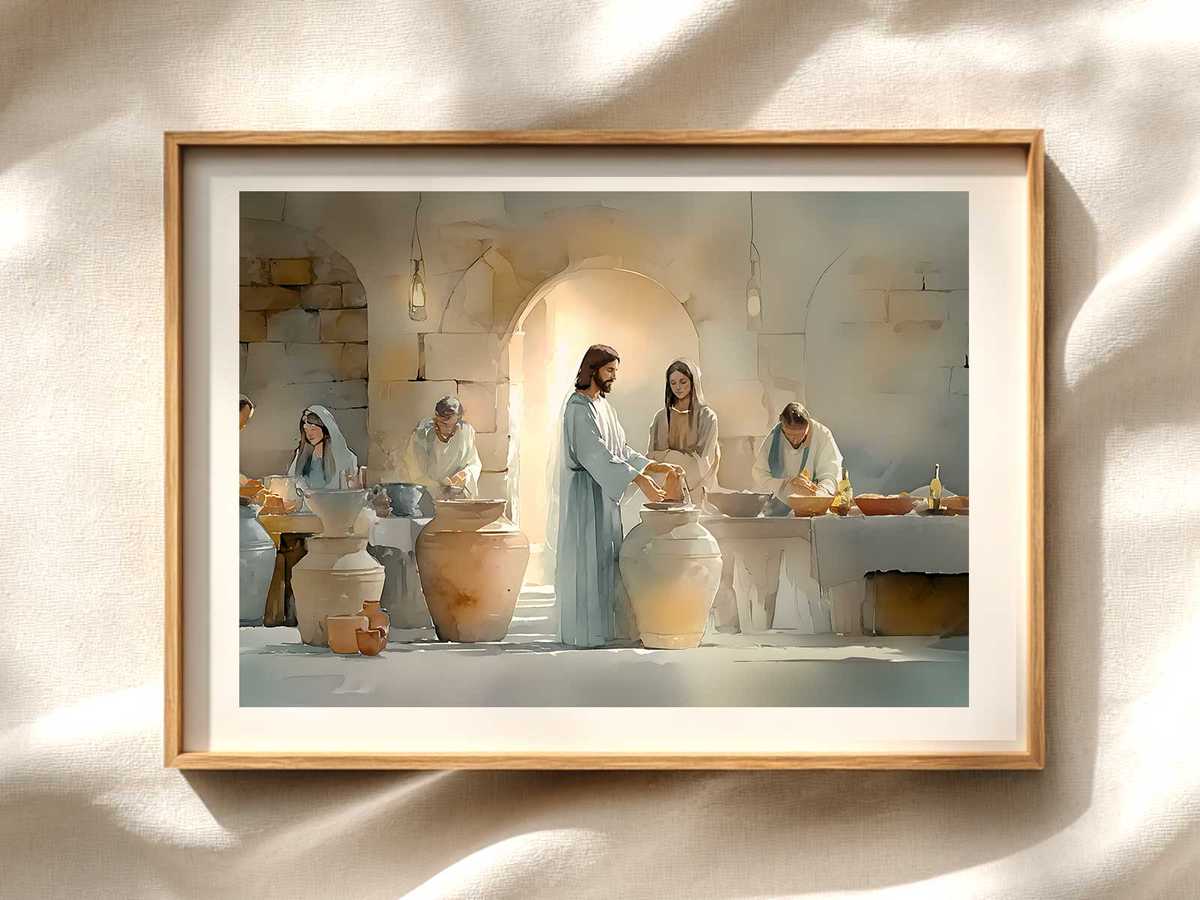
Wedding at Cana — Jesus Art for a Home of Transformed Joy
Digital download
↧ Digital download
Wedding at Cana — Jesus Art for a Home of Transformed Joy
Digital download
 ↧ Digital download
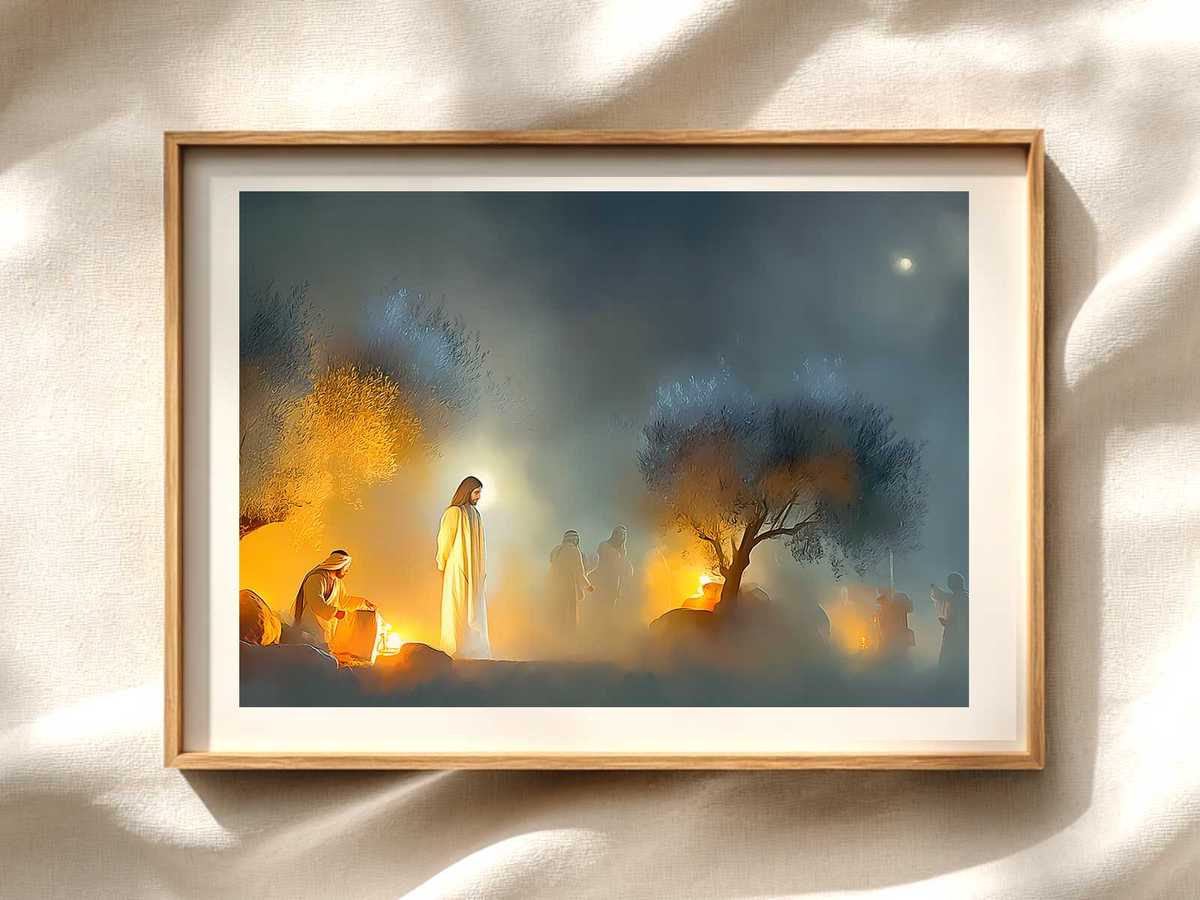
Drawings of Jesus Christ Wall Art: The Arrest and the Quiet...
Digital download
↧ Digital download
Drawings of Jesus Christ Wall Art: The Arrest and the Quiet...
Digital download
 ↧ Digital download
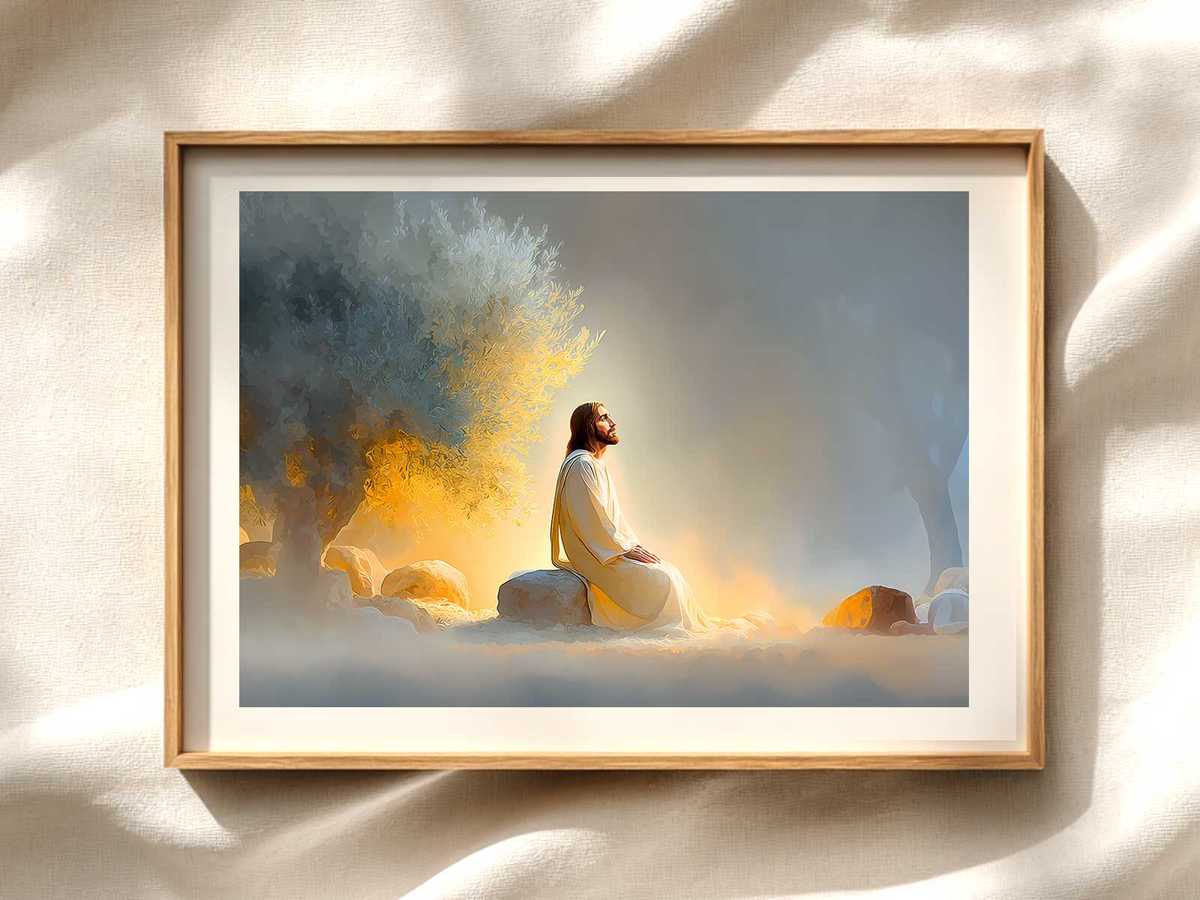
Gethsemane Drawing with Bible Verse Wall Art: A Quiet Companion for...
Digital download
↧ Digital download
Gethsemane Drawing with Bible Verse Wall Art: A Quiet Companion for...
Digital download