Alpha and Omega Meaning: A Sign of Hope over Death
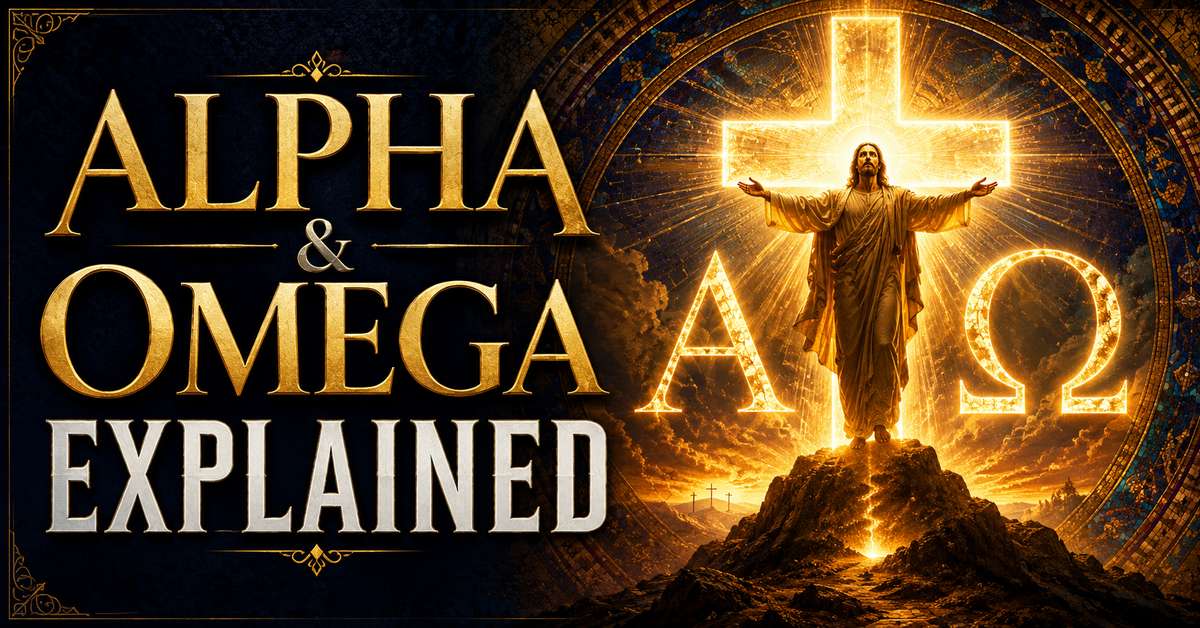
The phrase "Alpha and Omega" names God or Christ as the beginning and the end. Taken from Revelation, this title expresses a simple yet profound claim: God holds the full span of history.
Summary: The Alpha and Omega phrase appears in Revelation and, together with Jesus’ Johannine words about resurrection, forms a theological foundation for Christian hope over death.
Quick access:
WHAT THE SYMBOL MEANS AT ITS CORE
At its heart, "Alpha and Omega" uses the first and last letters of the Greek alphabet to declare sovereignty over time: the beginning and the end. In Christian use this expresses God’s authority over history and reality. Applied in Revelation to God and to Christ, the title affirms that nothing lies outside divine purpose and care.
BIBLICAL OR TRADITIONAL ROOTS
The phrase appears in the Book of Revelation (for example in Revelation 1:8; 21:6; 22:13) where it is used as a title for God and for Christ. Early Christians also adopted the motif in inscriptions and art found in catacombs and on liturgical objects, making it a persistent marker of faith that links biblical text and Christian practice.
WHY THE IMAGE IS SO VISUALLY ENDURING
Alpha and Omega is visually concise and theologically rich: two simple letters stand for an all-embracing claim. That economy makes the motif easy to reproduce on clocks, tombstones, church art, and devotional objects. Its clarity communicates a steady, stabilising message to viewers facing the uncertainties of life and death.
HOW THE SYMBOL APPEARS IN CHRISTIAN ART
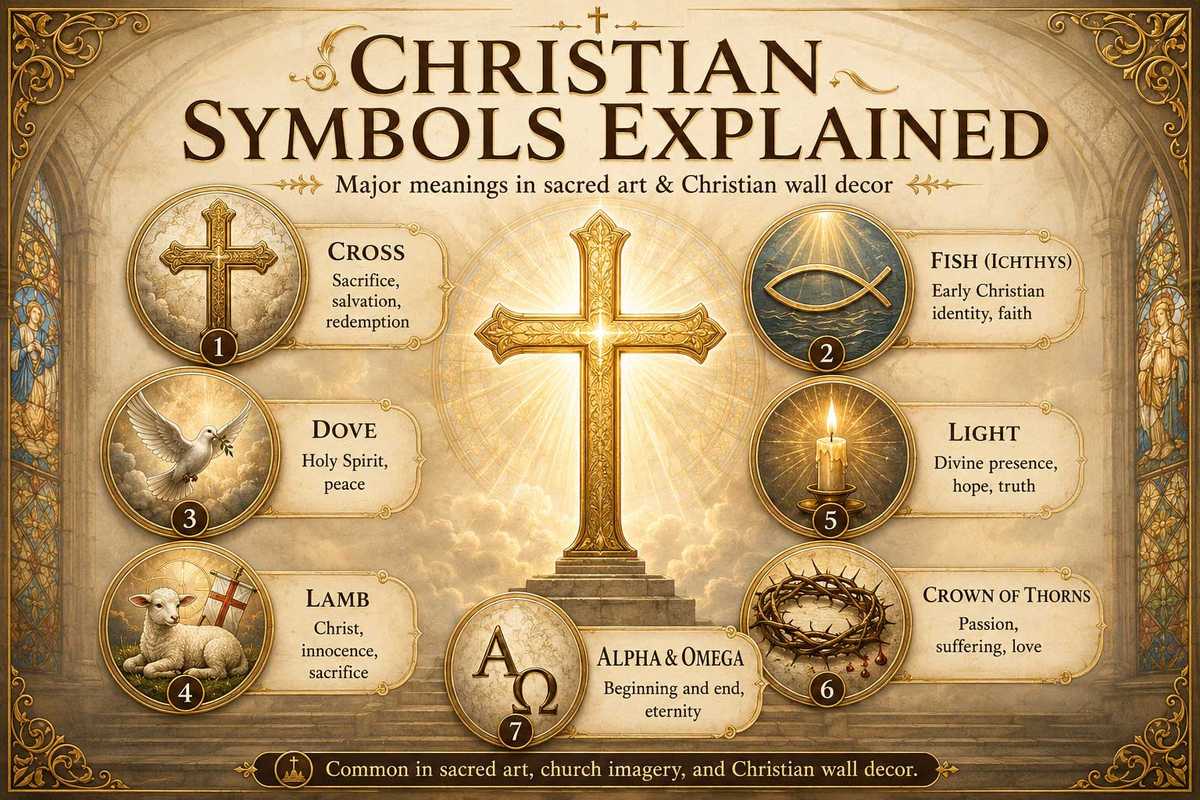
From early inscriptions in the Roman catacombs to later liturgical furnishings, the Alpha and Omega appears alongside other Christological images. Its presence in art and ritual objects links doctrinal claims about eternity with the practices of worship and remembrance, making theological truth visible in material culture.
RESURRECTION CONNECTION: ALPHA, OMEGA, AND JESUS’ PROMISE
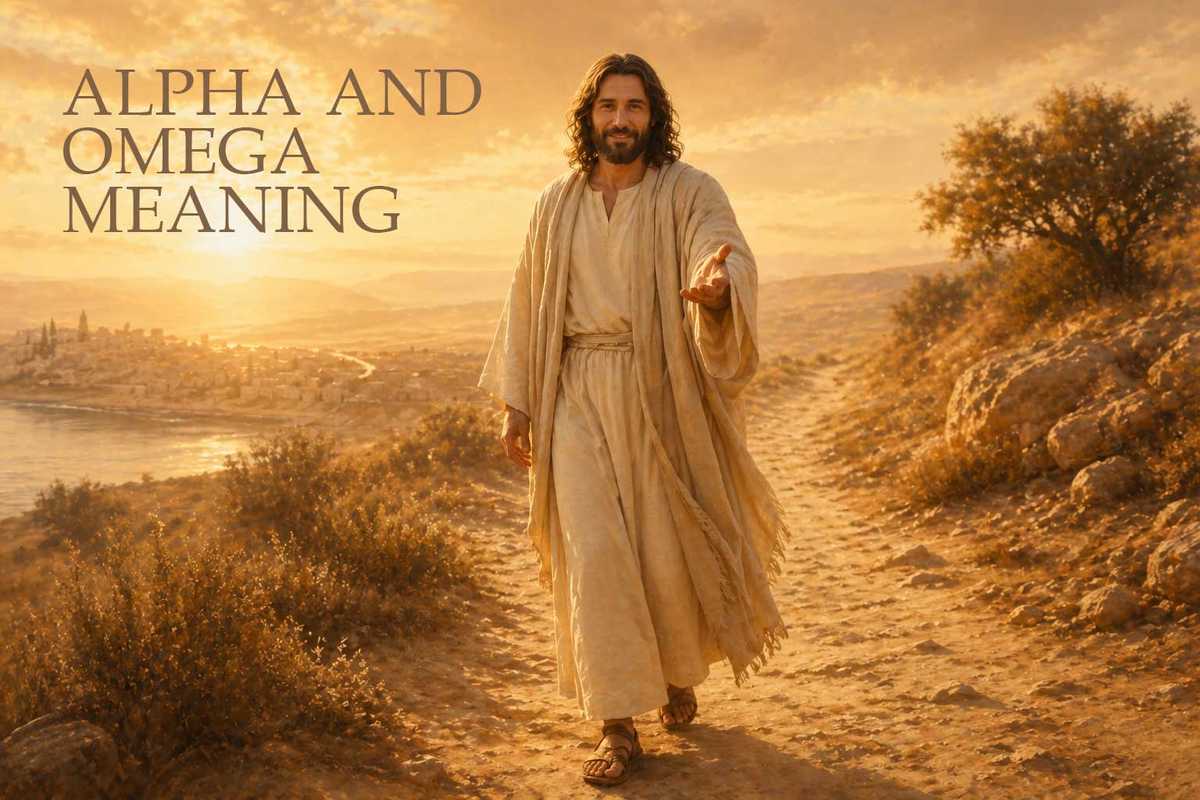
The title "Alpha and Omega" and Jesus’ Johannine declaration "I am the resurrection and the life" (John 11:25) are often read together in Christian reflection. Where Revelation frames Christ as the beginning and the end of all things, the Johannine text identifies him as the source of resurrection life. Together these scriptural strands provide a theological basis for hope in the face of death: Christ’s lordship over time includes victory over the grave and the promise of ultimate consummation.
DEVOTION, MEMORY, AND EVERYDAY RECOGNITION
Because it condenses a broad doctrine into a simple mark, the Alpha and Omega is used in devotional contexts to express trust in God’s fidelity. It appears on memorials, in Easter reflections, and in pastoral teaching as a reminder that life and death are held within divine providence. For many Christians the symbol quietly reassures: beginnings and endings are not random but belong to God.
DIFFERENT CONTEXTS WHERE THE SYMBOL APPEARS
The motif surfaces in liturgy, funerary art, personal devotion, and public proclamation. Its adaptability allows it to function in solemn contexts of mourning, joyful celebrations of Easter hope, and catechesis about God’s relationship to time. While traditions may emphasize facets differently, the shared theme is the same: God’s encompassing care.
A CLEAR AND QUIET CONCLUSION
"Alpha and Omega" remains a memorable Christian sign because it speaks plainly to our deepest questions about origin and destiny. Grounded in Revelation and joined by the Johannine promise of resurrection, the title invites believers to rest in the assurance that Christ holds history from its beginning to its end. In art, worship, and private devotion the motif continues to point hearts beyond fear of death toward the hope of ultimate renewal.