Christian Cross Meaning: Sacrifice, Resurrection Hope, and Why It Became…
The Christian cross is the principal symbol of Christianity, recalling the crucifixion of Jesus and representing both his sacrificial death and the hope of resurrection and salvation. This article explains the Christian cross meaning, traces how the image gained prominence in Christian life and art, and shows what it communicates in prayer, liturgy, and home devotion.
Quick summary: The cross functions as a reminder of Christ’s crucifixion, a theological sign of atonement and victory over death, and a widely used devotional and liturgical emblem. Its public prominence rose sharply after Emperor Constantine’s conversion in the early 4th century, though forms of cross symbolism existed earlier.
Quick access: Definition | Biblical roots | Symbolism
Clear definition
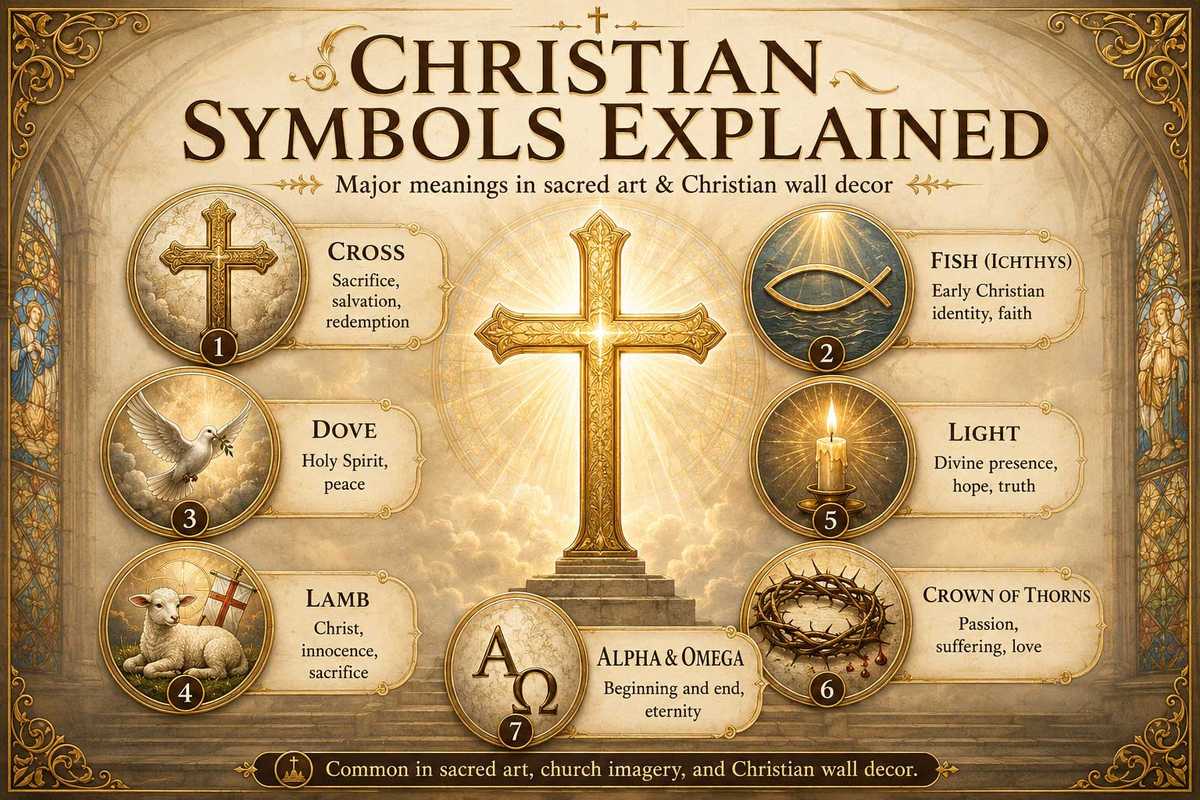
The Christian cross meaning centers on two closely related ideas: it recalls the crucifixion of Jesus and it stands for the hope of resurrection and salvation that flows from that event. As the principal symbol of Christianity, the cross functions both as a memorial of suffering and as a sign of triumph over death.
Biblical roots
The cross as image recalls the historical and theological reality of Jesus’ crucifixion, which lies at the heart of Christian reflection on sacrifice and redemption. Christian teaching and standard reference works link the cross with Christ’s death and the salvation Christians associate with his rising from the dead; this connection underpins the symbol’s centrality.
Christian symbolism: sacrifice and victory
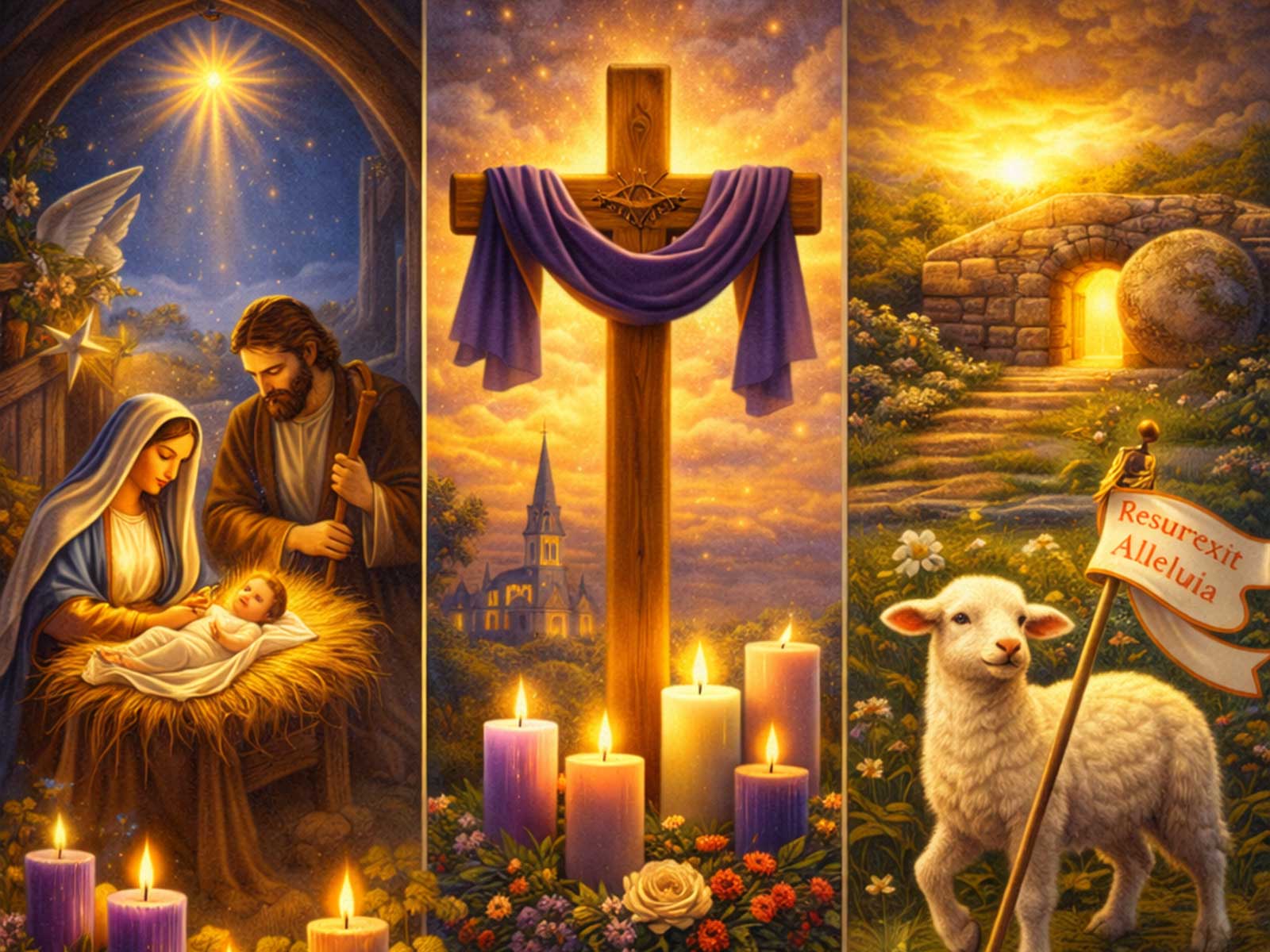
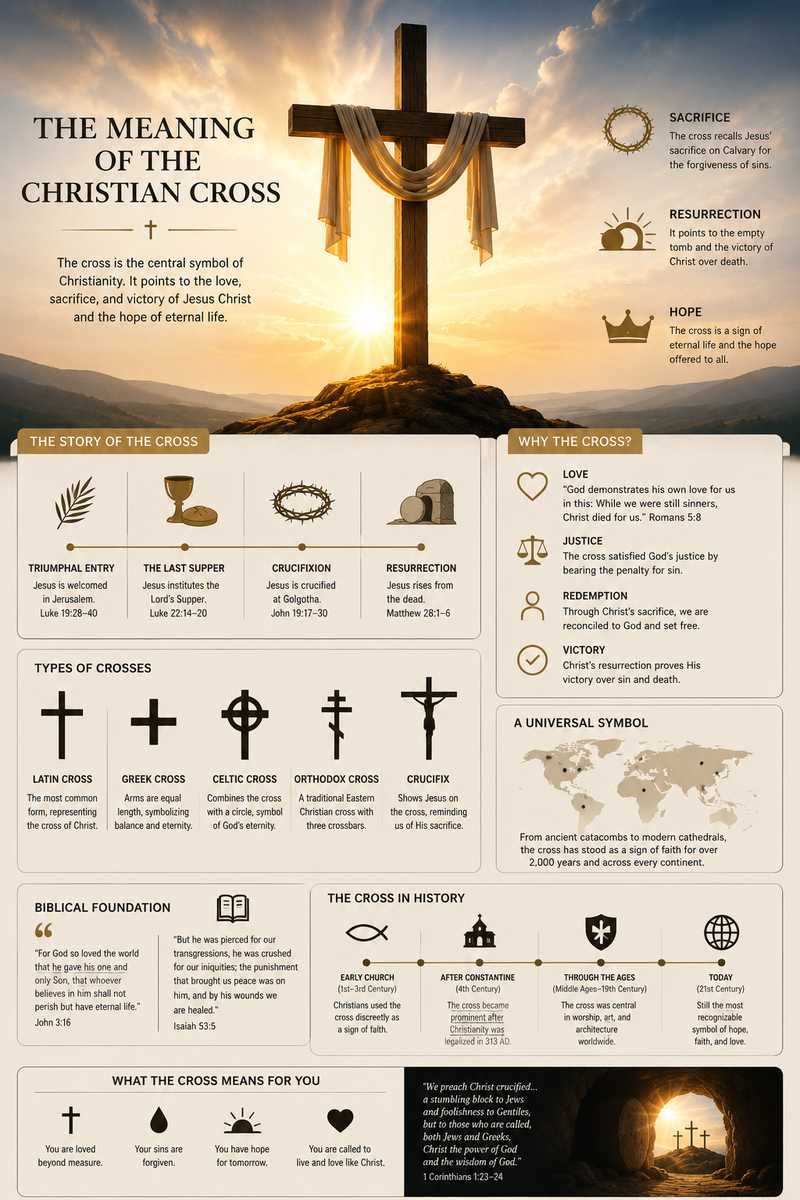
Theologically the cross came to signify atonement—Christ’s sacrificial death for sin—and also victory over death through resurrection. This double meaning allows Christians to read the cross both as the instrument of suffering and as a hopeful emblem of eternal life and triumph.
Historical development and public prominence
While some early Christian communities used cross-like imagery before the 4th century, the cross acquired far greater public prominence after Emperor Constantine’s conversion in the early 300s. Constantine promoted Christian symbols such as the cross and the Chi-Rho and ended practices like crucifixion as an imperial punishment, contributing to the symbol’s official and artistic status in Late Antiquity and Byzantine Christianity.
Forms and denominational nuances
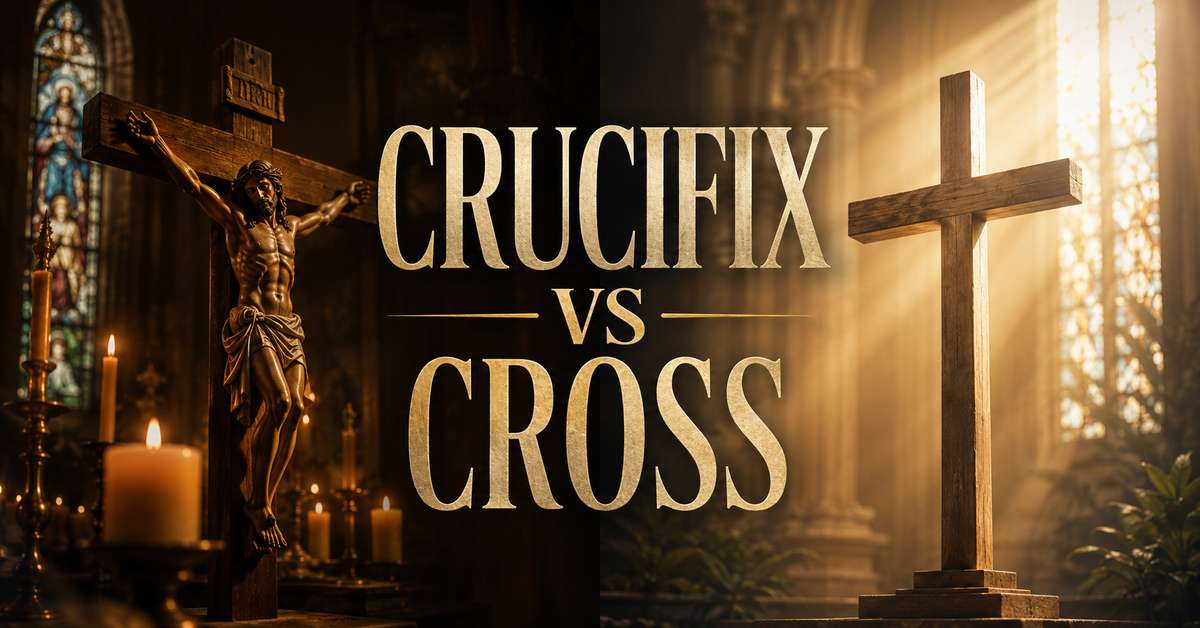
Two common visual choices reflect different emphases within Christian traditions. A crucifix— a cross that includes a figure of Christ—appears especially in Roman Catholic and Eastern Orthodox practice, underlining the reality of Christ’s suffering. Many Protestant traditions prefer a plain cross, which often emphasizes Christ’s victory over death rather than the execution instrument itself. Both uses draw on the same foundational meaning while offering different devotional focuses.
Sacred art and liturgical use
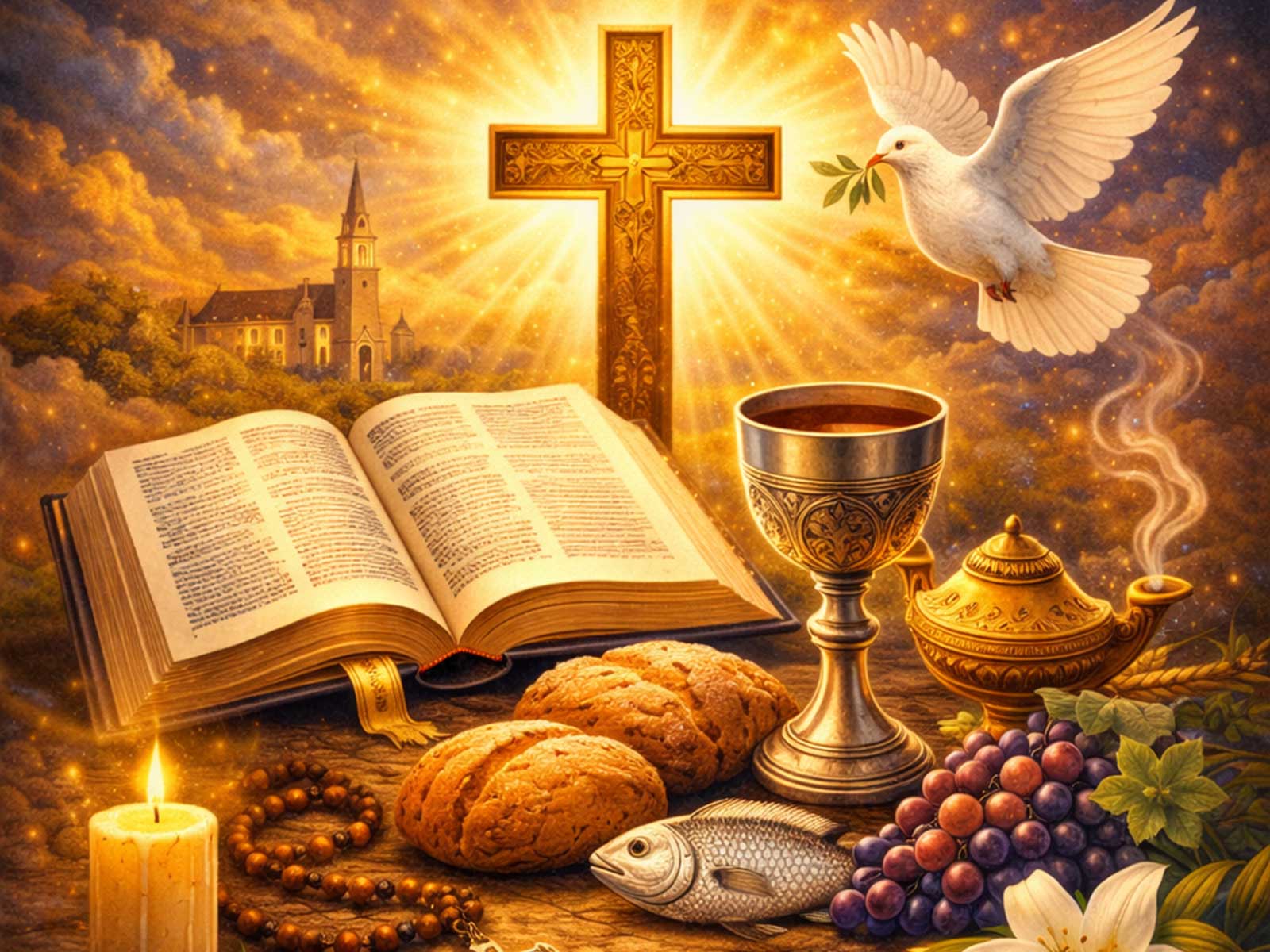
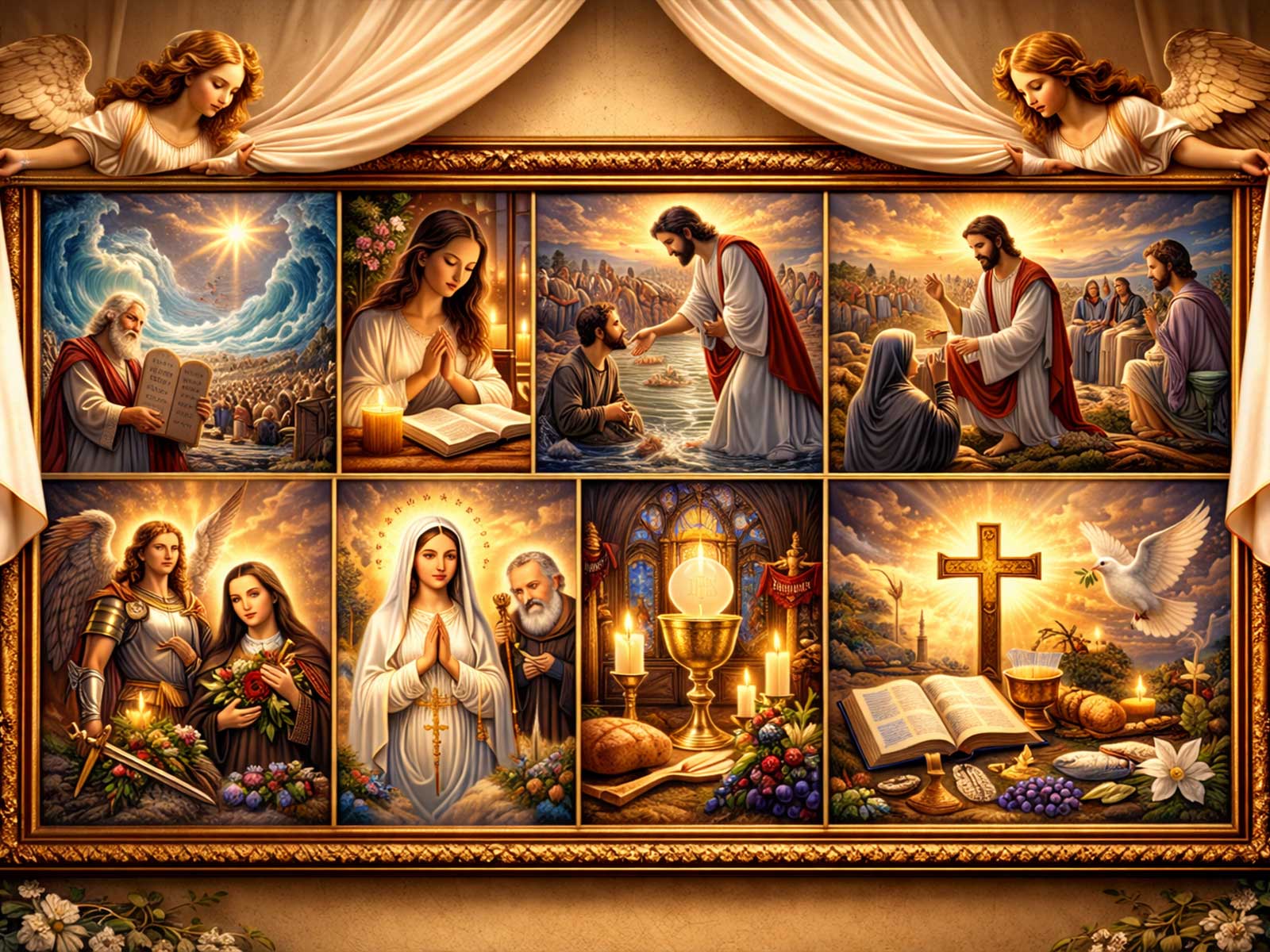
The cross became a central motif in Christian art—icons, mosaics, liturgical objects, and architecture—especially after the 4th century when its public status grew. In liturgy and devotion the sign of the cross is an established gesture in many Christian traditions, linking bodily practice with the cross’s theological message and reinforcing its role in prayer and worship.
Prayer, home devotion, and wall art
As a visual object, the cross functions well in home prayer corners and on Christian wall art because it quickly communicates key Christian convictions: remembrance of Christ’s sacrifice and confidence in resurrection hope. Whether rendered simply or as a crucifix, a cross in a quiet interior can shape reflection, mark a sacred corner, and connect daily life to liturgical and theological memory.
Common misunderstandings
Beginners sometimes reduce the cross to mere decoration or cultural motif. While it is widely used in public and decorative contexts, the cross’s origin and continued power are theological and devotional: it primarily recalls Christ’s death and resurrection hope. Another frequent confusion is to assume all traditions use the cross the same way; practices and emphases vary, as seen in the distinction between crucifix and plain cross.
Closing interpretation
Understanding the Christian cross meaning helps viewers move beyond surface aesthetics to grasp why the image remains central in worship, art, and private devotion. Rooted in the memory of crucifixion and the hope of resurrection, the cross continues to serve Christians as a sign of both sacrifice and victory—an image that shapes liturgy, inspires sacred art, and quietly anchors prayer in home spaces.
Author: Cynthia D.